Upsetting the Theory: Rights for Housing and Queers

The second post on our forum on Joe Hoover’s Reconstructing Human Rights, from DoT’s Anthony Langlois. You can read Joe’s opening post here and Karen Zivi’s commentary here.


 As I was reading Joseph Hoover’s fabulous new book, a critical debate was going on at the peak human rights institution of the global political system. The Human Rights Council, an institution to which UN Secretary General Ban Ki-moon suggests “all victims of human rights abuse should be able to look…as a forum and springboard for action”, was debating a resolution to establish a UN Independent Expert on Protection Against Violence and Discrimination based on Sexual Orientation and Gender Identity. On June 30, 2016, after extensive debate, in which much opposition was expressed, the Human Rights Council voted in favour of this UN Special Procedure, establishing the office of the Independent Expert on Sexual Orientation and Gender Identity (SOGI).

It is a harsh reality that in many countries around the world, lesbians, gays, bisexuals, trans* and others of queer and diverse sexual orientation, gender identity and expression (LGBTQ) are not able to look to human rights institutions for support and protection, or, those institutions find themselves constrained and unable to offer such support and protection openly, or at all. The creation of the SOGI expert by the UN is in part a recognition of this, and it is seen by many as a critical further step in the UN’s recent activism on this routinely neglected area of human rights concern.

sogiexpertnow

But as well as allegedly being “progress” in the human rights agenda of freedom and emancipation, it should cause us to pause and think. What does it mean that Human Rights have only come lately to queer communities, if at all?

Hoover does not directly consider this question. But the debate about gay rights, human rights for queers more broadly, and their place in IR, plays a role like that which Hoover shows the right to housing to play. Hoover uses the right to housing to destabilise, challenge, pluralize, democratize and reconfigure our received ideas of human rights. I would suggest that this is also precisely what happens, or, at least, what can happen, when human rights meets sexual orientation and gender identity expression, as well. Continue reading

Human Rights: A Love Story?

zivi-headshots-gray-backgroundThis is the first comment, following Joe’s opening post, penned by Karen Zivi. Karen is Associate Professor of Political Science at Grand Valley State University where she teaches courses on rights, democracy, and gender and politics. She is the author of Making Rights Claims: A Practice of Democratic Citizenship (Oxford University Press, 2012) and her work on topics such as LGBT rights, citizenship, and motherhood has appeared in the Journal of Human Rights, American Journal of Political Science, Politics & Gender, and Feminist Studies.


A Longing

As I write this post, I am preparing for the first day of my ‘Introduction to Human Rights’ class. I’ll begin by asking my students to identify a human rights issue of interest to them. I won’t be surprised if they mention the Syrian refugee crisis or police brutality in the United States, religious liberty or reproductive justice, Wikileaks and freedom of the press or Flint and access to clean water (I teach in Michigan after all). I’ll ask them what should be done to address these issues and I won’t be surprised if they advocate for providing humanitarian aid or making new laws that limit or enhance state power. And when I ask them why we should respond one way or another, I won’t be surprised if they make reference to ideas about a common humanity, the meaning of justice, or doing the right thing.

giphy

Not wanting to crush their spirit on the first day, I’ll tell them they are in good company in the way they are thinking about human rights. But over the course of the semester, I’ll tell and show them that political solutions and philosophical justifications disappoint again and again for reasons that go beyond the sheer callousness, greed, or stupidity of human beings. Even when victories are won, as Joe Hoover’s new book makes so astonishingly clear, collateral damage is often unavoidable. My students thus have the difficult task of confronting the reality of human rights’ limitations. I have the task keeping their promise alive, balancing rights realism with rights optimism in ways that motivate my students to engage in making change and yet staves off the kinds of skepticism, despair, and apathy that do nobody any good. I still believe in the power and promise of human rights. And, fortunately, so too does Joe Hoover.

Continue reading

Reconstructing Human Rights

The first in a forum on Joe’s recently released Reconstructing Human Rights: A Pragmatist and Pluralist Inquiry in Global Ethics (Oxford University Press, 2016). A number of commentaries will follow in the coming days.


hoover-reconstructing-human-rights-cover1Earlier this year I visited Sylvia’s Corner, the home of the Focus E15 campaign, to give a talk about the human right to housing. As I shared my research, based on work I had done with housing campaigns in Chicago and Washington DC, I was struck by how this specific moment illustrated what I most hope Reconstructing Human Rights might accomplish—namely, helping to reconstruct human rights as a more democratic idea, and practice.

In London, Focus E15 has been fighting for the human rights of those struggling to secure a decent home for themselves and their families, often struggling against the very public agencies who should be assisting them. Their work not only draws on an ethical and political language of human rights, but it also remakes that language, renders it suitable to their needs and responsive to their experiences. I have witnessed this same process with other campaigns, such as the  Chicago Anti-Eviction Campaign, and with community organising groups like ONE DC in Washington DC. It was revealing to act, even briefly, as a conduit through which the experiences of these distant groups could be relayed. Human rights are constantly being remade, repurposed—reconstructed—to serve the ends of those suffering from injustice. It is this reality that motivates my book, which is at its core an attempt to understand how human rights can be both an instrument of the privileged and powerful, and also a weapon for the oppressed and disempowered. I wrote this book because I wanted to know, what should we make of human rights?

Continue reading

White World Order, Black Power Politics: The Author’s Response

Bob’s response to Naeem, NiviSrdjan, and Meera completes our symposium on White World Order, Black Power Politics.


Four critical IR theorists have taken time away from other tasks to read my book carefully, generously, and thoughtfully. What a gift. The brevity of this response will appear stingy by comparison, but I don’t mean it to be. Rather, I am typing with my wrist in a splint, and it hurts, while I am also due to leave in the morning for a two-week vacation. Perhaps there will be another chance to show my gratitude. Many of the questions that Nivi, Naeem, Srdjan, and Meera raise have to do either with the book’s and my relationship to theory or with the limitations of my research strategy, as I anticipated and sought, self-servingly, to head off.

Continue reading

On Statues

Even commentators sympathetic to the aims of Rhodes Must Fall in Oxford (RMFO) have been at pains to point out that the removal of the statue of Cecil Rhodes on the facade of Oriel College is not the most significant element of the campaign’s platform. Amia Srinivasan observes that ‘Neither the Cape Town nor the Oxford campaign has ever been just about statues.’ Amit Chaudhuri laments that ‘it would be…sad if Rhodes Must Fall in Oxford became identified with the statue in Oriel College alone’ because its ambition beyond the removal of the statue, namely that of decolonising education, is more significant. David Olusoga worries that by building their manifestos around calls for the taking down of statues, the more complex and worthy ideas around decolonisation raised by these campaigns have been ‘distorted into a simple right-wrong, yes-no statue debate’. I don’t disagree (much) with these views and indeed, if you want a right-wrong, yes-no answer, this essay will disappoint. But they beg the question of what statues mean and why we keep putting them up if they are so easily relegated to an epiphenomenal register of political discourse.

It’s worth remembering that RMFO itself has never downplayed the significance of the statue in the way that some of those writing in solidarity with it have done. It describes its mission as that of decolonising ‘the institutional structures and physical space in Oxford and beyond’ (emphasis mine) and lists as its first aim the intention to tackle ‘the plague of colonial iconography (in the form of statues, plaques and paintings) that seeks to whitewash and distort history’. In addition, it aims to reform the Eurocentric curricula to which university students continue to be subject and to address the under-representation and lack of welfare provision for black and minority ethnic staff and students at Oxford. One way to think about the place of the statue in this debate is to see it as a means to an end: as Srinivasan rightly notes, ‘complaints of structural racism and calls for curriculum reform don’t draw public attention like the toppling of a statue, and the RMF leaders know this.’ But while clarifying that its campaign is indeed ‘about more than a statue’, RMFO nonetheless insists that

statues and symbols matter; they are a means through which communities express their values. The normalised glorification of a man who for so many is a symbol of their historical oppression is a tacit admission that – as it stands – Oxford does not consider their history to be important. This is incompatible with a community that posits itself as progressive, enlightened and intellectually honest.

Without wanting to suggest that the success of RMFO should be judged by whether the statue falls or endures (it shouldn’t), I want to think with RMFO about what the expressive function of statues entails. Writing in a very different context, Judith Butler has famously worried that the relegation of injustices to the realm of the ‘merely cultural’ effectively downgrades the urgency with which they demand redress. For ‘merely cultural’ read ‘merely symbolic’, and the risk of disappearance of the demand for iconographic decolonisation (exactly what Oriel College might wish for) becomes obvious: if RMFO is about more than ‘just’ a statue and if we all agree that the statue is ‘merely symbolic’, then we might as well get beyond, behind, and beneath the symbol to address its putative ‘real’ while leaving the symbol itself intact. Meanwhile the possibility that the ‘merely symbolic’ has material consequences remains unexplored.

rhodes oxford

***

Continue reading

Arab Political Thought After 2011 (Lines of Inquiry for a Research Agenda)

A guest post – on the eve of the 5th anniversary of the Egyptian uprising – by Michaelle Browers. Michaelle is Associate Professor of Politics and International Affairs and directs the Middle East and South Asia Studies Program at Wake Forest University. She is author of Democracy and Civil Society in Arab Political Thought: Transcultural Possibilities (Syracuse University Press, 2006) and Political Ideology in the Arab World: Accommodation and Transformation (Cambridge University Press, 2009), and has edited and contributed to (with Charles Kurzman) An Islamic Reformation? (Rowman and Littlefield, 2003). Her articles have appeared in the International Journal of Middle East Studies, Journal of Middle East Women’s Studies, Journal of Political Ideologies, Critical Review of Social and Political Philosophy, Theory and Event, and Third World Quarterly. An earlier version of this memo was prepared and presented at working group on “Re-envisioning the Arab State,” hosted by the Center for International and Regional Studies (CIRS) at the Georgetown University’s School of Foreign Service in Doha, Qatar (January 17-18, 2016).


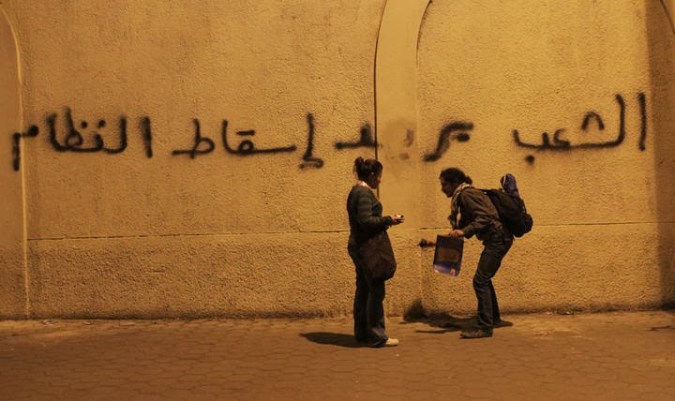
Browers - Cairo Graffiti

The past five years has been a series of ups and downs, trading moments of great elation and hope with periods of deep disappointment for those of us who study Arab political thought and practice. We have seen declarations of Arab springs and Arab winters, and claims about the resilience, the end and again the resilience of Arab authoritarianism. We have seen people in the streets and squares of many cities call for justice, dignity, democracy, rights, revolutions – ideas that many Arab intellectuals have written about at great length and mourned for their lack – and heard commentators claim Arab intellectuals were absent from the uprisings or, as Ramzy Baroud put it, “resting, not dead.” In general, we have seen much in the way of claims of a lack of intellectual work or a lack of alternative visions to the status quo. I contend that the real lack is a full investigation of whether, in fact, such claims have merit—that is, that there is a need for research into political thought that assumes its existence rather than its absence.

But in engaging post-2011 “Arab political thought” we may need to revise some of our assumptions about what it is we seek at the outset. This intervention puts forth four subsets of questions in need of further discussion as we broach that larger question (of how we should study Arab political thought after the 2011 uprisings): one which raises an old question worth reconsidering anew, a second which suggests a different approach to our study, a third which maintains the need to look for answers in a slightly different place or with a broader lens, and a fourth which proposes one substantive line of theorizing that strikes me as politically salient after 2011. Embedded in each of these four broad question-sets are myriad avenues of research, as well as, of course, indications of some of my own convictions and commitments.

Continue reading

Economy of Force: A Reply

In which Patricia Owens responds to our four commentaries (on patriarchy, colonial counterinsurgency, biopolitics and social theory) on her Economy of Force.


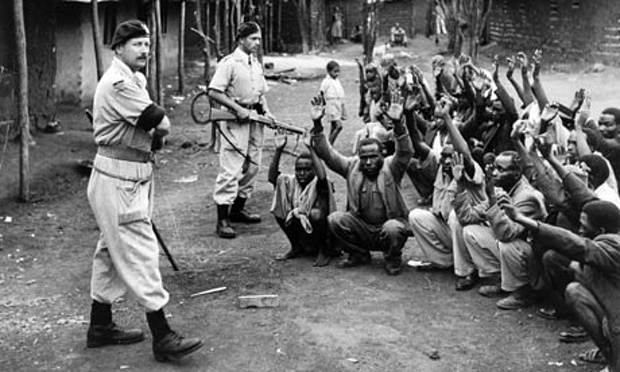
I’m extremely grateful to Pablo K, Elke Schwarz, Jairus Grove, and Andrew Davenport for their serious engagements with Economy of ForceAs noted in the original post, the book is a new history and theory of counterinsurgency with what I think are significant implications for social, political and international thought. It is based on a study of late-colonial British military campaigns in Malaya and Kenya; the US war on Vietnam; and US-led campaigns in Afghanistan and Iraq against the background of the high colonial wars in the American Philippines and nineteenth-century French campaigns in Tonkin, Morocco and Algeria. Probably the emblematic case for the book is Britain’s colonial state terror against Kenya’s Land and Freedom Army and civilians in the 1950s, a campaign that was closer to annihilation than ‘rehabilitation’. Although the so-called ‘hearts and minds’ campaign in Malaya is held up by generations of counterinsurgents as the model for emulation, the assault on Kikuyu civilians shows the real face of Britain’s late-colonial wars. It also points to some profound truths about the so-called ‘population-centric’ character of more recent campaigns in Afghanistan and Iraq. Though offering new readings of some better-known counterinsurgency cases, Jairus Grove suggests that this choice perpetuates an erasure of America’s ‘Indian Wars’.

Mau-Mau

Researching Economy of Force, I certainly became aware of the general significance of these wars, including through Andrew J. Birtle’s and Laleh Khalili’s histories of counterinsurgency. However, Grove draws attention to something more relevant to Economy of Force than appreciated before: “one of the first federal bureaucracies with jurisdiction over the home and social issues”, he writes, “was created by and administered by the War Department”. Decades before the distinctly ‘social’ engineering during the Philippines campaign (1899-1902), the Bureau of Indian Affairs was administering indigenous populations on the mainland. In focusing on overseas imperial wars, Economy of Force surely neglects settler colonialism, its genocides, and how “warfare, pacification, and progressivism were an assemblage in the US context from the outset”. While the book was not centrally focussed on US state making, I’m grateful to Grove for insisting that settler colonialism is necessarily a form of counterinsurgency. To be sure, the Philippines campaign was examined not as the founding moment of American counterinsurgency, but because it was explicitly conceived by contemporaries as a form of overseas housekeeping; to problematize progressive social policy; and to challenge the effort to separate good (domestic) social engineering at home from bad social engineering (overseas). I would hesitate to wholly assimilate the Progressive Era (1890s-1920s) into earlier Indian Wars, though its ‘social reforms’ shaped indigenous administration. But these are quibbles. Grove is right that I have neglected something of significance in the ‘historical trajectory from Thanksgiving to Waziristan’. I hope to be able to rectify this in future work.

Continue reading

Critiquing the Social: Comments on Patricia Owens’ Economy of Force

The last commentary in our forum on Economy of Force, from Andrew Davenport. Andrew is Lecturer in International Politics at the University of Aberystwyth, where he works on International Theory, with particular emphasis on debates in Critical Theory, materialism and idealism, and modern social theory. He is the author most recently of ‘Marxism in IR: Condemned to a Realist Fate?’ in the European Journal of International Relations. Patricia’s rejoinder to the four commentaries (from Pablo, Jairus, Elke and Andrew) will follow tomorrow.


In the concluding section of Chapter Two of this book, Patricia Owens quotes Robert Nisbet to the effect that the essential concepts and perspectives of the sociological tradition “‘place it much closer to … philosophical conservatism’, than we might otherwise think.” A basic theme of the book is that it ought to be more clearly understood that prominent categories in the work of Durkheim, Weber and Marx – community, authority, alienation and status – are in fact just “conservative moral categories … but in scientific garb”.[1] The conservative character of sociology’s origins is in fact no secret. At much the same time as Nisbet was writing, Theodor Adorno also noted it: near the beginning of his introductory lectures on sociology, he emphasised that any assumption of an intrinsic connection between sociology and radical politics (that sociology = socialism) would be seriously mistaken: “if the concept of sociology is understood as it came into being, with the historical meaning it has, it can be said that the opposite is actually the case.” Sociology’s interest, from the start, was always the maintenance and preservation of the existing order, not its critique and change. What does the character of these origins mean for social theory? How should it affect or condition our understanding of social thinking and its basic concepts: precisely, ‘society’ and ‘the social’? Owens’ answer is unequivocal: it should lead to profound suspicion, if not outright rejection. Social thinking, from the start, contained a poison and its natural affinity to conservative thought, attitudes and practices is simply indicative of this noxious nature. Especially damaging in its consequences for IR theory, so the argument runs, has therefore been the unthinking naturalisation of ‘social’ terminology virtually across the spectrum, from statist Political Realism to Foucauldian biopolitics – as if society and the social were neutral terms that do not themselves colour or prejudice the discourse.

The language of ‘society’ is indeed widespread, and often perhaps unreflectively used, in IR, and so its critique is surely an important theoretical project. Not the least of the book’s merits is that it poses uncomfortable questions to critical theory about how far it is possible to adopt social thinking for purposes of critique. Owens directs some pointed remarks at Marxists, Foucauldians and other critical theorists for, in effect, supping with the devil, and in the chapters on counter-insurgency she marshals enough evidence of a ‘homology’ between social theory and imperial practices of counter-insurgency to give even the most committed sociologist pause. Further, in demonstrating that the emergence of distinctly social thinking was coeval with the development of capitalist society, there is at least the implication that those who would pursue critique of capital ought not to accept social categories at face value. Nevertheless, it seems to me that there are difficulties with the critique of the social elaborated in the book, both in how the argument is structured and with the categories employed, difficulties that lead to some of the work of critique remaining undone. As a result, the account of the social developed here, challenging and thought-provoking as it is, breaking new ground, nevertheless does not go as far as it might.

Continue reading

All Means, No End? Economies of Life Management

The fourth piece in our forum on Patricia Owens’ Economy of Force. One more to follow before Patricia’s rejoinder this weekend.


Economy of Force provides an insightful and provocative re-reading of Anglo-American imperialism and counterinsurgency. Unlike conventional accounts, which for the most part remain trapped within the hermeneutic limits of political theory, Owens undertakes a historical sociology of ‘the social’ itself, tracing out its attendant mechanisms of political rule over time. Central to her account is the notion of ‘the household’, which, she suggests, functions as a dominant form of administration and rule within both modern and contemporary imperialisms. ‘Despotism’, ‘governance’, ‘ruler-ship’, ‘sovereignty’, ‘administration’, ‘life processes’, ‘violence’, ‘hierarchy’, ‘patriarchy’, ‘pacification’, ‘domestication’, ‘domesticity’ – this language of household rule is crucial in order to better understand the politics that underpin different forms of imperial practice. For this, we must also understand that it is the oikos, and not politics, that stands at the heart of imperial and counter-insurgency campaigns. Indeed, for Owens, such campaigns are best grasped as “armed social work”.

One clear target of this argument is mainstream IR, which all too often works with an ahistorical conception of society. Owens firmly rejects this approach by identifying: (1) the origins of ‘the social’ in a concept of household rule; (2) the transformation of household rule over time; and (3) the historically-specific influence that different forms of household rule exert over political practices in the present. In so doing she also rejects the folk wisdom that household rule and management has been eliminated or pushed to the margins of politics through various processes of modernisation. Rather, she argues, household rule is sozialpolitik rendered as politics, and that IR scholars would do well to engage with the changing logics of household rule if they want any purchase on the political world.

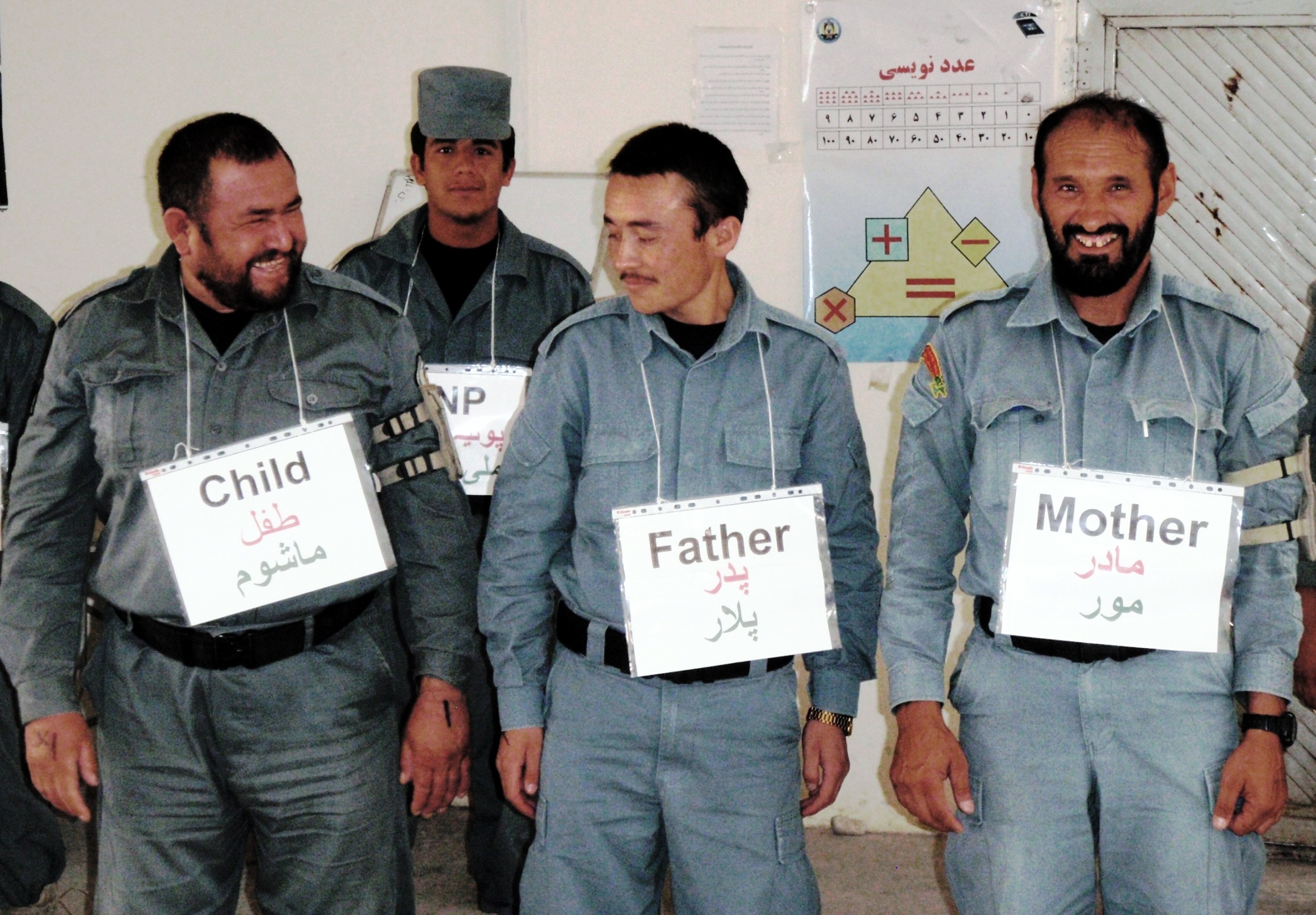
Afghan National Policemen participating in an interactive exercise during Counter Insurgency Training

Afghan National Policemen participating in an interactive exercise during Counter Insurgency Training

Owens grounds this bold claim in the close relation between the social and an ancient modality of household rule: oikonomia. This is an important move and I, for one, am convinced that an engagement with household management can provide a powerful lens through which to understand the entwinement of the social and the international. Such a lens resonates with Hannah Arendt’s insight that, in modernity, “we see the body of peoples and political communities in the image of a family whose everyday affairs have to be taken care of by a gigantic, nation-wide administration of housekeeping” (The Human Condition, p.28). And for Arendt too, ‘the social’ is infused with the logic of household management, turning modern ‘society’ into a mode of government based on specific and historically situated relations of reproduction. In fact, I would argue that Arendt’s proto-biopolitical argument has much to offer to Owens’ project.

Continue reading

Home-ology; Being a Comment On Patriarchs and Patriarchy in Economy of Force

This is the second contribution to a forum on Patricia Owens’ Economy of Force. More to follow in the coming days.


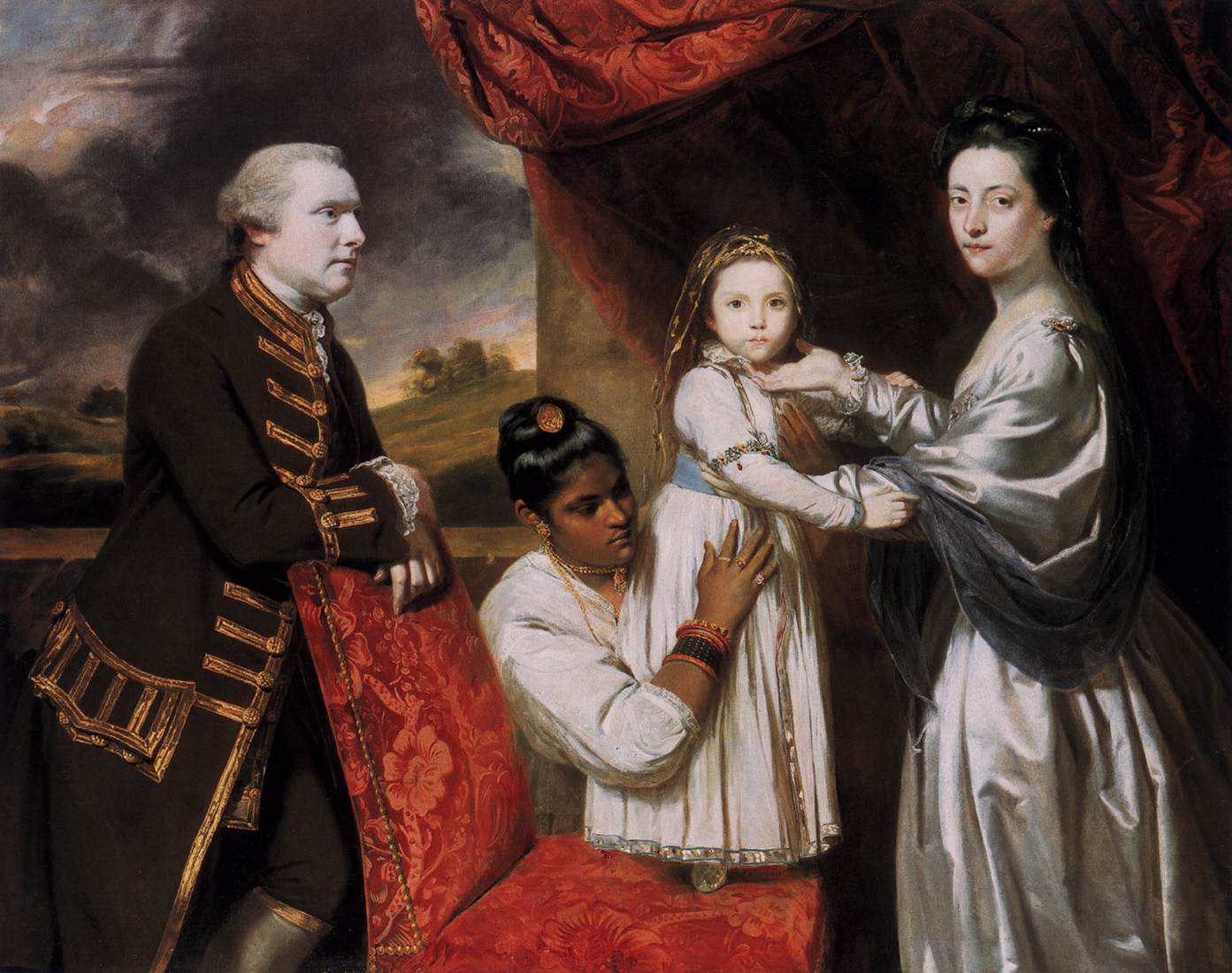
Joshua Reynold's portrait of Clive of India, director of the East India Company, c. 1765

Joshua Reynold’s portrait of Clive of India, director of the East India Company, c. 1765

What to say about Economy of Force, Patricia Owens’ wildly ambitious contribution to international political theory?[1] A book that threatens to overwhelm, whether with the vast literature it marshals or in its brazen assault on (almost all) social theory. A book that consistently degrades the “intellectual crutch” of sociality, offers an arresting agenda for historical and political analysis, and then delivers a revisionist account of late colonial and ‘post-colonial’ counterinsurgency of its own. Amidst the parade of detail and argument, a book in which you will also discover a nascent theory of patriarchy. Arguably more, Economy of Force presages nothing less than the groundwork for a unification of feminist and international political theory.

As we have already seen, Owens’ critique of ‘the social’ as a category of thought and practice involves reviving the alternative to it: oikonomia, economy in its original sense. More precisely, Economy of Force dispenses with the usual distinction between a time when the family household was the primary site of power (feudal, certainly pre-modern, personalist, and status-based) and the contemporary distribution of political, economy and civil power in something we call ‘society’ (properly modern, bureaucratic or networked, and contract-based). Instead of telling stories in which the household is overcome by society, we should, on this account, recognise that ‘the social’ is a historical transformation of the household form. The change in the form of household governance is real, but the stories told about the change are fictions. The current hegemonic story – social theory itself – has as its effect the obscuring of power as domestication. In other words, our conventional narrative of how the household disappeared provides ideological cover for the fact that the household is still very much with us.

Oikonomia, or household governance, is rule characterised by a father figure (paterfamilias) whose power is more or less that of a despot. Since despot means ‘master of the house’, you might expect International Relations scholars to have noticed, or to be alert to their own repeated tendency to name as ‘domestic’ whatever is not part of global politics proper. Instead, these threads must be uncovered, recovered, constructed and mapped anew.

Continue reading