International Relations versus Punk Rock (Slight Return)

Nothing could compromise a joint blog project more than disagreement over music. Luckily, this much-delayed follow-up to Joe’s sonic assault on global politics gets to play the role of supplement and supplicant, and not that of adversary. And no, it’s not bloody Christmas-themed.


Nobody was as fully aware of the properly traumatic dimension of the human voice, the human voice not as the sublime, ethereal medium for expressing the depth of human subjectivity, but the human voice as a foreign intruder, nobody was more aware of this than Charlie Chaplin [in The Great Dictator]…Silent figures are basically like figures in cartoons, they don’t know death, they don’t know sexuality even, they don’t know suffering, they just go on in their oral egotistic striving, like cats and mouse in a cartoon: you cut them into pieces, they’re reconstituted. There is no finitude, there is no mortality here. There is evil, but a kind of a naïve, good evil, you are just egotistical, you want to compete, you want to hit the other, but there is no guilt proper. What we get with sound is interiority, depth, guilt, pulpability, in other words the complex oedipal universe. The problem of the film is not only the political problem, how to get rid of totalitarianism, of its terrible seductive power, but it is also this more formal problem, how to get rid of this terrifying dimension of the voice. Or, since we cannot get rid of it, how to domesticate it, how to transform this voice nonetheless into the means of expressing humanity, love, and so on…

[Chaplin’s character] delivers his big speech about the need of love, understanding between people, but there is a catch, even a double catch: people applaud exactly in the same way as they were applauding Hitler. The music that accompanies this great humanist finale, the overture to Wagner’s opera Lohenngrin is the same music as the one we hear when Hitler is daydreaming about conquering the entire world and where he has a balloon in the shape of the globe, the music is the same. This can be read as the ultimate redemption of music, that the same music which served evil purposes can be redeemed to served the good, or it can be read – and I think it should be read – in a much more ambiguous way, that with music we cannot ever be sure, insofar as it externalises our inner passion music is always potentially a threat.

Slavoj Žižek, The Pervert’s Guide To Cinema

We humans are a musical species no less than a linguistic one.

Oliver Sacks, Musicophilia: Tales of Music and the Brain


1. Fugazi, ‘Smallpox Champion’, In On The Kill Taker (1993)

Smallpox champion, U S of A
Give natives some blankets
Warm like the grave
This is the pattern cut from the cloth
This is the pattern designed to take you right out, right out, right out
This is the frontier with winter’s so cold
Greed informs action where action makes bold
To take all the cotton that’s cut from the stalk
Weave the disease that’s gonna take you right out, right out, right out
What is good for the future what was good for the past
What is good for the future…won’t last
Bury your heart U S of A
History rears up to spit in your face
You saw what you wanted
You took what you saw
We know how you got it
Your method equals wipe out, wipe out, wipe out
The end of the frontier and all that you own
Under the blankets of all that you’ve done
Memory serves us to serve you
Yet memory serves us to never let you wipe out, wipe out, wipe out
Cha-cha-cha-champion
You’ll get yours
Wipe out

2. Ani Difranco, ‘Fuel’, Little Plastic Castle (1998)
Continue reading

International Relations versus Punk Rock

Today I was re-reading a piece by Kevin Dunn, “Never mind the bollocks: the punk rock politics of global communication,” and it lead me to wonder how far one’s route into the study of world politics affects how one perceives the “object” of inquiry. Dunn starts out by stating:

I am increasingly concerned about the ways that International Relations (IR) as a discipline seems unable to communicate to everyday citizens about issues of tremendous importance. I am repeatedly struck by our inability to speak to the people whose lives are affected daily by the issues we are supposed to be studying. More importantly, I am struck by how irrelevant we and our work can seem to the world’s population.

In 2003, I grappled quite openly and vocally with this alienation. The annual International Studies Association (ISA) Conference was being held in Portland, Oregon that year. Throughout the hallowed halls of the soul-numbing conference hotel, the discipline of IR was displaying its strengths and weaknesses. The US and its ‘ coalition of the willing’ were on the verge of invading Iraq. But within the ISA, there was little attempt to grapple with what this meant. My few attempts to stage some form of protest and intellectual outrage proved heart-warming but ineffectual. Then, at the end of the week, I went to a punk club a few blocks from the hotel to see a Joe Strummer tribute show. Joe Strummer, the frontman for the Clash, had died suddenly a few months before, and now over twenty bands from all over the region were coming together to play a benefit show. Each band performed two or three Clash songs; one band getting up after the other, sharing amps and a drum set. On stage, the bands were using the songs to make sense of the dangerous world we all found ourselves in. The in-between song banter reflected this – comments about President George W. Bush, remarks about American fascism, concerns about the impending war on Iraq, and pleas to register to vote. The kids in the club were using the Clash and punk rock, much as I did years before, to help them understand the world they were inheriting. While the discipline of IR pontificated down the street to itself about world affairs, I swirled in the mosh pit wondering: what relevance did I and the ISA have to these kids? Sadly, it seemed to me that we as a discipline were doing a poor job communicating with most of the people outside that conference hotel.

Leaving aside Dunn’s very interesting analysis of punk rock’s role as a form of counter-hegemonic global communication and subversive political message, the opening lines resonated in a profound way for me, as I share Dunn’s experience of punk music providing a frame for engaging with world politics. This leads me to the question: how does our route into the study of world politics affect our work? Continue reading

Fred Halliday and ‘The Mid-Atlantic Journal of Inverted Abstraction’

The next few days at LSE will see a number of events celebrating the life, and exploring the ideas, of the late Fred Halliday. Indulging in some narcissism-by-proxy, we’re pointing out that there’s an early assessment of his intellectual trajectory and legacy by Alex Colás and George Lawson freely available from Millennium (already mentioned elsewhere).

The Mid-Atlantic Journal of Inverted Abstraction was an imaginary output for work Halliday deemed excessively introverted or self-regarding. There is some argument to be had about that attitude to (some) theory. But not now. Instead, a few other choice Fred-isms:

History repeats itself: the first time as tragedy, the second time as farce, the third time as a fad in IR theory.

The ESRC is a four letter word.

One good post-graduate seminar is worth a thousand anti-ageing creams.

In his less charitable moments, he is said to have spoken of ‘Floor 7 Disease’, referring to the Millennium office, as a catch-all for the navel-gazing abstracters in our midst. It seems appropriate to point that many of the other Millennium articles currently (if temporarily) freed from the tyranny of the paywall, to my mind at least, resist such a dismissal. I would particularly recommend Gideon Baker‘s historical-reconstruction-cum-Derridean-intervention on hospitality and haunting in the colonial encounter:

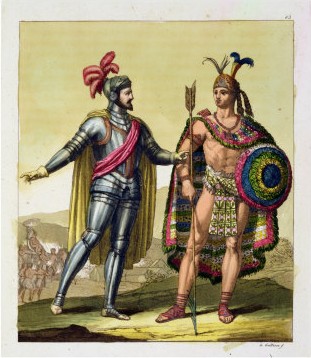
The neglected history of hospitality teaches us that unconditional hospitality, such as that which Montezuma showed to Cortés, can unleash an annihilating violence in which sovereignty and identity, much more than being ‘problematised’, are obliterated in an orgy of violence. The ghost of Montezuma reminds us that unlimited hospitality is haunted too. The Spanish, totalling around 300 men, were outnumbered a thousand to one; Montezuma could have prevailed and his homeland could have survived, at least for a time, if he had not offered an unconditional welcome.