In the spirit of Sociological Images, some postcards recently acquired in Amsterdam. Principally produced to profit the French Red Cross and general effort in World War I, there’s also a more domesticated military masculinity apparent in the ‘Neerland’s Weermacht’ (Dutch Army) card posted in 1939. The artist for the middle set of four (the letter, the gas, the cemetery-orphanage, the seduction) is Louis Raemaekers.
Militaries and Militarism

Understanding Peacekeeper Sexual Violence

Why do soldiers rape? When footage of peacekeepers from MINUSTAH, the UN mission in Haiti, gang-raping an 18-year old boy surfaced earlier this month, that question resurfaced with it. Official declarations have predictably stressed how unfortunate it is that the actions of ‘a few’ should taint the efforts of ‘the many’, although 108 Sri Lankan peacekeepers were expelled from Haiti for sexual exploitation in 2007, and another Uruguayan soldier was recently discharged for sexual relations with a Haitian minor. Certainly, patterns of similar abuse are not restricted to the Haitian mission. One of the more disturbing points in my brief fieldwork in the Democratic Republic of Congo was when an international human rights official told me, with an almost confessional seriousness, that they had feared more for their sexual integrity while travelling with UN peacekeepers than when interviewing Congolese soldiers.
When discussing rapacious African warriors, it is common to interpret sexual violence as part of a drive to accumulate resources or as the reflection of communal hatred in war. Peacekeeper sexual violence constitutes something of a control case in such debates, since it is much harder to link rape to these dynamics. There is no genocidal project for which peacekeepers are the foot soldiers, and they cannot really be said to be frustrated by poor pay and conditions. Certainly there have been links between sexual exploitation by UN peacekeepers and a kind of trade, although in the opposite direction than usually posited. In the case of UN missions, it has been peacekeepers who have exchanged goods for sex with locals, rather than using rape as a means of accessing additional resources for themselves (although they have also been implicated in other criminal networks for financial gain). Peacekeeper practices of sexual abuse are thus closer to sex trafficking and prostitution on a continuum of gendered exploitation than to models of rape as a tool of terror to facilitate resource capture.
Looking Beyond Spring for the Season: Echoes of Time Before Tahrir Square
This is the fifth and last part in a series of posts from Siba Grovogui, Professor of International Relations and Political Theory at John Hopkins University. The first part is here; the second here; the third here; the fourth here. The series considers the character and dimensions of the tension between the African Union and ‘the West’ over interventions in Africa. As before, responsibility for visuals adheres solely to Pablo K.
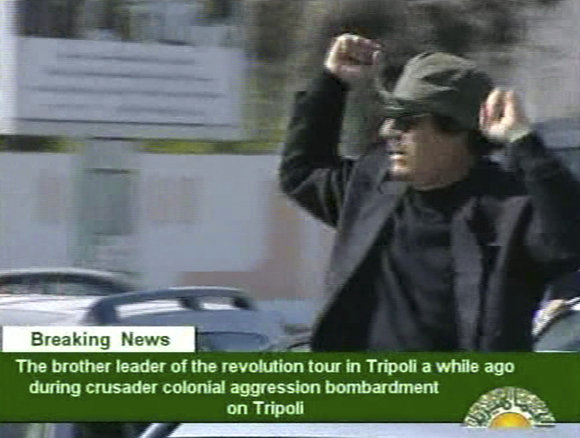 It would be disingenuous to relate events in North Africa and the Middle East (or MENA) today without reference to the media. Here too, there are many possible angles to examine. I will focus on the institutional support that the media provide in shaping consensus in support of foreign policy. In this regard, so-called mainstream Western media and networks (BBC, CNN, Fox, RFI and the like) have played a significant role in generating domestic support for the Libyan campaign. The media find themselves in the contradictory positions of both providing sustenance to foreign policy rationales and reporting on government actions. In this role the media either wittingly or unwittingly assumed the position of justifying contradictory Western foreign policy aims while trying to satisfy the needs of their audiences (especially domestic constituencies and home governments) for information from the front. Consistently, the media often generate sympathy for foreign actors or entities that either support Western interests or have affinities for Western values.
This role is not without a cost, especially when foreign policy actions, including wars, fail to attain their objectives. When the outcome of foreign policy proves disastrous, Western media also have an inexhaustible capacity to either ignore their prior support for the underlying causes or to reposition themselves as mere commentators on events over which they had no control or could not prevent. Increasingly, these tendencies have spread around the world as evidenced in the techniques and styles that have propelled the Qatari-based Al Jazeera into prominence as key contender in the emergent game of production, circulation, and consumption of foreign policy-concordant images for their affective and ideological effects.
So it is not surprising that the backdrop and background scenarios for most reporting on the 2011 revolts in MENA are dimensions of Orientalism, of which they are many. But the most constant is one of autocratic ‘barbarism’. In this regard, the discourses and media techniques for creating and supporting sympathetic figures are just as constant (or invariable) as Western states rationales for intervention. The media-hyped stories of Oriental despotism that preceded Operation Desert Storm, when the US expelled Iraq from Kuwait, have provided the template. During that event, for instance, media feted their viewers with stories of invading Iraqi hordes storming through hospital only to disconnect incubators and let helpless infants die a slow death. These and many stories of heroic bids by US soldiers to prevent such barbarism were later discredited but not the other horrific stories which convinced US citizens of the need to wage war on Saddam Hussein’s occupying army. In the Libyan case today, one of the earlier images of the aura of impunity created by Gaddafi was that of a Libyan female lawyer who was allegedly raped by Gaddafi’s forces. There was also a reported event of military takeover of a hospital.
Looking Beyond Spring for the Season: Democratic and Non-Democratic Cultures
This is the fourth part in a series of five posts from Siba Grovogui, Professor of International Relations and Political Theory at John Hopkins University. The first part is here; the second here; the third here. The series considers the character and dimensions of the tension between the African Union and ‘the West’ over interventions in Africa. As before, responsibility for visuals adheres solely to Pablo K.
 It is not accurate to say that the African Union has been indifferent to the conflict in Libya. If there has been silence in Africa, it has to do with the extent to which the ‘maverick’ Colonel (Gaddafi) has angered some of his peers over the years by interfering in the affairs of such states as Nigeria, Liberia, Burkina Faso, Sierra Leone and others, with disastrous effects. Even when, as in Sudan and Uganda, officeholders have welcomed his entreaties, large segments of the populations have not appreciated them. Yet, regardless of their personal views of Gaddafi and their political differences with him, African elites and populations have yearned for a more positive, conciliatory, and participatory solution to outright regime change or the removal of Gaddafi preferred by the West. This variance, I surmise, comes from a positive understanding of postcoloniality that include forgiveness, solidarity, and democracy and justice, as exhibited in post-apartheid South Africa and post-conflict Liberia, Angola, Mozambique, and the like.
In opting for negotiated mediation and a new constitutional compact, therefore, the African Union (or AU) aimed to foster a different kind of politics in Libya – admittedly one that has escaped many of the states endorsing that position. As articulated by Jean Ping, the Secretary General of the AU, the Libyan crisis offered an opportunity “to enhance a self-nourishing relationship between authority, accountability and responsibility” in order to “reconstitute African politics from being a zero sum to a positive sum game” toward one “characterized by reciprocal behavior and legitimate relations between the governors and the governed.” Mr. Ping added two other dimensions to his vision. The first is an acknowledgement that events in Libya point to the fact that all Africans “yearn for liberty and equality’ and this yearning is “something more consequential than big and strong men.” The second is that Africa’s destiny should be shaped by Africans themselves based on an actualized “sense of common identity based, not on the narrow lenses of state, race or religion, but constructed on Africa’s belief in democracy, good governance and unity as the most viable option to mediate, reconcile and accommodate our individual and collective interests.”
Coming from a politician, these words may read like slogans. But the uniform refusal of the AU to endorse Western intervention tells another story. Continue reading
Looking Beyond Spring for the Season: The West, The African Union, and International Community
This is the third part in a series of five posts from Siba Grovogui, Professor of International Relations and Political Theory at John Hopkins University. The first part is here; the second here. The series considers the character and dimensions of the tension between the African Union and ‘the West’ over interventions in Africa. As before, responsibility for visuals adheres solely to Pablo K.
 The oblivion of commentators to these possible African objections has been less than helpful to understanding the actualized Western intervention itself; emergent African ideas on democracy and security; and the actual place of international morality in international affairs. Underlying the African apprehension to military intervention is a long-standing tension between international organizations that represent Africa, on one hand, and self-identified representatives of the West, on the other, over the meaning of international community as well as the source, nature, and proper means of implementation of the collective will. The dispute over the meaning of international community and the collective will has been particularly salient in Africa because, as a political space, Africa has been more subject to military interventions than any other geopolitical space in the modern era. These interventions have reflected contemporaneous relations of power, permissible morality, and objects of desire: from proselytism to fortune-seeking, trade, extraction of raw material, and the strategic pursuit of hegemony. Indeed, it is hard to remember a time since the onset of the slave trade when there was no open conflict between the majority of its states and the West over some dimensions of global governance that implicated the notion of the commons or international community.
The postcolonial era has not brought about any change to this situation. Since the end of World War II and the institution of the United Nations system, the plurality of African political entities have confronted self-appointed representatives of the West over the ethos of UN procedures (involving transparency and open access to the channels of decision-making) and the mechanisms of dispute mediation (including the determination of the principles and applicability of humanitarian interventions in a number of cases). One need only recall the political, legal, and military confrontations between African states and former Western colonial powers over Apartheid South Africa’s mandate over South West (which involved the legality and morality of colonial trusteeship); the French war on Algeria (which involved the legality and legitimacy of settler colonialism); the wars of decolonization in the former Portuguese colonies of Angola, Guinea Bissau, and Mozambique (which involved the principles of majority rule through open elections which communists might win); the unilateral declaration of independence by the white minority in Southern Rhodesia (which involved the principle of white-minority rule in postcolonial Africa); and the legality and morality of apartheid (which involved the principle of self-determination and majority rule). The underlying antagonisms contaminated deliberations throughout the UN system (particularly General Assembly proceedings) and involved all major issues from the Palestine Question to the Law of the Sea to other matters of trade and intellectual property. They reached a climax at the time of exit of the US and Great Britain from UNESCO, which was then directed by Ahmadou Mathar Mbow, a Senegalese diplomat and statesman.
These and other contests have shared a few singular features. One is a Western insistence on representing the essential core and therefore will of something called international community. In any case, the label of international community has often been reserved for Western entities in relations to others, who remain the object of intervention on behalf of the international community. This is to say that the term ‘international community’ has had political functionality in relations of power and domination in which Europe (and later The West) subordinated ‘Africa’. The relevant tradition can be traced back to the opening moments of the modern era, particularly during the ascension of The West to global hegemony. While it has undergone changes over time, the embedded imaginary of international community and its will have been built around artificially fixed identities and politically potent interests. Accordingly, the identity of the West, and therefore the international community, flows from a theology of predestination, formally enunciated as the Monroe doctrine in the US or the Mission Civilizatrice in France.
Looking Beyond Spring for the Season: Common and Uncommon Grounds
This is the second part in a series of five posts from Siba Grovogui, Professor of International Relations and Political Theory at John Hopkins University. The first part is here. The series will consider the character and dimensions of the tension between the African Union and ‘the West’ over interventions in Africa. Responsibility for visuals adheres solely to Pablo K.
 As I indicated in my last post, the decision by the African Union (or AU) to not endorse the current military campaign in Libya has been mistaken by many observers and commentators alternatively as a sign of African leaders’ antipathy to political freedom and civil liberties; a reflexive hostility to former colonial powers, particularly France and Great Britain; a suspicion of the motives of the United States; and more. The related speculations have led to the equally mistaken conclusion that the African Union is out of step with the spirit of freedom sweeping across the Middle East and North Africa (or MENA). The absurdity of the claim is that the only entity that imposed any outline of solution agreeable to Gaddafi has been the African Union and this is that Gaddafi himself would not be part of any future leadership of the country. But the AU has insisted on an inclusive negotiated settlement. The purpose of this series of essays is not therefore to examine the meaning and implications of the absence of ‘Africa’ on the battlefield of Libya, but to point to the larger geopolitical implications of the intervention for international order, global democratic governance, and the promotion of democratic ideals and political pluralism in the region undergoing revolution and beyond.
To begin, it is not just ‘Africa’, ‘African indecision’, and ‘African non-Normativity’ that are at stake in the characterization of African actions or inactions. Much of what is construed as ‘lack’ or ‘absence’ in Africa is also intended to give sustenance to the idea of the indispensability of the West – composed on this occasion by France, Great Britain, the United States, and tangentially Canada – to the realization of the central ends of the MENA Spring. The myth of the centrality of the West to the imaginary of freedom everywhere is inscribed in the name given to the events under description. In the US at least, the Arab Spring evokes many other ‘Springs’ all located in the West (including the 1968 Prague Spring or the 1989 collapse of the Soviet Union and its satellite states). Likewise, ‘Jasmine’, the emblem of the Tunisian revolt has been advanced as evocative of the Ukrainian ‘Orange’ and other colour-coded European events. These allusions have justifications but they are seldom evoked comparatively to elucidate the originality and specificity of the MENA revolutions. In this latter regard, even the suggestion of an Arab Spring assumes that the majorities in the countries involved are Arab. This is not always the case in North Africa but Orientalism obliges!
The fact is that the ongoing revolutions in MENA are at once specific and universal in their own ways. Continue reading
Reality Mining for Population-Centric Computational Counterinsurgency; Or, Feedback Loops Meet Hermeneutic Circles
Drizzled between the gun battles were occasional accounts of villages stabilized and town elders met. But, written as random notes, the accounts were hard to insert into a database. There was nothing consistent, nothing you could plot as a trend over time.
‘These were intelligence reports, not measurable data,’ the source says. ‘The population-centric information wasn’t to be found there.’
So the team widened their search, without much luck. The most reliable data they could find was weekly fruit prices from Jalalabad, a city in northeastern Afghanistan. At least those could be measured over time.
“One assumed there was some secret mound of data to be exploited. But it’s just not true,” the source adds.
Noah Shachtman, ‘Inside Darpa’s Secret Afghan Spy Machine’
Albright has noted that Iran has material to build only 12,000-15,000 centrifuges, and if 1,000 to 2,000 were destroyed, this would hasten the demise of its stockpile. But his and other organizations have also noted that after the centrifuges were replaced, Iran stepped up its enrichment program and its overall production of uranium had actually increased in 2010, despite any effects Stuxnet may have had.
Stuxnet required an enormous amount of resources to produce, but its cost-benefit ratio is still in question. While it may have helped set Iran’s program back to a degree, it also altered the landscape of cyberattacks…In the end, Stuxnet’s creators invested years and perhaps hundreds of thousands of dollars in an attack that was derailed by a single rebooting PC, a trio of naive researchers who knew nothing about centrifuges, and a brash-talking German who didn’t even have an internet connection at home.
Kim Zetter, ‘How Digital Detectives Deciphered Stuxnet, the Most Menacing Malware in History’

These domestic images must be more than simply one more form of distancing, one more way to remove oneself from the grisly reality behind the words; ordinary abstraction is adequate to that task. Something else, something very peculiar, is going on here. Calling the pattern in which bombs fall a ‘footprint’ almost seems a wilful distorting process, a playful, perverse refusal of accountability – because to be accountable is to be unable to do this work.
These words also serve to domesticate, to tame the wild and uncontrollable forces…The metaphors minimize; they are a way to make phenomena that are beyond what the mind can encompass smaller and safer, and thus they are a way of gaining mastery over the unmasterable. The fire-breathing dragon under the bed, the one who threatens to incinerate your family, your town, your planet, becomes a bet you can pat.
Carol Cohn, ‘Sex and Death in the Rational World of Defense Intellectuals’ (1987)
The ways of thinking embodied in institutions govern the way the members of the societies studied by the social scientist behave. The idea of war, for instance, was not simply invented by people who wanted to explain what happens when societies come into armed conflict. It is an idea that provides the criteria of what is appropriate in the behaviour of members of the conflicting societies. Because my country is at war there are certain things which I must do and certain things which I must not do. My behaviour is governed, one could say, by my concept of myself as a member of a belligerent country. The concept of war belongs essentially to my behaviour. But the concept of gravity does not belong essentially to the behaviour of a falling apple in the same way: it belongs rather to the physicist’s explanation of the apple’s behaviour. To recognise this has nothing to do with a belief in ghosts behind the phenomena.
Peter Winch, The Idea Of A Social Science And Its Relation to Philosophy (1958)
Damage, Reincorporated: A Carbon-Based Author Responds

Paul has produced a couple of highly stimulating posts (here and here) reviewing three books concerned with the contemporary interface between war and technology (Manabrata Guha’s Reimagining War in the 21st Century, James Der Derian’s Virtous War and my own The Scientific Way of Warfare) and that involve both pointed comments on the respective texts and some wider considerations of the challenges posed by the study of present transformations in the exercise of collective violence. With so much to reflect upon, a full post is called for in order to respond to the rich lines of thought suggested by Paul and I will attempt to do so here, however incompletely, by taking on specific comments directed at my own work before offering some brief remarks on its relation to the two other books reviewed.
War is War, PERIOD
Paul points to the limitations inherent to the periodisation I propose and I would accept that, for all the caveats and qualifications I have sought to make, the neatness of the technoscientific typology developed inevitably leaves it open to a range of criticisms. It necessarily occludes or minimises the other influences that have impacted military change, it papers over much of the cultural and historical particularities of national military organisations, and it does not really allow for the ebb and flow of different doctrines that cut across different periods. The empirical evidence supporting such a periodisation is likewise obviously selective and, at their weakest, I think the connections I draw between scientific ideas and military practice are more impressionistic than as thoroughly substantiated as I could have wished. Sweeping as it does through four hundred years of history, the work is unabashedly a much more generalising and grand theorising undertaking than the careful and painstakingly detailed studies into the interplay of technoscience and war that have been produced within the field of science and technology studies on topics such as missile guidance or the origins of cybernetics and therefore may well have fallen prey to some of the pitfalls of such a perilous exercise. At the very least though, I would hope the typology is a useful heuristic device for thinking through various tensions inherent to the organisation and application of military force.

In its more forceful defence however, the typology is not intended to imply that in any given period all contemporaneous ideational and social constructs are ruled by the scientific and technological frameworks of the day (something which my use of the term “technoscientific regime” might unfortunately suggest – I remember agonising a long time over the terminology and never settled it to my entire satisfaction). Rather these frameworks act as pregnant sources of meaning among others but with the particularity that they are endowed with the special prestige granted to scientific rationality in modern societies (science in turn being shaped by its wider cultural and institutional settings). In this sense, the notions of metaphor and resonance I employ point to a much more partial and piecemeal role in the shaping of thought than the episteme presented in Foucault’s The Order of Things and in this more limited regard I think the periodisation continues to stand up quite well.
Looking Beyond Spring for the Season: An African Perspective on the World Order after the Arab Revolt
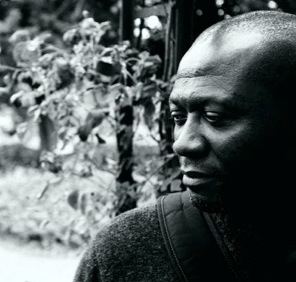 The first of a series of posts by Siba Grovogui, Professor of International Relations and Political Theory at John Hopkins University (followed by a second, third, fourth and fifth installment). He is the author of Sovereigns, Quasi-Sovereigns and Africans: Race and Self-Determination in International Law and of Beyond Eurocentrism and Anarchy: Memories of International Orders and Institutions, as well as a number of articles on race, sovereignty, postcoloniality and human rights and what the history of slavery tells us about the contemporary discourse of international politics. Reposted from The Contemporary Condition. Images by Pablo.
There is much misunderstanding today about the decision of African Union (AU) to not endorse the military intervention in Libya undertaken by France, Great Britain, and the United States in conjunction with a few Arab States. Speculations abound as to whether the uniform decision coming out of Africa indicates that the African Union is out of step with the spirit of freedom sweeping across North Africa and the Arab World; or whether the absence of Africa in the battlefield of Libya merely suggest military ineptitude and political bankruptcy. In fact, it is not accurate that the African Union has been indifferent to the conflict in Libya. The AU opted for mediation and negotiated constitutional compact, with the aim of fostering a different kind of politics. The uniform refusal of the AU to endorse Western intervention has two main explanations. The first is the practice of consensus in decision-making which has long history within Africa. The other is profound unease on the continent about the form and foundation of the intervention itself.
I suggest that there is continent-wide scepticism in Africa about Western leadership in the eras of global governance, the rule of (international) law, the status of international morality, and the future of global democracy. This development is the result of continental experiences with the modes of enactment and execution interventions in Africa. The African position arises therefore from doubt that the coalition of Western powers leading the military effort in Libya today can be trusted to not abuse legitimate anti-Gaddafi sentiments; to not instrumentalize international law and morality; and to not subvert UN procedures and the mechanisms of global governance in order to advance hegemonic agendas and parochial ‘strategic’ interests. In short, underlying the African objection to military intervention is a long-standing tension between international organizations that represent Africa and the self-identified ‘West’ around the representations of the will of the international community, the resulting global democratic deficit in times of intervention, and their effects on international morality, including the principles of humanitarianism.
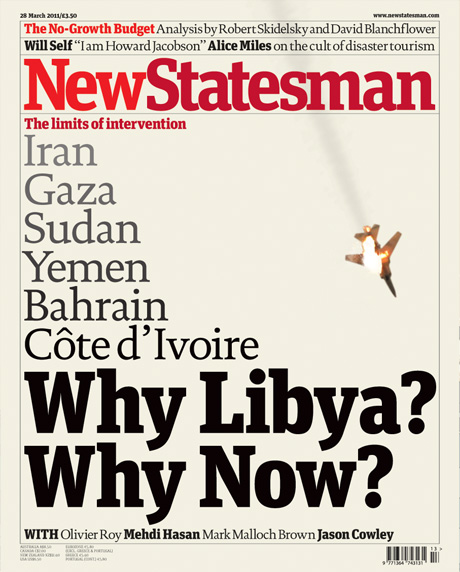 In relating this conflict, I do not wish to speak for a uniformly-defined ‘Africa’ and/or for all African entities. Continue reading
Damage, Unincorporated*, Part Two: War Studies in the Shadow of the Information Bomb

I’m thinking about something much more important than bombs.
I am thinking about computers.
John von Neumann, 1946 (via The Scientific Way of Warfare)
Modern war has become too complex to be entrusted to the intuition of even our most trusted commander. Only our giant brains can calculate all the possibilities.
John Kemeny, 1961 (ditto)
‘Extreme science’ – the science which runs the incalculable risk of the disappearance of all science. As the tragic phenomenon of a knowledge which has suddenly become cybernetic, this techno-science becomes, then, as mass techno-culture, the agent not, as in the past, of the acceleration of history, but of the dizzying whirl of the acceleration of reality – and that to the detriment of all verisimilitude.
Paul Virilio, The Information Bomb (1998)
Non-Consensual Hallucinations
A recent spate of cyber-attacks, and the civilian-military responses to them, have pushed questions of collective violence, technological complexity and the very relation between war and peace into a more mainstream arena. Alongside diagnoses of the political impact of Web 2.0, the analysis of contemporary technoscience and its militarised uses seems less neophiliac marginalia than urgently-required research program. As previously indicated in Part One of this review, a number of recent works have broached this subject, and in the process have addressed themselves to the very relation between bios and technos, sometimes with the implication that the latter is on the verge of overwhelming the former. Skynet gone live!
Critical engagement with the boundaries and possibilities of Network-Centric Warfare (NCW) thus opens a range of complex problems relating to the co-constitution of war and society, the place of ethics in military analysis (and military practice) and the adequacy of standard categories of social science to world-changing inventions. To expect answers to such broad questions is perhaps to overburden with expectation. Yet it is interesting to find that both Guha and (Antoine) Bousquet, who are most concerned with the radical newness of contemporary war, implicitly operate within a rather traditional understanding of its boundaries. For both, ‘war’ means the restricted arena of battlespace, and in particular that battlespace as viewed by the soldiers and generals of the United States of America.
James Der Derian is intrigued by many of the same questions, but his view is more expansive, and his diagnosis of the connection between NCW and international politics generally more comprehensive. Continue reading
 The Disorder Of Things