A Martial Gaze Conscious of Itself

Enter the final contributor to our symposium on Antoine’s The Eye of War (University of Minnesota Press). After the author’s opening post and pieces from Katharine HallDan Öberg, and Matthew Ford, our very own Jairus Grove steps up to the plate. Jairus is Associate Professor at the Department of Political Science in the University of Hawai’i at Manoa and the Director of the Hawai’i Research Center for Futures Studies.  His forthcoming book Savage Ecology: War and Geopolitics at the End of the World will be published by Duke University Press in 2019.


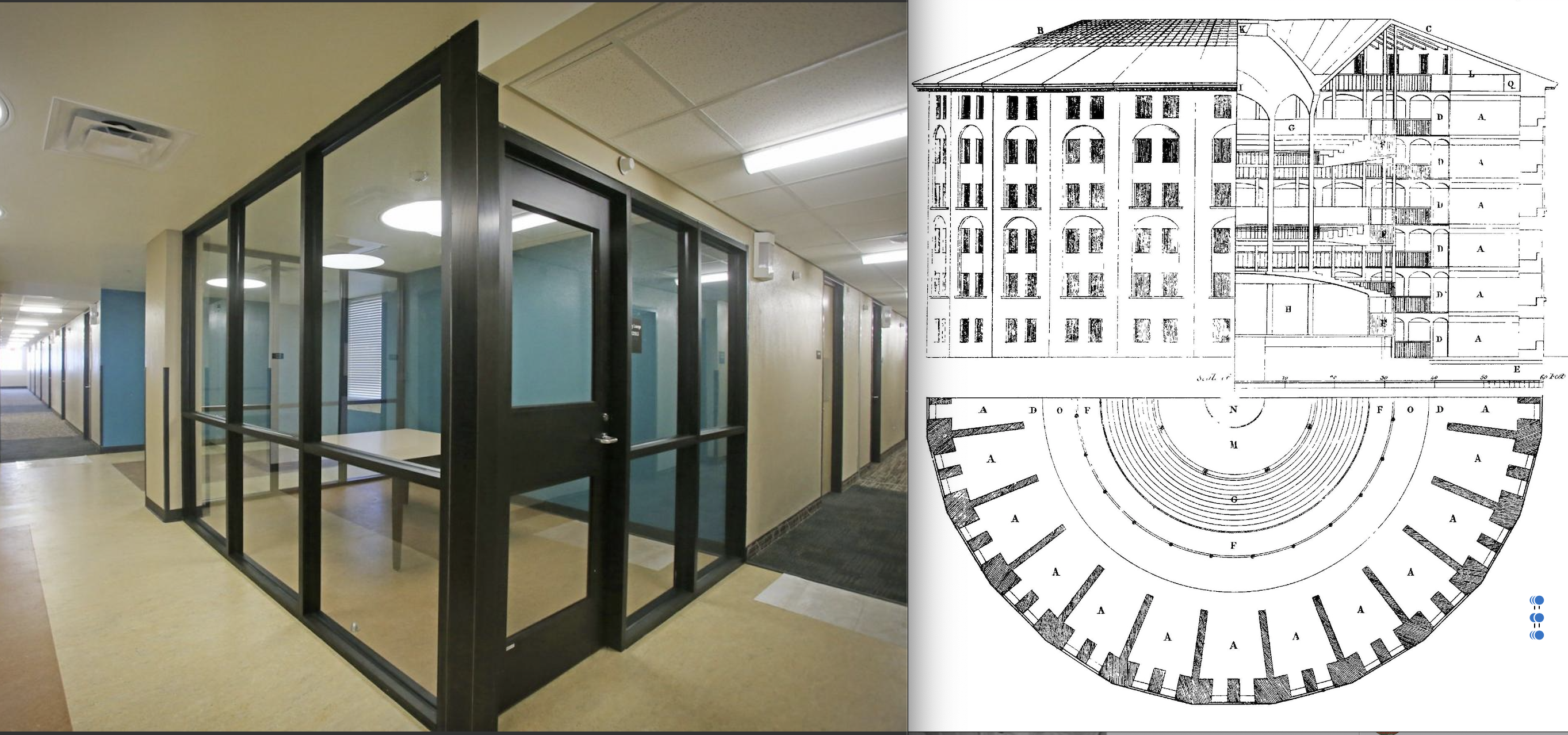
Leafing back through The Eye of War’s evocative images of zebra-striped naval destroyers, pigeon-powered targeting systems, and steampunk-worthy ‘binaural acoustic aircraft detectors,’ I am reminded of how vital prototypes, designs, and never deployed gadgets are to Antoine Bousquet’s story of the martial gaze. I want to spend a bit of time thinking through the status of technical things that are more than ideas and less than practical machines with a little help from one of Bousquet’s interlocutors, Gilles Deleuze. At the end of Deleuze’s book on Foucault, he queries what the exact status of the panopticon is. According to Deleuze, the panopticons of Bentham’s dreams were rarely completed, and yet Foucault saw in its schematic the ordering principle of a new historical episteme. Is the panopticon, then, a metaphor, a kind of architectural condensation of discourses in the form of a blueprint? Those who would see ideas at the heart of the matter would hope so. The panopticon in a thinly constructivist reading would be at best the outcome of a changing set of normative relations regarding enclosure, discipline, and reform. 

The reactionary realist would be just as happy with this reading, as they are already prepared to dismiss Foucault as a naïve ideational thinker inured to the formative significance of things. However, Deleuze accepts neither of these positions. He instead describes Foucault’s thought as diagrammatic, that is, “a display of the relations between forces which constitute power… the panoptic mechanism is not simply a hinge, a point of exchange between a mechanism of power and a function; it is a way of making power relations function in a function, and of making a function function through these power relations.” Drawing inspiration from Gilbert Simondon, Deleuze locates Foucault as a machinic thinker investigating “the very tissue of the assemblage” and the “immanent causal” relationship between abstract machines and concrete machines. The diagram or abstract machine of the panopticon comes to inhabit and form what Deleuze calls the “human technology which exists before a material technology” with the concrete machine its execution in the form of schools, factories, prisons, open plan office spaces, ad infinitum. As Deleuze puts it succinctly, “the machines are social before being technical,” where the social is defined by Deleuze, this time drawing from Gabriel Tarde, as any assemblage or collection of relations that exceed, make up, and go beyond the sociology of humans or individuals.

Continue reading

Totalising the State through Vision and War

Another commentary in our series on Antoine’s The Eye of War (University of Minnesota Press), following the author’s introduction and pieces by Katharine Hall and Dan Öberg. This latest intervention comes from Dr Matthew Ford, Senior Lecturer in International Relations in the School of Global Studies at the University of Sussex. Matthew has written extensively on military innovation, science and technology studies, and counter-insurgency. Matthew’s latest works are Weapon of Choice: Small Arms and the Culture of Military Innovation (Hurst, 2017), and (with Alexander Gould), ‘Military Identities, Conventional Capability and the Politics of Standardisation at the Beginning of the Second Cold War, 1970-1980’ in The International History Review. He is in addition the founding editor of the British Journal for Military History, a peer-reviewed open access that caters to audiences outside of academia as well as within.


usa seal


The Eye of War does not draw a connection to the official seal of the United States of America but the book does serve to remind us that among all the world’s powers, the United States has done the most to make the symbol of the all-seeing eye a technological reality. Tracing the pattern of ideas that framed the American political imaginary and subsequent reification of the Eye of Providence is not Antoine Bousquet’s purpose. Instead, Antoine’s book makes a double move. In the first instance, the majority of the work goes wider and draws attention to how technologies of vision personify the Leviathan state (Neocleous, 2003). In the second, it shows how technologies of hiding have undermined battle as a point of decision.

In an effort to develop these lines of reasoning and add my own provocation, I advance a three-step argument. In part one, I draw parallels with James Scott’s Seeing like a State (1998) and argue that the technologies of vision that Antoine identifies reflect the impulse of the state to sedentarise populations in an attempt to assert control over them. Expanding my point, in part two, I argue that the martial desire to achieve decisive battle has been frustrated by camouflage and concealment, technologies that are represented in orientalist terms by Western militaries. Finally, I contend that these modes of seeing have reified Western military strategies into technical systems that in effect reproduce what might best be described as a frustrated Western Way of Warfare (Hanson, 2009), trapping martial thinking in orientalist (Porter, 2009) and counter-productive ways.

Continue reading

Requiem for the Battlefield

The third post in our series on Antoine’s The Eye of War (University of Minnesota Press), following an opening summary and Katharine Hall’s intervention on perspective and subjectivity. This next commentary comes from Dr Dan Öberg. Dan is Associate Professor of War Studies at the Swedish Defence University, where his research focuses on the ontology of war, critical military studies and the thought of Jean Baudrillard. Dan is author most recently of ‘Warfare as Design: Transgressive Creativity and Reductive Operational Planning’ in Security Dialogue and ‘Enduring War: Heroes’ Acre, ‘The Empty Throne, and the Politics of Disappearance’ in Critical Military Studies.


If we look closely, we see that the real world begins, in the modern age, with the decision to transform the world, and to do so by means of science, analytical knowledge and the implementation of technology – that is to say that it begins, in Hannah Arendt’s words, with the invention of an Archimedean point outside the world (on the basis of the invention of the telescope by Galileo and the discovery of modern mathematical calculation) by which the natural world is definitively alienated. This is the moment when human beings, while setting about analyzing and transforming the world, take their leave of it, while at the same time lending it force of reality. We may say, then, that the real world begins, paradoxically, to disappear at the very same time as it begins to exist. (Jean Baudrillard, Why Hasn’t Everything Already Disappeared?)

Antoine Bousquet’s excellent and much anticipated book The Eye of War: Military Perception from the Telescope to the Drone traces how the history of the rationalisation of vision and the mathematisation of space during the Renaissance have enabled an ever expanding martial gaze. Herein the reader, among many things, gets an in-depth look at the changing fields of military perception and the subsequent attempts to hide from its view. As the author notes, this development leads towards the dispersal and disappearance of the battlefield in its traditional sense.[1] In this intervention, I would like to put forward a complementary view of the battlefield in relation to the trajectory traced by the author. This view can be summarised as an insistence that from the end of the 18th century and onwards, the traditional battlefield starts to disappear as it is operationalised through military doctrines, planning, and conduct. Moreover, as a direct consequence, the battlefield reappears, refracted through military attempts to model space and time. Below I attempt to sketch out this dual process of disappearance and reappearance by engaging with the history of the military imaginary which both sees and targets, and which arguably corresponds to that martial gaze of which the book speaks so well.

As The Eye of War illustrates, often through fantastic pictures and drawings from historical times, the introduction of new weapon-systems and their social interpretation influence the possibility of targeting and the remits of the battlefield. Historically, we may perhaps argue that varying conceptions of the battlefield have been part of warfare for as long as there has been strategic dispositions in war, evident particularly in attempts to connect tactical means with strategic ends. At times such connections have been drawn on spatially and temporally demarcated battlefields. However, at other times, we find examples of how the conception of the battlefield challenges such remits. For example, in medieval warfare when a strategy of attrition was employed to starve an opponent, the target was crops and the tactics was to put your army in the field, aggressively devastate the countryside, and live off the land. Here the battlefield expands and the target shifts from the enemy soldier to the milieu in which a system of production is established. Or when the strategy was one of plunder, the target was likely to be a poorly protected enemy fortress and the tactics assaulting its walls and exciting pay, while avoiding surrounding armies through manoeuvre. Consequently, the attempt to operationalise the tactical means into strategic ends, that is, the attempt “to target”, potentially constitutes and challenges the remits of the battlefield.

Continue reading

The Eye of War: A Symposium

Over the coming week, The Disorder of Things will host a symposium on Antoine Bousquet’s new book The Eye of War: Military Perception from the Telescope to the Drone, published last year by University of Minnesota Press. Following today’s introductory post by the author will be contributions from Katharine Hall, Dan Öberg, Matthew Ford, and Jairus Grove before a final rejoinder from Antoine. See also The Eye of War‘s accompanying website for a visual synopsis of the book and special order discounts.

Antoine is a Reader in International Relations at Birkbeck, University of London and a long-standing contributor to The Disorder of Things. His first book was The Scientific Way of Warfare: Order and Chaos on the Battlefields of Modernity (Hurst Publishers & Columbia University Press, 2009). Antoine’s visual-heavy war-centric twitter feed can be found here.

All the entries in this series will be collated here. Previous symposia are also available.


“Visibility equals death.”

This is the stark expression with which strategist Martin Libicki sums up our contemporary martial condition.[1] Indeed, we increasingly live in a world where anything that can be seen can be targeted with lethal force, whatever its position on the globe. The U.S. Air Force certainly has no hesitation in affirming that its “nuclear and conventional precision strike forces can credibly threaten and effectively conduct global strike by holding any target on the planet at risk and, if necessary, disabling or destroying it promptly.”[2]

How have we got to this extraordinary state of affairs? Which concatenation of knowledges, devices, and motives has realised this formidable alignment of perception and destruction? What becomes of war when it hinges on struggles over visibility across planetary battlespaces? Who is the agent of war when it is conducted through technologies that augment, envelop, and supplant human perception? These are the questions that The Eye of War asks and seeks to answer.

Continue reading

The End of The Hague Yugoslavia

The Hague campus of Leiden University today hosted the “Final Reflections” symposium of the International Criminal Tribunal for the former Yugoslavia (ICTY). Everyone from the institution showed up: current and past presidents, current and past judges as well as ad hoc judges, current and past prosecutors, media officers and archivists, plus a bunch of guests—gender advisors, professors, judges from other courts, and so on. Even the president of the International Criminal Court (ICC) spoke at the last panel. This was not a mere stock-taking exercise “between a variety of stakeholders,” says the agenda.  Rather, it was an opportunity for said stakeholders to reflect on the ICTY’s legacy, ideally via a set of “short but emphatic statement[s] on the importance of international criminal courts and tribunals – particularly in today’s political climate.”

Continue reading

Academics Against the Arms Fair: An Open Letter

Last week, about 1500 weapons manufacturers and representatives of more than 100 states descended on London for Defence and Security Equipment International (DSEI) – the world’s largest arms fair. The companies have exhibited products ranging from crowd control equipment and ammunition to fighter jets and military vehicles, which they displayed to militaries, police forces and border agencies from around the world. DSEI is a major event for the international arms trade, and the deals done there play a major role in reinforcing Western militarism, fuelling conflict, repressing dissent and strengthening authoritarian regimes.

Two weeks ago, the Stop the Arms Fair coalition held a week of action in an attempt to prevent the arms fair from taking place. Anti-militarist groups, working in solidarity with activists from countries which have suffered the brutal consequences of the arms trade, held a series of events to disrupt the setup of DSEI. One event during this week was ‘Conference at the Gates’, an academic conference held in front of the arms fair, where participants debated ideas about militarism while taking action to resist it.
Continue reading

Militarism in the Age of Trump, Part II

Based on a paper I am co-authoring with Bryan Mabee. See Part I here.

Nation-statist militarism is the default (‘normal’) setting for militarism in international and global life.  Following Mann, this manifestation of militarism is characterized by some form of civilian control over the armed forces and a state-led economic and social mobilization of ‘destructive’ forces. (Alternative labels are ‘Westphalian militarism’ and even ‘Keynesian militarism’). In claiming the monopoly of legitimate violence, the nation-state prioritized territorial defence; planned, built and consumed from its own arsenals; and engaged in military recruitment practices that reflected and reinforced the prevailing social structures of the nation (whether professionalized or constricted).

This type subsumes what Mann refers to ‘authoritarian militarism’ and ‘liberal militarism’, his main examples coming from Europe–the absolutist polities and their twentieth century authoritarian descendants (e.g. Germany, Russia) versus the polities deriving from the constitutional regimes (e.g. Britain, France).  It even subsumes the militarisms of the post-1945 nuclear age, which include, in Mann’s terminology, sub-types like ‘deterrence-science militarism’ (‘techno-scientific militarism’) and ‘spectator sport militarism.’

Continue reading

Militarism in the Age of Trump, Part I

Part I of a post based on a paper I am co-authoring with Bryan Mabee, Senior Lecturer at Queen Mary, University of London. Bryan is the author of Understanding American Power (Palgrave, 2013), The Globalization of Security (Palgrave, 2009) and co-editor with Alejandro Colás, Mercenaries, Pirates, Bandits and Empires (Hurst/Oxford University Press, 2010).  The paper is being prepared for “Militarism and Security,” a workshop organized later this month at the School of Global Studies, University of Gothenburg by Anna Stravianakis (for her latest appearance on this blog see The Dissonance of Things No 3) & Maria Stern.

Update: Part II added on 18/03/17.

With Donald Trump as the president of the United States, militarism is once again becoming a hot topic. Trump’s appointment of right-wing generals to senior posts in both the White House and his cabinet legitimate militaristic policy discourses and positions, as do the president’s pronouncements about the need to “modernize” the country’s nuclear capability, put America’s enemies “on notice,” massively “rebuild” the military, hold “more military parades” in American cities, deploy the national guard to “restore order” (and possibly “hunt illegal immigrants”) and “streamline” U.S. defence exports.

And all of this is only the proverbial tip of the iceberg. For one thing, the Trump presidency merely empowers an already deeply militaristic and militarized American culture, one that is forever in love with guns and prisons and forever reticent to acknowledge the inherently racialized dimensions of both. For another thing, Trump’s top advisor is the “ethnonationalist” Steven Bannon, who is so influential in the White House that some describe him, tongue only halfway in cheek, as the actual president of the United States. Apparently, Bannon reasons that war between the U.S. and China is likely, given the thorny nature of international disputes in the South China Sea. One could in fact say that beneath the visible iceberg lie powerful and long-standing militarized realities—most of which have been ignored, temporized or marginalized in the earlier, ‘normal’ periods.

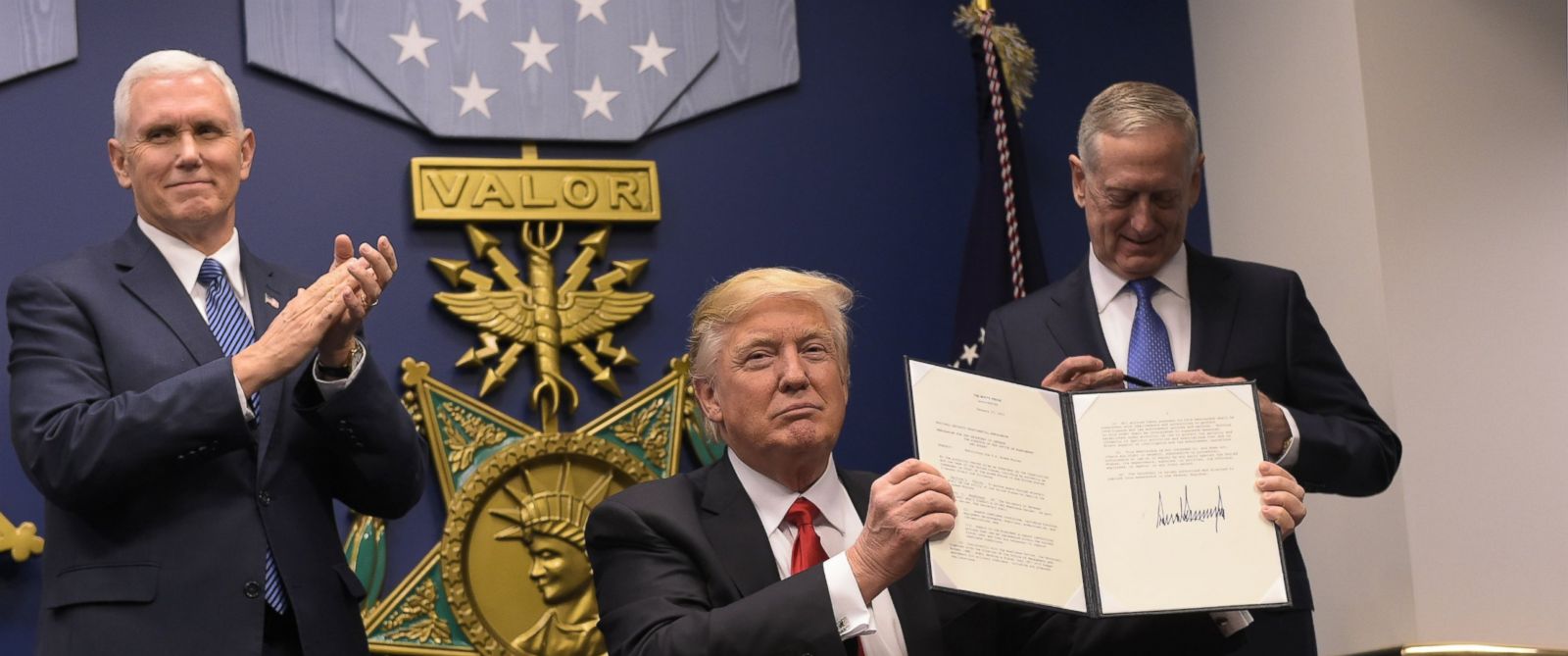
ABC News

Can Critical Security Studies (CSS) help us illuminate militarism in the age of Trump? On one level, yes. Militarism is central to the field’s go-to framework on securitization—meaning, the scrutiny of the ways in which constitutional or ‘normal’ politics are transformed, via speech acts, into ‘exceptions’. The above image, Trump signing the Executive Order banning immigrants, dual nationals and US residents with citizenships from seven Muslim-majority countries from entering the country, suspend refugee admission and bar all Syrian refugees indefinitely, can be said to capture ‘exceptionalist militarism’ at work. Yet, beyond theorizing this one form of militarism, CSS has mostly been silent on the ‘classic’ concern of the literature on militarism—its sources, consequences, and the changing character.

In this two-part post we build on insights from historical sociology to develop a typology of militarism that CSS schools could consider as they try to make sense of political violence today.

Continue reading

Of Course Poppies are Political

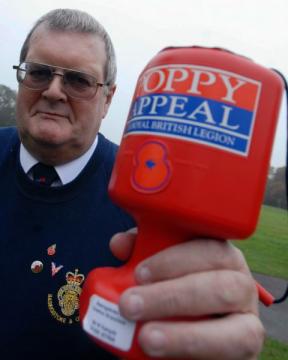
As we approach Armistice Day, which comemmorates the end of World War One, the British media is awash with the usual froth about poppies: the badges sold by a veterans’ group, the Royal British Legion, to raise funds for veterans and their families. This year’s poppy-outrage story is that FIFA has banned British footballers from wearing poppy armbands at this weekend’s matches on the grounds that they are political symbols. The plucky English Football Association plans to defy the ban. FIFA is wrong to ban the armbands, but only because bans on freedom of expression should be opposed in whatever form. But they are, of course, entirely right that the poppy is a political symbol.

poppyappeal261002

Continue reading

The EU Referendum: “We will burn it all down” – War, Blackmail and the Case for the European Union

This is a post in our EU referendum forum. Click here for the introduction with links to all the contributions.


Our next guest contributor to the EU forum is Philip Cunliffe. Philip is Senior Lecturer in International Conflict at the University of Kent and editor-in-chief of the journal International Peacekeeping. He is co-editor, with Chris Bickerton and Alex Gourevitch, of Politics Without Sovereignty (UCL Press, 2007), and author of Legions of Peace: UN Peacekeepers from the Global South (Hurst, 2014).  His most recent book, co-edited with Kai Michael Kenkel, is Brazil as a Rising Power: Intervention Norms and the Contestation of Global Order (Routledge, 2016).
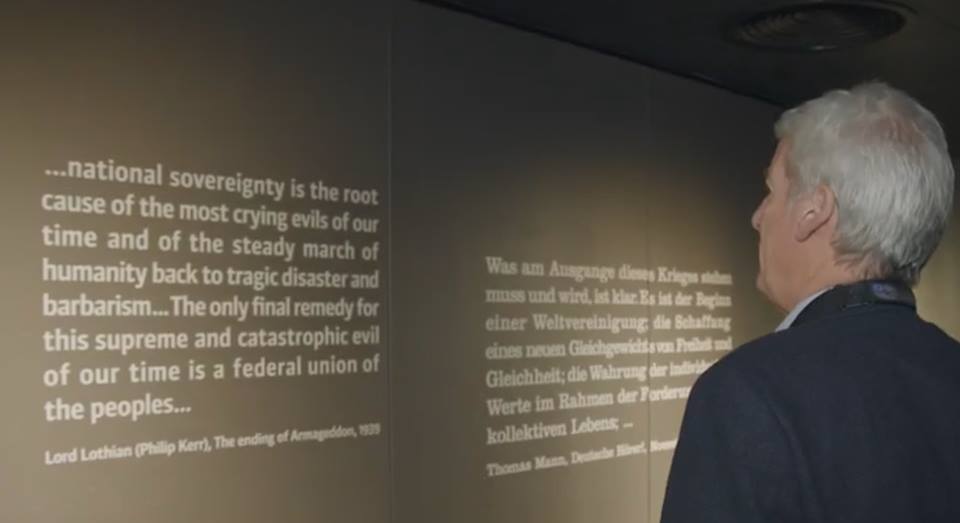

It’s often heard that the European Union (EU) is a peace project – an institution engineered to bring peace, prosperity and stability to a war-torn continent that was at the core of global conflict over the last century. This was the animus behind UK Prime Minister David Cameron’s speech on 9 May 2016, in which he claimed that Britain leaving the EU could lead to renewed rivalries, geopolitical tension and ultimately war in Europe. It is one of the most powerful, popular and enduring claims given in defence of the EU and one that drastically raises the political stakes in the debate over Brexit.

Given that this claim comes from our political leaders, it is a remarkably menacing way of eliciting popular support: Vote for us, they seem to be saying, vote for the European Union, or war will be the result ... That political elites could threaten voters so brazenly while implying their own powerlessness to control the course of events at the same time speaks to the strength of popular (mis)conceptions about the origins of conflict in Europe.

A screenshot from "Paxman in Brussels" (BBC), shot in the EU visitors' centre (h/t Ben Pile)

A screenshot from “Paxman in Brussels” (BBC), shot in the EU visitors’ centre (h/t Ben Pile)

Continue reading