The EU Referendum: “We will burn it all down” – War, Blackmail and the Case for the European Union

This is a post in our EU referendum forum. Click here for the introduction with links to all the contributions.


Our next guest contributor to the EU forum is Philip Cunliffe. Philip is Senior Lecturer in International Conflict at the University of Kent and editor-in-chief of the journal International Peacekeeping. He is co-editor, with Chris Bickerton and Alex Gourevitch, of Politics Without Sovereignty (UCL Press, 2007), and author of Legions of Peace: UN Peacekeepers from the Global South (Hurst, 2014).  His most recent book, co-edited with Kai Michael Kenkel, is Brazil as a Rising Power: Intervention Norms and the Contestation of Global Order (Routledge, 2016).


It’s often heard that the European Union (EU) is a peace project – an institution engineered to bring peace, prosperity and stability to a war-torn continent that was at the core of global conflict over the last century. This was the animus behind UK Prime Minister David Cameron’s speech on 9 May 2016, in which he claimed that Britain leaving the EU could lead to renewed rivalries, geopolitical tension and ultimately war in Europe. It is one of the most powerful, popular and enduring claims given in defence of the EU and one that drastically raises the political stakes in the debate over Brexit.

Given that this claim comes from our political leaders, it is a remarkably menacing way of eliciting popular support: Vote for us, they seem to be saying, vote for the European Union, or war will be the result ... That political elites could threaten voters so brazenly while implying their own powerlessness to control the course of events at the same time speaks to the strength of popular (mis)conceptions about the origins of conflict in Europe.
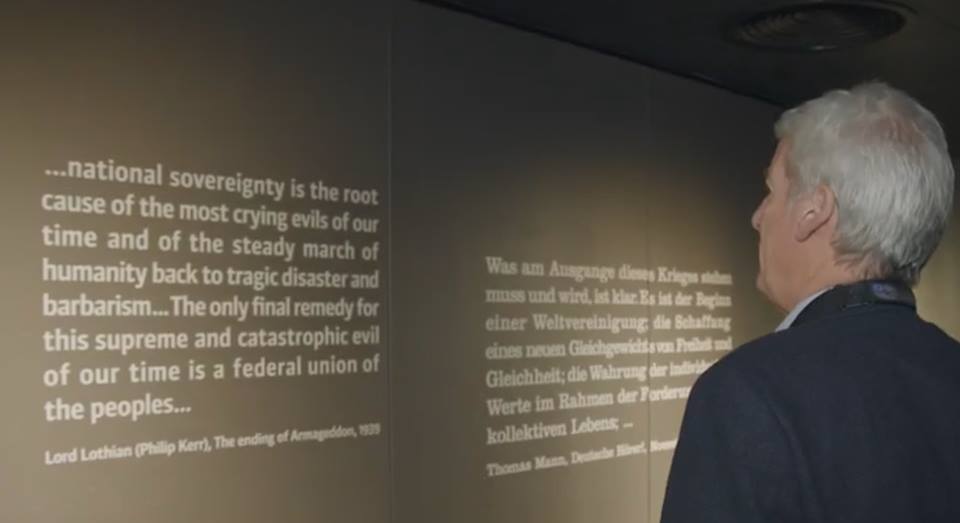
A screenshot from "Paxman in Brussels" (BBC), shot in the EU visitors' centre (h/t Ben Pile)

A screenshot from “Paxman in Brussels” (BBC), shot in the EU visitors’ centre (h/t Ben Pile)

Continue reading

Churchill’s “Iron Curtain” Speech (A Black History Month Perspective)

Truman and Churchill in Missouri

Churchill’s Westminster College audience, March 5, 1946 (Life/Getty Images)

This year is the seventieth anniversary of Winston Churchill’s “Iron Curtain” speech, a.k.a. “Sinews of Peace,” a.k.a., the Fulton address, which means that we will soon be hearing all about it once again. The speech is central to the iconography of the Cold War, of anti-communism, and of Anglo-American specialness. Countless historians, biographers and rhetoreticians have examined almost every aspect of it: when and where it was written, whether it was pre-approved by others, including President Truman, and, indeed, how it was received. On the last point, we know that the speech was met with a mixture of cheers and boos. The reactions tended to be politically and ideologically determined. Conservative politicians and the media praised the speech for its realism about the nature of the postwar settlement: at last someone had the courage to publicly say that the victor nations could not forever be friends.  In contrast, most liberals, socialists, and communists condemned the speech as inflammatory. With so many hopes pinned to the newly created United Nations Organization (UNO), the last thing the world needed was geopolitical tension between the Western powers and the Soviet Union, they argued. But that was not all. Some leftists went further still. Churchill’s notion the Anglo-American “special relationship” and “fraternal association” constituted the ultimate sinew of world peace smacked of racial supremacism, they said.

Continue reading

The HE Green Paper: (Don’t) Read it and Weep – Part 2: Completing the Market

This post continues where Part 1 left off.

The real goal of the green paper is to accelerate the formation of a fully functioning market in HE – as has already been discussed elsewhere by the brilliant Andrew McGettigan. The opening move was HEFCE’s QA consultation earlier this year which, as I explained on TDOT, was an attempt to dilute quality standards to make it easier for ‘alternative’ (i.e. private) providers to enter the market. Whereas HEFCE hid behind technocratic jargon, however, the green paper openly announces the government’s ‘clear priority’ to ‘widen the range’ of HE providers (p.50). ‘Our aspiration is to remove all unnecessary barriers to entry’ and create a ‘level playing field’ (p.42).

Continue reading

The HE Green Paper: (Don’t) Read it and Weep – Part 1: The TEF & Social Mobility

Britain’s Conservative government recently released its much-awaited (or much-dreaded) ‘green paper’ on higher education (HE), a consultation document that sets out broad ideas for the sector’s future. Masochistically, I have read this document – so you don’t have to. This first post describes and evaluates the centrepiece of the green paper, the Teaching Excellence Framework (TEF), and measures on ‘social mobility’.

Continue reading

Three Theses on ISIS: The Universal, the Millenarian, and the Philistine

Nimer SultanyA warm welcome to Nimer Sultany who brings us a guest post on thinking about ISIS. Nimer is Lecturer in Public Law, School of Law, SOAS, University of London. He holds an SJD from Harvard Law School. He practiced human rights law in Israel/Palestine, and was the director of the Political Monitoring Project at Mada al-Carmel – The Arab Research Center for Applied Social Research. His recent publications include: “The State of Progressive Constitutional Theory: The Paradox of Constitutional Democracy and the Project of Political Justification” in the Harvard Civil Rights – Civil Liberties Law Review and “Religion and Constitutionalism: Lessons from American and Islamic Constitutionalism” in the Emory International Law Review.


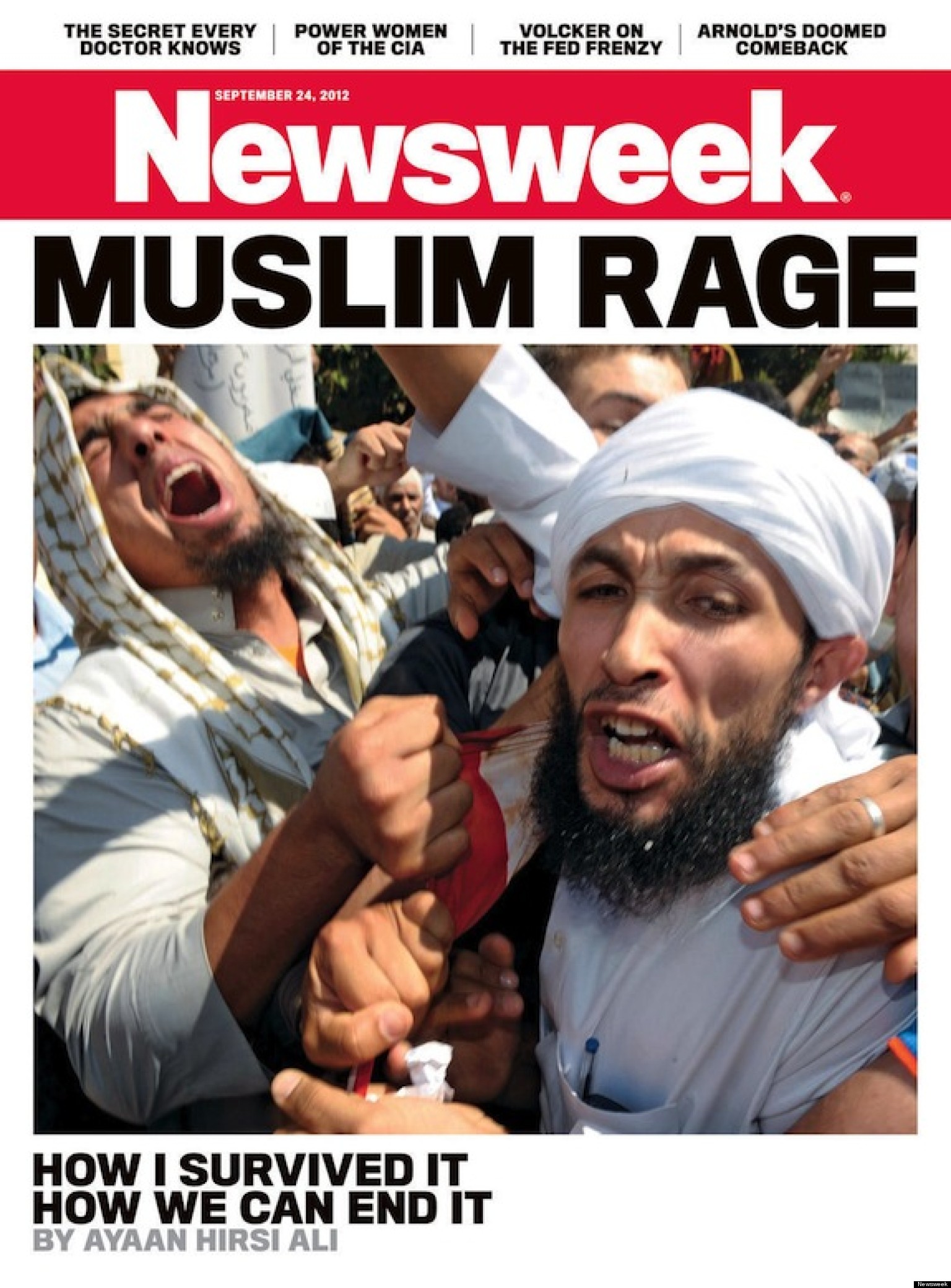
The ruthless brutality of the Islamic State in Iraq and Syria (ISIS or ISIL) unfolds before our eyes on the screens. As commentators struggle to explain and understand it, it becomes convenient to revive old Orientalist tropes. Beyond the spectacular brutality, the reason that ISIS invites attention (both fascination and fear) is that it seems easy to fit in confrontational narratives of Islam (us v. them, anti-American, etc.). Muslims are clearly angry at something. In his infamous article “The Roots of Muslim Outrage”, Bernard Lewis simplistically explained that Muslims are envious of, and angry at, Western modernity and secularism. The U.S. magazine Newsweek illustrated this knee jerk reaction, and recourse to run of the mill thinking patterns, in a Muslim Rage cover in September 2012.

o-NEWSWEEK-MUSLIM-COVER-facebook

In his book “Covering Islam” (1981) Edward Said has effectively critiqued these binary simplifications that dominate not only journalistic discourse about “Islam”, but also expert-talk about Islam. For Said, all attempts to conceptualise other cultures are a value-laden interpretive exercise. He showed the deficiencies of orthodox writings on—and views of—Islam, and called for “antithetical knowledge” to challenge the orthodoxy’s claims of value-free objectivity.

It seems little has changed, however, since Said wrote his book in the wake of the Iranian revolution. In this brief commentary I want to examine three attempts to understand ISIS. These are long treatments in respected liberal media outlets. To use Said’s phrase, these are treatments that fit in different “communities of interpretation.” These three essays are all aware of the need to provide “context” for ISIS. However, their contextualisation differs. The success of this contextualisation in shedding a light on ISIS varies. Let me call these interpretive techniques: universalization; Millenarian confrontation; and intellectual bewilderment. These three attempts operate mostly on the ideational/ cultural domain.

Continue reading

The Corbyn Effect

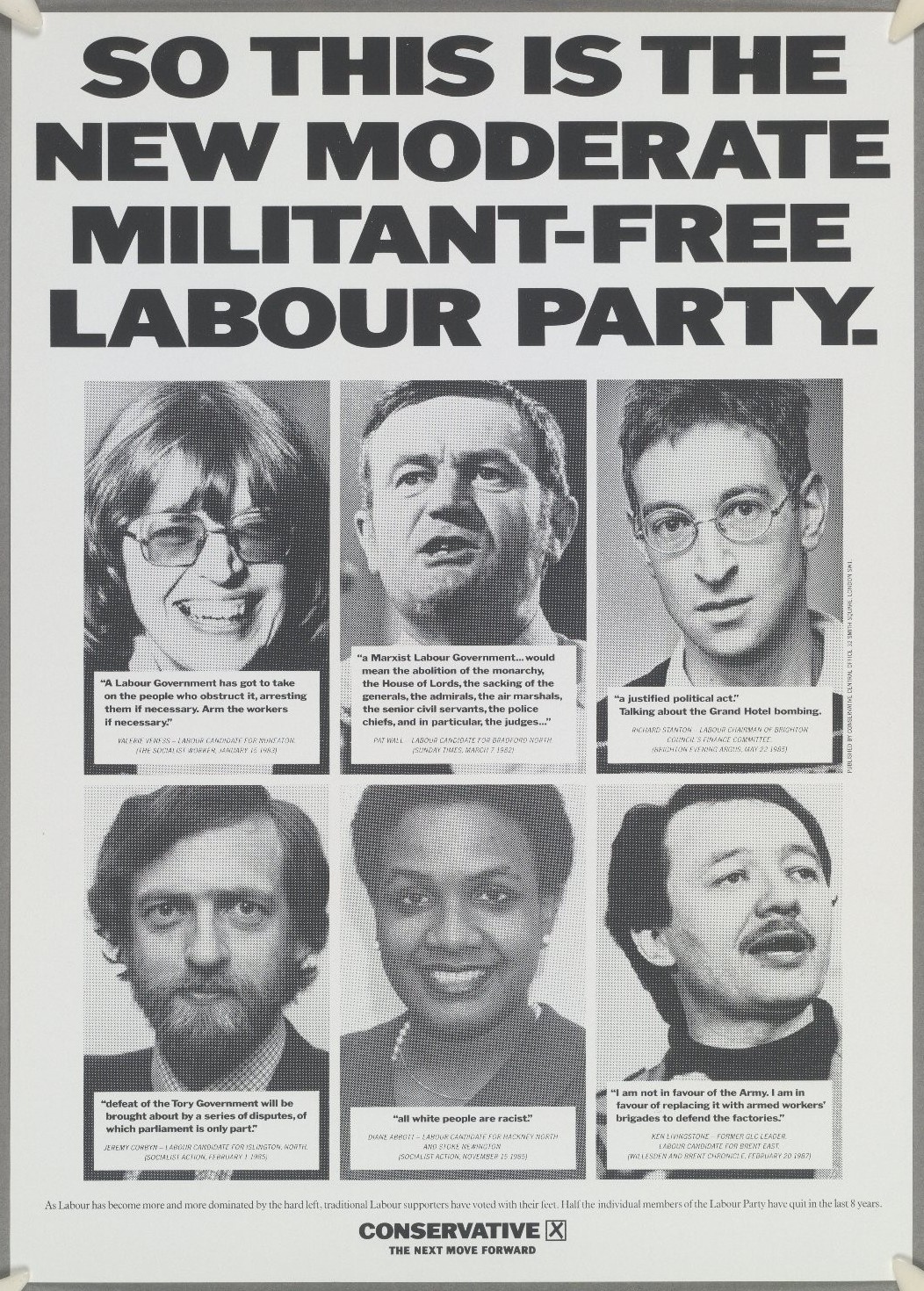
Moderate Militant-Free Labour Conservative Poster

In the last days, the Labour mainstream has not so much fallen as fully leapt into a fit of apoplexy. The cause an opinion poll – by no means solid, by no means a guarantee of future stock value – placing Jeremy Corbyn as the likely winner of the party’s leadership contest. Labour MPs, some now publicly flagellating themselves, nominated Corbyn for a ‘balanced debate’, but apparently couldn’t countenance that it might actually lead anyone to, you know, debate. Corbyn’s moment of popularity is thus sketched as, among other things, “the emotional spasm…an apocalyptic tendency”. John McTernan – a prime mover in the utter implosion of Labour in Scotland – was invited to hold forth on national TV as an oracle nevertheless, where he showed off his great talent in persuasion by calling Labour supporters “morons”. John Rentoul, that other great passé hack, thought recognising the left-wing appeal of the SNP as a factor in Labour’s defeat was like believing in space lizard conspiracy theories.

There was an equal portion of patronising bullshit to go with the name-calling. “Do some research” before you dare to a preference, chided Anne Perkins. Don’t be a “petulant child”, admonished Chuka Umunna. Sunny Hundal came at logic with customary cack-handedness, transforming the clear articulation of principles into a pathology. These are some of the same people who bemoan the detachment of politicians from real people, the decline in party membership, and so on, only to rise up as vengeful furies when a candidate dares to stir energies. All down to an unsavoury populism, natch. This, says Helen Lewis, is ‘purity leftism’, nothing like the necessary compromises of opposition, where you have to be bold enough to endorse 2% defence spending (something “the public” indeed likes, although hardly top of their polled priorities). Blair, of course, can only relate in the terms of triangulation, regurgitating the 1990s whilst pretending to the terrain of the future.

It doesn’t matter that Corbyn’s record is one of social democracy (remember that?). It doesn’t matter that there are trends in his favour. It doesn’t matter that his economic policies are comparatively bold and redistributive. It doesn’t even matter that many of Corbyn’s policies are popular. One line of Blair’s intervention was widely cited: “I wouldn’t want to win on an old fashioned leftist platform”. Few completed the quote: “…even if it was the route to victory“. This is not political argument, nor even Machiavellian electoral planning, but the tantrum-jitters of the self-appointed aristocracy. Having passed out lectures on loyalty and collective responsibility on Monday during the second reading of the Welfare Bill, the dauphins were by Thursday pre-declaring a coup should Corbyn win and practically spitting on their own activists besides. They saw no contradiction. Labour’s experts advocate not political communication but political manipulation, impersonating the enemy to take their place in our collective consciousness.

And so it will go on if any of the appeasement candidates win. Continue reading

Reading across the ‘Colour Line’: Texts, Traditions, and Academic Solidarity

ShowFullImageA guest post by Prof Gurminder K Bhambra, University of Warwick

Four incidents in the last week have caused me to check the calendar and confirm that I hadn’t accidentally time-travelled back a generation. Debates on which I had believed there to have been some (positive) movement over the last couple of decades seem to have made such little impact on many colleagues that it was as if the earlier debates had never happened. I outline the first three incidents briefly before going on to discuss the fourth in greater detail; I do so in order to reflect on their implications and consequences for academic work and engagement.

**********************************

bebop-2014-flyer-names-low-resA community statement was circulated by colleagues in Germany protesting against the development of an academic programme of Black Studies that did not include Black scholars or thinkers or engage with Black scholarship. It seems astonishing, in 2015, to have to rehearse the arguments, again, about why setting up a programme addressing the distinct experiences of a particular group of people and not including people – academics, activists, and others – who have had such experiences and have produced scholarship articulating that experience is problematic. Just so that people don’t misunderstand me here: I am NOT saying that only people with the experience can ever study or talk about such experiences. However, I am saying that to set up a programme for study without the participation of people whose experiences and writing are putatively central to it is problematic. There has been so much discussion on this topic that to repeat the mistakes of earlier times seems deliberately willful and it is this willfulness that requires to be addressed.

Since starting to write this piece, the director of the programme has disbanded it, apparently temporarily, in favour of an open debate about how to move forward in light of the criticisms being raised. Instead of disbanding, why not restructure on the basis of the criticisms and by taking them into account? They are not new.

**********************************

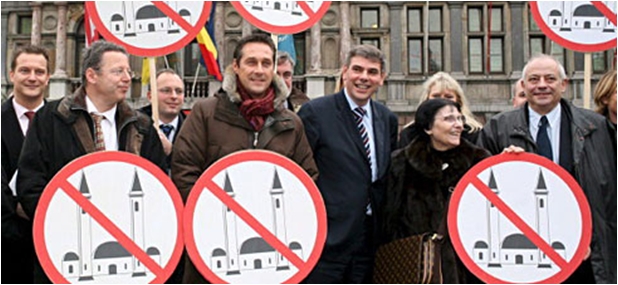
europeislamSecondly, the professional association that I consider to be my academic ‘home’ has advertised its forthcoming annual conference theme as ‘Fragmented Societies: Migrating Peoples’. As another colleague suggested, why not just call it ‘Migrating Peoples Fragmenting Societies’ and do away with the niceties and apparent distance created through the use of the colon. Thus far, there has been no response from the professional association to the suggestion that the wording of the conference theme be changed to avoid it sounding like a UKIP-sponsored conference.

**********************************

The third incident involves the setting up of expert panels at an international conference where all the experts chosen are from north America. There is not a single all-male panel; but all the panelists on all four panels are white. When concern about this was expressed on social media, one response was:

“Moronic tokenism, mk 2. Not satisfied with gender equality on panels at XXX? Rant about people’s skin colour instead”

Continue reading

Among the Atavists

If there is one especially lazy characterization among the many about Scotland’s independence referendum, it is the description of the Yes movement as motivated by ‘atavistic ethnic tribalism’ or the like. Toss a pebble at the UK commentariat and you will come across it soon enough: from the Guardian to the Financial Times, the argument is the same. Britain is the outward-looking future, an independent Scotland a reversion to the barbaric past.

Taken literally, the idea of reverting to a period before Scot and Englishman jointly exported the apparatus of colonial power and racial supremacy they forged in Ireland to the rest of the world does not seem at all regressive. One can scarcely imagine an Indian or Ghanaian, for example, objecting to the move on these grounds. In the same breath as condemning the Yes campaign’s alleged ethnic tribalism, Unionist commentators give as their prime reason for retaining the UK its 300 years of success. Of what, in large part, does that success consist? Why, expanding into other territories and enforcing a hierarchy by which the indigenous inhabitants were plundered of their resources and denied self-government on the grounds of their alleged genetic or cultural inferiority. A textbook case of ethnic nationalism, you might say. One might think that someone celebrating centuries of such behaviour would baulk at condemning the ‘tribalism’ of others.

There is no insincerity in such condemnations. We can have no doubt that when Sir Jeremy Greenstock says of the referendum:

in this ­complex, unpredictable and sometimes threatening environment, the instinct to return to the tribe is understandable. Yet it is creating momentum for global chaos.

he believes it. So profound a substratum is British nationalism that men such as these, its prime beneficiaries, cannot see that their tribe – easily identified by its common modes of dress, speech and rituals of adolescent sequestration – dominate all the institutions of the British state and therefore articulate their interests as universal. Were a Kenyan of Gikuyu heritage, or a Syrian of the Alawite faith to do the same, we can imagine what would be made of her.

Continue reading

Why Metrics Cannot Measure Research Quality: A Response to the HEFCE Consultation

Pacioli Euclid Measurement

Update 24th June: 7,500+ views, 100s of shares, 200+ signatories! And a new post with some responses to further issues raised.

The Higher Education Funding Council for England are reviewing the idea of using metrics (or citation counts) in research assessment. We think using metrics to measure research quality is a terrible idea, and we’ll be sending the response to them below explaining why. The deadline for receiving responses is 12pm on Monday 30th June (to metrics@hefce.ac.uk). If you want to add an endorsement to this paper to be added to what we send to HEFCE, please write your name, role and institutional affiliation below in the comments, or email either ms140[at]soas.ac.uk or p.c.kirby[at]sussex.ac.uk before Saturday 28th June. If you want to write your own response, please feel free to borrow as you like from the ideas below, or append the PDF version of our paper available here.


Response to the Independent Review of the Role of Metrics in Research Assessment
June 2014

Authored by:
Dr Meera Sabaratnam, Lecturer in International Relations, SOAS, University of London
Dr Paul Kirby, Lecturer in International Security, University of Sussex

Summary

Whilst metrics may capture some partial dimensions of research ‘impact’, they cannot be used as any kind of proxy for measuring research ‘quality’. Not only is there no logical connection between citation counts and the quality of academic research, but the adoption of such a system could systematically discriminate against less established scholars and against work by women and ethnic minorities. Moreover, as we know, citation counts are highly vulnerable to gaming and manipulation. The overall effects of using citations as a substantive proxy for either ‘impact’ or ‘quality’ could be extremely deleterious to the standing and quality of UK academic research as a whole.

Why metrics? Why now? Continue reading

The Queer Art of Whistle Blowing

What should we make of the fact that Bradley Manning has become Chelsea, that Glenn Greenwald is gay, that David Miranda loves a man enough to submit to the harassment incurred by his partner’s work, that Greenwald’s detractors sought to tarnish him by association with—of all things—a porn company? Possibly nothing generalisable, except that gender is doing work here.

There has been no shortage of voices denying a straightforward connection between sexual orientation, gender identity, and patriotism. (Part of the reason I feel compelled to write about this is that there isn’t one.) San Francisco Pride Board notoriously repudiated Manning’s election as a Grand Marshall in the 2013 Pride in that city, declaring: ‘even the hint of support for actions which placed in harms [sic] way the lives of our men and women in uniform—and countless others, military and civilian alike—will not be tolerated by the leadership of San Francisco Pride.’ That statement has not been retracted, notwithstanding its now patent inaccuracy in light of the prosecution’s inability to cite any evidence that Manning’s leaks led to any deaths and the court’s decision finding her not guilty of the charge of ‘aiding the enemy’. Kristin (formerly Chris) Beck, ex-US Navy Seal who recently announced her gender transition, has been harsher in her condemnation of Manning: ‘For this person, whether male or female to use gender identity to act “BADLY” is a slap in the face to me and everyone who does not fit the “Binary Gender Norm.” It is not an excuse for anything illegal or unjust.’ Pablo K is right to point out the dangers of the temptation, for those who see a link between sex/gender and truth-telling, to make the reverse move—’to relegate Beck to a minority report, and so to re-inscribe the hierarchy of authenticity, this time with Manning as the actual face of resistance, and Beck the mere puppet of militarism’—while pointing out, also, that the gap between these contrasting appropriations is constitutive of the space of contemporary politics. So let’s talk politics.

Continue reading