It’s Not About You: US Media Bias and Egyptian Protests


Nice piece on Al Jazeera by Mohamed Shokeir that takes the US media to task for its coverage of Egyptian protests.

He asks some important questions about US conceptions of “Arab Anger”, the lack of solidarity with a people fighting an oppressive regime and the myopic US-centric narratives that have dominated the news.

Egypt and the Failure of Realism

Update (19/05/11): A revised and expanded version of this post has been published in The Journal of Critical Globalisation Studies (Volume 4), which you can access for free here.

I’ve hesitated to comment on events unfolding in Egypt (and in the wider region, from Tunisia to Yemen). Not only do I lack any special knowledge of events but many others have said all that I would say with greater skill and clarity. Yet, a sense of solidarity with protesters and my frustration with the commentary on events leads me to offer a few thoughts on the ambiguous role that appeals to “realism” are playing in the response to the actions of the protestors and the government in Egypt.

As the protestors and Mubarak’s goons wait it out in Tahrir Square, the rebellion against the president has entered a key phase. Will the threat of continued violence give Mubarak the space he needs to solidify his power till next year, and in the process avoid the thorough changes the Egyptian people are demanding? As protestors face violence, exhaustion and deprivation the prospect of compromise must seem more desirable than before. The time seems ripe for expressions of support from key states and leaders.  The protestors need our support; it’s much easier for Mubarak to play for time from the presidential palace than for protesters in the streets, but the men and women able to make a difference do not use their voices to share in democracy’s street-choir. And these moral midgets are attended to by their Lilliputian advisors, who counsel patience, restrain and reform that preserves stability.

When Keeping It Real Goes Wrong

Barak Obama has clearly mastered the dark art of evasive support, leaving no doubt that he’s all for Egyptian democracy that doesn’t change too much, too fast, and, most importantly, doesn’t compromise the key strategic interests of the US.

The administration’s restraint is also driven by the fact that, for the United States, dealing with an Egypt without Mr. Mubarak would be difficult at best, and downright scary at worst. For 30 years, his government has been a pillar of American foreign policy in a volatile region, not least because of Egypt’s peace treaty with Israel. American officials fear that a new government — particularly one dominated by the Muslim Brotherhood or other Islamist groups — may not honor the treaty signed in 1979 by Mr. Mubarak’s predecessor, Anwar el-Sadat. (NY Times)

Predictably, Joe Biden made the point with less tact, but perhaps more truth, when he expressed his insensibility to the crimes of Mubarak against his own people.

Asked if he would characterize Mubarak as a dictator Biden responded: “Mubarak has been an ally of ours in a number of things. And he’s been very responsible on, relative to geopolitical interest in the region, the Middle East peace efforts; the actions Egypt has taken relative to normalizing relationship with – with Israel. … I would not refer to him as a dictator.”

Continue reading

Freeing the Pluralist Imagination, or on the wisdom of escaping Weber’s “Iron Cage”

This is the second in a series of posts by several of us at The Disorder Of Things on Patrick Thaddeus Jackson‘s The Conduct Of Inquiry in International Relations: Philosophy of Science and Its Implications for the Study of World Politics. Paul started things off with his post setting up Jackson’s methodology of politics in order to ask important questions about the politics of Jackson’s methodology. The next few weeks will see further posts, followed by a reply by Jackson himself.

Update (3 Feb): Nick’s post is now up, to learn about material monism and the philosophical power of beards read it here.

Update (17 Feb): Meera’s post is now online, in which she threatens the stability of the matrix.


A broad definition of science, by design, does not provide us with any standards for good research, or indeed any specific advice for how to go about doing research, beyond the two basic admonitions to focus on factual knowledge of the world, and to separate this activity logically and conceptually from the promulgation of normative judgments and partisan-political stances. (25)

Patrick Jackson, The Conduct of Inquiry in International Relations

My comments on Jackson’s book need to be put in a personal context. I have no interest in claiming the title of “science” for my work or “scientist” for myself. Further, I do not consider my primary vocation the production of empirical knowledge. Instead, my work is “normative” and focused, most broadly, on how we think about the ethical dimension of world politics. Finally, I do not self-identify as a participant in the discipline of “International Relations,” nor as a “political scientist;” the tradition of scholarly work identified as “International Relations” is compromised by its statist foundations and the historically positivist pretensions that motivated the move to a science of politics are unsustainable in my estimation.

This raises an obvious question: why am I commenting on a book about the conduct of scientific inquiry in International Relations (IR)?

A Personal Anecdote

While at a conference in Ljubljana, Slovenia, I had an argument with my friend, Laust Schouenborg, about the nature of social science. Sitting in a Soviet-era housing block converted into a budget hotel, watching the sun go down behind the park, I was rhetorically ejected from academia.

Our argument began when Laust, after reading Chris Brown’s International Relations Theory: New Normative Approaches, suggested (contra Brown) that because there are no standards of what constitutes a “good” normative argument, the study of ethics had no place in IR, and that scholars concerned with making arguments about how politics should be, had no place in academia.[1] The modern university is a place for scientific study and those who were not practicing science should, he claimed, be relegated to the political and cultural spheres.

This line of reasoning shocked me, but it was only the culmination of a disciplining process I experienced in my first two years as a PhD student in the International Relations Department at the LSE. Even as many members of faculty supported my work, I was constantly asked why I was studying in an IR department and some “colleagues” suggested that my research was value-less as scientific work – whatever its virtues as polemic or sermon.[2]

These experiences have left me with two abiding intellectual concerns about the conduct of social inquiry. The first is to challenge the institutional privilege bestowed upon those conducting their inquiry as “science.” On this concern, Jackson and I share considerable ground, as his critique of exclusive definitions of scientific inquiry deflates dominant pretensions and advocates for a more inclusive study of world politics. And I must give credit where it is due: Jackson doesn’t suggest that my kind be thrown from the ivory tower – just given separate offices. The second concern is deeper and more contentious: to challenge the notion that the ethical questions that interest me can and should be separated from scientific inquiry into world politics. On this point Jackson and I share less ground, and for this reason the bulk of my comments will focus on how and why Jackson separates the “scientific” and the “normative” in his pluralist approach to IR.

Aside from satisfying very personal concerns, I offer this response to Jackson’s book because his generous orientation, stated most forcefully in the concluding chapter, invites engagement. Along with analyzing Jackson’s essentially Weberian account of a pluralist science of IR, and suggesting that a fuller account of social inquiry should bring together ethical and empirical inquiry, my most substantive critique is that the pluralism Jackson defends is partial and continues to discipline the study of world politics in an unsustainable way – a critique that, if correct, undermines a central aim of his project.

Continue reading

Martin Luther King as an international thinker?

Monday 17 January marked the official US holiday honoring Martin Luther King, Jr. While watching Monday’s Democracy Now! program, featuring substantive excerpts from King’s speeches,  the clarity with which he connected the domestic fight for equality to international politics, in particular poverty and war, struck me. The international aspects of King’s thinking, I believe, are important for two reasons.

King’s Radicalism

First, it challenges the interpretation of King as an insufficiently radical leader offered by some critics, and the co-option of King’s legacy not only by “moderate” liberals but also by conservative political figures in the US. King has become a symbol in the public consciousness of a safe reformism and a favorite icon for the type of liberal who abhors radicalism above any other political sin. As Michael Eric Dyson says, “Thus King becomes a convenient icon shaped in our own distorted political images. He is fashioned to deflect our fears and fulfill our fantasies. King has been made into a metaphor of our hunger for heroes who cheer us up more than they challenge or change us.”

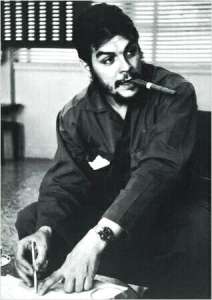
A personal anecdote to illustrate the point: a couple of years ago while handing over the editorship of Millennium to the incoming editorial team, one of the new editors commented on the large poster of Che Guevara that hangs on the Millennium office door. The Che poster, so far as I know, predates most of us currently associated with the journal, therefore I suggested it should stay. I then asked why Che should go. My colleague suggested that Che’s participation in revolutionary violence made him an inappropriate icon – in many academic disciplines this might be a rather devastating point, but International Relations is full of characters far more violent and less admirable than Comrade Che – see Paul’s post on Kissinger, for example.

When asked who might better grace the walls of the office my colleague suggested Martin King or Mohandas Gandhi (a political figure subject to a similar post-hoc liberal deification), with their key qualification as acceptable iconography being that they had not participated in political violence. While I have a great deal of sympathy for non-violence, my own introduction to both King and Gandhi came through the study of non-violence political strategy, the liberal (and I think my colleague would gladly accept that identification) embrace of King or Gandhi, paired with the repudiation of Che, is (unintentionally?) disingenuous.

It’s a disingenuous embrace because it insists that the first rule of acceptable political action is a renunciation of physical violence, while at the same time turning a blind eye to the violence institutionalized in the state through everyday police brutality and legalized/legitimized imperial warfare, as well as the structural violence inherent to global capitalism. This misses the radical content of non-violence as practiced by King and obscures the link that exists between non-violent agitation and armed resistance. The political commitments and motivations of King and Che are remarkably similar, even as their fundamental orientations (Marxism vs. Christianity) and tactics (non-violent direct action vs. guerrilla insurgency) diverged. Continue reading

Demarcation Problems: ‘The Conduct Of Inquiry’ Between Politics & Methodology

This is the first in a series of posts by several of us at The Disorder Of Things on Patrick Thaddeus Jackson‘s The Conduct Of Inquiry in International Relations: Philosophy of Science and Its Implications for the Study of World Politics, released last year to considerable critical acclaim. The next few weeks will see further posts, followed by a reply by Jackson (or PTJ) himself. Taken together, we hope they go some way to meeting the challenge, to paraphrase PTJ himself, of emerging from splendid isolation to engage in some contentious conversations on inquiry.

UPDATE (24 Jan): Joe’s call to free the pluralist imagination is now up.

UPDATE (3 Feb): Nick’s speculative realist examination of inference, progress and materialist monism is now available.

UPDATE (17 Feb): Meera’s further untangling of ‘science’ and challenge to the stasis and status of reflexivism completes this round of responses.

UPDATE (14 March): PTJ has begun his reply.


Conclusion: neither science nor the methodology of research programmes provides arguments against anarchism. Neither Lakatos nor anybody else has shown that science is better than witchcraft and that science proceeds in a rational way. Taste, not argument, guides our choice of science; taste, not argument, makes us carry out certain moves within science (which does not mean that decisions on the basis of taste are not surrounded by and entirely covered by arguments, just as a tasty piece of meat may be surrounded and entirely covered by flies). There is no reason to be depressed by this result. Science, after all, is our creature, not our sovereign; ergo, it should be the slave of our whims, and not the tyrant of our wishes.

Paul Feyerabend, ‘Theses on Anarchism’ (1973), For & Against Method (with Imre Lakatos)

I: Conducts Of Inquiry

Paul Feyerabend’s Dada-ist approach to the philosophy of science was informed by a hostility to singular conceptions of the world, a rejection of rigid prescriptions for the correct character of knowledge and a healthy scepticism towards how people thought their forms of inquiry worked. Setting himself against method, he argued that ‘science’ has no common structure and that no general laws can explain its success or prescribe its methods. The growth of knowledge has not only historically been associated with a disrespect for prevailing methodological rules, it in fact requires such violation (whether deliberately or unwittingly).

Patrick Jackson’s The Conduct Of Inquiry attempts both to expand and to limit the knowledge practices counted as legible and legitimate in International Relations. Like Feyerabend (and Imre Lakatos and Thomas Kuhn and Karl Popper for that matter), Jackson evinces a healthy distrust of hard, fast or easy judgements about truth, reality and research procedure. And so he both avoids making the argument for a particular philosophical perspective with which to forge ‘better’ IR and eschews usual schemas that start with the putative ‘fundamentals’ of ontology and epistemology. Instead he offers a Weberian ideal-typification of methodologies (not methods), intended not as a menu of coherent and precise options but as a useful typology of functional categories (on which more in a moment).

The conception of methodology proffered is an expansive one, taken to designate ‘the logical structure and procedure of scientific inquiry’, but not the actual nature of reality and knowledge or the correct technique for a particular problem. Four commitments to philosophical ontology organise the options, generating four methodologies through their various combinations. The purpose is not somehow to test between them, but to reveal their assumptions and explain how they hang together as philosophical wagers. Hence the need to discuss the forms of faith and commitment that under-gird our styles of research.

So, in one sense, we could read PTJ as speaking with Feyerabend in demonstrating that “all methodologies, even the most obvious ones, have their limits…like an undercover agent who plays the game of Reason in order to undercut the authority of Reason (Truth, Honesty, Justice, and so on)“.

This intervention is much needed. Continue reading

Kissingerian Contempt: Realism, Statism and Other People’s Genocides

For a blog apparently devoted to global politics, we have so far rather neglected its voguish scandals and intrigues. Disciplinary exposure therapy has evidently done its work, particularly where the amorphous theory-cum-policy-manual of Realism is concerned. After all, what could be more mutually disappointing than a lengthy online discourse on the neo-neo ‘debate’ or its ilk? So much somnabulatory exegesis.

That said, last month’s fracas over ‘criminal psychopath’ and one-time ‘elegant wit’ Dr Henry A. Kissinger deserves a mention. In new releases from the Nixon tapes, his fawning jingoism in the name of some clear-cut national interest rather caught the eye:

The emigration of Jews from the Soviet Union is not an objective of American foreign policy…And if they put Jews into gas chambers in the Soviet Union, it is not an American concern. Maybe a humanitarian concern.

Bushite polemicist Michael Gerson took the opportunity to indict Realism, denouncing its shallow moral compass in favour of a vision of more righteous foreign policy (neo-conservative manifest destiny branch). Stephen Walt responded, pointing out that Kissinger is not the delegated representative of Realists, that many who self-describe as such opposed both the Vietnam and Iraq wars, and that hand-wringing by culpable members of the Bush administration over the human costs of foreign policy is straight-up hypocrisy. Henry Farrell at Crooked Timber rightly stressed that this was besides the point, since what makes Kissinger Realist in the relevant sense is his instrumentalist attitude to the lives of others and the over-riding importance of material power in his world view. Along the way, he also provided a particularly apt description of this particular peace-prize winning carpet-bomber as in thrall to “a scholar’s fantasy of Metternich, in which cynicism, duplicity, and clandestine brutality were not foreign policy tools so much as a demonstration of one’s ‘seriousness’ as a statesman“. Nice. Enter Christopher Hitchens, spraying invective like it was the old days and usefully dismantling the apologetics now apparently emanating from several quarters [1].

Naturally, the seriousness of Kissinger’s servile indifference is as nothing next to his actual and extensive crimes, if legal language can be made to fit the special character of his achievements. And one can hardly credit that the good doctor’s snivelling before the anti-Semitism of Richard Milhouse Nixon should matter half as much as his responsibility for the deaths visited on Kien Hoa or the euphemistic and not-so-euphemistic barbeques served up as part of operations ‘Breakfast’, ‘Lunch’, ‘Dinner’, etcetera. Continue reading

The Racial Empire of International Relations

Primarily, our action is based on national self-interest. In other words, it is patriotic. A certain limited number of persons are fond of decrying patriotism as a selfish virtue, and strive with all their feeble might to inculcate in its place a kind of milk-and-water cosmopolitanism. These good people are never men of robust character or imposing personality, and the plea itself is not worth considering. Some reformers may urge that in the ages’ distant future patriotism, like the habit of monogamous marriage, will become a needless and obsolete virtue; but just at present the man who loves other countries as much as he does his own is quite as noxious a member of society as the man who loves other women as much as he loves his wife. Love of country is an elemental virtue, like love of home, or like honesty or courage. No country will accomplish very much for the world at large unless it elevates itself. The useful member of a community is the man who first and foremost attends to his own rights and his own duties, and who therefore becomes better fitted to do his share in the common duties of all. The useful member of the brotherhood of nations is that nation which is most thoroughly saturated with the national idea, and which realizes most fully its rights as a nation and its duties to its own citizens.

Theodore Roosevelt, The Monroe Doctrine (1896)

Roosevelt’s imperial condescension is but one of the historical anecdotes mobilised in a recent paper by Robert Vitalis to trace the legacy of empire and race in the development of International Relations as a discipline. Although eschewing a direct critique of the contemporary field (since “the likelihood is small that self-identified specialists in international relations will seek out an account of the discipline’s past in a journal that has no standing in the field”), he nevertheless provides a wealth of historical detail on the complicity of scholarly ancestors in ‘colonial administration’ and its attendant euphemisms.

Take A. Lawrence Lowell, a political ‘scientist’ who went on become President of Harvard and used that lofty perch to impose a  dormitory colour bar for freshman in 1915 (and a man now also revealed as the convener of homophobic secret trials). A proponent of professionalised training for colonial administrators, Lowell also set legal arguments before Congress explaining that the requirements of the Constitution need not be upheld in those violently-acquired territories where the racial capacities of the indigenes fell short of proper statehood. And, like a rather more recent over-flattered Harvard globetrotter, he was particularly interested in the wisdom to be gleaned for such bold endeavours from British experiments

Or take the institutional delivery rooms of International Relations itself. At the first ever APSA conference in 1904, ‘Colonial Administration’ was designated one of the five fundamental branches of Politics. One prominent speaker that September was William Frank Willoughby, an APSA founder, its 10th President, and the author of Territories and Dependencies of the United States (1905). He crafted this work in a particularly applied setting (pay heed ye  assembled bridgers of theory and practice), serving as both Treasurer and Secretary of Puerto Rico from 1901-1907. It seems reasonable to assume that auto-ethnographic reflexivity did not feature heavily in his work. A decade later he became director of a new research body, soon re-christened as The Brookings Institution.

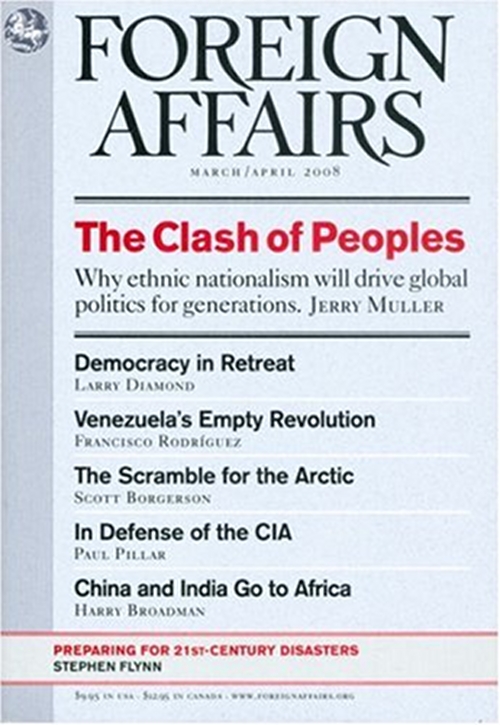
And what of our learned fora? Perhaps most symbolically of all, the debates over the proper governing of lesser peoples were carried out in the discipline’s first publication, The Journal of Race Development. It was founded in 1910 by G. Stanley Hall, who headed up a centre on the psychology of the races at Clark University, and who also pioneered the idea that the developmental stages of individual humans mirror the hierarchies of race, with children being to adults as savages are to the civilized. The twist being that in 1922 The Journal of Race Development became Foreign Affairs, still the go-to publication on global ‘administration’ (although this particular legacy is mysteriously absent from its current autobiography).

Several general themes emerge from the detail. First, far from positing states as the central actors of global politics, the comprador intellectuals of the early 20th century saw race, both within and without the United States, as the salient frontier. The earliest IR scholars all included American racial relations (to wit, the Southern ‘Negro problem’) within their disciplinary remit. In a racial supremacist twist on W.E.B. Du Bois’ ‘colour line’ “the world’s biological boundaries mattered much more to theory-building than did territorial boundaries”.

Second, the centrality of race as a category was not a mere function of scientific ignorance. Continue reading

International Relations versus Punk Rock (Slight Return)

Nothing could compromise a joint blog project more than disagreement over music. Luckily, this much-delayed follow-up to Joe’s sonic assault on global politics gets to play the role of supplement and supplicant, and not that of adversary. And no, it’s not bloody Christmas-themed.


Nobody was as fully aware of the properly traumatic dimension of the human voice, the human voice not as the sublime, ethereal medium for expressing the depth of human subjectivity, but the human voice as a foreign intruder, nobody was more aware of this than Charlie Chaplin [in The Great Dictator]…Silent figures are basically like figures in cartoons, they don’t know death, they don’t know sexuality even, they don’t know suffering, they just go on in their oral egotistic striving, like cats and mouse in a cartoon: you cut them into pieces, they’re reconstituted. There is no finitude, there is no mortality here. There is evil, but a kind of a naïve, good evil, you are just egotistical, you want to compete, you want to hit the other, but there is no guilt proper. What we get with sound is interiority, depth, guilt, pulpability, in other words the complex oedipal universe. The problem of the film is not only the political problem, how to get rid of totalitarianism, of its terrible seductive power, but it is also this more formal problem, how to get rid of this terrifying dimension of the voice. Or, since we cannot get rid of it, how to domesticate it, how to transform this voice nonetheless into the means of expressing humanity, love, and so on…

[Chaplin’s character] delivers his big speech about the need of love, understanding between people, but there is a catch, even a double catch: people applaud exactly in the same way as they were applauding Hitler. The music that accompanies this great humanist finale, the overture to Wagner’s opera Lohenngrin is the same music as the one we hear when Hitler is daydreaming about conquering the entire world and where he has a balloon in the shape of the globe, the music is the same. This can be read as the ultimate redemption of music, that the same music which served evil purposes can be redeemed to served the good, or it can be read – and I think it should be read – in a much more ambiguous way, that with music we cannot ever be sure, insofar as it externalises our inner passion music is always potentially a threat.

Slavoj Žižek, The Pervert’s Guide To Cinema

We humans are a musical species no less than a linguistic one.

Oliver Sacks, Musicophilia: Tales of Music and the Brain


1. Fugazi, ‘Smallpox Champion’, In On The Kill Taker (1993)

Smallpox champion, U S of A
Give natives some blankets
Warm like the grave
This is the pattern cut from the cloth
This is the pattern designed to take you right out, right out, right out
This is the frontier with winter’s so cold
Greed informs action where action makes bold
To take all the cotton that’s cut from the stalk
Weave the disease that’s gonna take you right out, right out, right out
What is good for the future what was good for the past
What is good for the future…won’t last
Bury your heart U S of A
History rears up to spit in your face
You saw what you wanted
You took what you saw
We know how you got it
Your method equals wipe out, wipe out, wipe out
The end of the frontier and all that you own
Under the blankets of all that you’ve done
Memory serves us to serve you
Yet memory serves us to never let you wipe out, wipe out, wipe out
Cha-cha-cha-champion
You’ll get yours
Wipe out

2. Ani Difranco, ‘Fuel’, Little Plastic Castle (1998)

Continue reading

Feminist Fatigues; Or, What Can Feminism Be in International Relations?

What is feminist IR and what does it do? Not a new question, by any means, but one worth mulling over in light of Laura Sjoberg’s attempts to make the case, or just plain describe, feminist IR across several posts at The Duck Of Minerva, spurred on by some less than charitable peer reviews. The complaints, and the responses alternating between outright hostility, condescension and general bemusement, happily confirm critical (European) prejudices. The American mainstream doesn’t think something counts as a knowledge practice unless it can be co-opted into a regression analysis, and lacks what would pass as an undergraduate understanding of feminism elsewhere.

So far, so self-satisfying. Educational-cum-critical interventions of this kind clearly do have their place. As Joe put it to me, marginal and critical perspectives (no less than others) require constant re-inscription and repetition. Different students, different times, different world-historical events: all call for a re-engagement through our preferred lenses, which is how we absorb and become committed to them. It’s not enough for people to just be referred back to de Beauvoir or Enloe.

That said, these are also acts of performance. As Sjoberg herself notes, the conversation repeats itself. Repeats on itself, even. You Just Don’t Understand. Like an algorithmic inter-paradigm debate. The steps are as obvious and stale now as they were decades ago. Feminists are humourless; feminism is inherently a negative critique; there is no place for men in feminism; feminism isn’t really IR, even if it has some purpose somewhere;  feminism is obtuse; feminists lack research projects and cumulative understanding. A stack of intellectual veneers on one big trope of man-hating idealist sex-phobic anti-rationalist frigidity.

So why doesn’t the conversation ever seem to go anywhere? Continue reading

International Relations versus Punk Rock

Today I was re-reading a piece by Kevin Dunn, “Never mind the bollocks: the punk rock politics of global communication,” and it lead me to wonder how far one’s route into the study of world politics affects how one perceives the “object” of inquiry. Dunn starts out by stating:

I am increasingly concerned about the ways that International Relations (IR) as a discipline seems unable to communicate to everyday citizens about issues of tremendous importance. I am repeatedly struck by our inability to speak to the people whose lives are affected daily by the issues we are supposed to be studying. More importantly, I am struck by how irrelevant we and our work can seem to the world’s population.

In 2003, I grappled quite openly and vocally with this alienation. The annual International Studies Association (ISA) Conference was being held in Portland, Oregon that year. Throughout the hallowed halls of the soul-numbing conference hotel, the discipline of IR was displaying its strengths and weaknesses. The US and its ‘ coalition of the willing’ were on the verge of invading Iraq. But within the ISA, there was little attempt to grapple with what this meant. My few attempts to stage some form of protest and intellectual outrage proved heart-warming but ineffectual. Then, at the end of the week, I went to a punk club a few blocks from the hotel to see a Joe Strummer tribute show. Joe Strummer, the frontman for the Clash, had died suddenly a few months before, and now over twenty bands from all over the region were coming together to play a benefit show. Each band performed two or three Clash songs; one band getting up after the other, sharing amps and a drum set. On stage, the bands were using the songs to make sense of the dangerous world we all found ourselves in. The in-between song banter reflected this – comments about President George W. Bush, remarks about American fascism, concerns about the impending war on Iraq, and pleas to register to vote. The kids in the club were using the Clash and punk rock, much as I did years before, to help them understand the world they were inheriting. While the discipline of IR pontificated down the street to itself about world affairs, I swirled in the mosh pit wondering: what relevance did I and the ISA have to these kids? Sadly, it seemed to me that we as a discipline were doing a poor job communicating with most of the people outside that conference hotel.

Leaving aside Dunn’s very interesting analysis of punk rock’s role as a form of counter-hegemonic global communication and subversive political message, the opening lines resonated in a profound way for me, as I share Dunn’s experience of punk music providing a frame for engaging with world politics. This leads me to the question: how does our route into the study of world politics affect our work? Continue reading