Ecotones And Borderlands Of The Feminist Peace

a photo of Helen Berents

The next contribution to our symposium on Governing the Feminist Peace comes from Helen Berents. Helen is Senior Lecturer in International Relations in the School of Government and International Relations at Griffiths University. Helen is a feminist scholar centrally concerned with both representations of young people in contexts of crises and conflict, and with engagements with the lived experience of violence-affected communities. Helen’s work sits in international relations, particularly peace studies and critical security studies but is interdisciplinary in drawing from anthropology, feminist theory and sociology. Earlier posts in the symposium can be found here, here and here.


I have always been a gardener; I hold a love of the bright green of new shoots, the petrichor smell of soil after rain (or here in Australia, after an early morning watering before the heat sets in), the uncertainty of success as I bury tiny seeds, the never-ending weeding, and the joy of the harvest.  As I’ve gardened in my backyard over the years, my eye has become more attuned to what is present: it is not just that ‘a bee’ is visiting my patch, but a flock of tiny native stingless honeybees, or my favourite, the gorgeous blue banded bee. Their purpose, as they duck in and out of the flowers in search of pollen, is very different to mine as I weed and plant and prune, but we both share a desire for the ecosystem of my backyard vegetable patch to thrive.
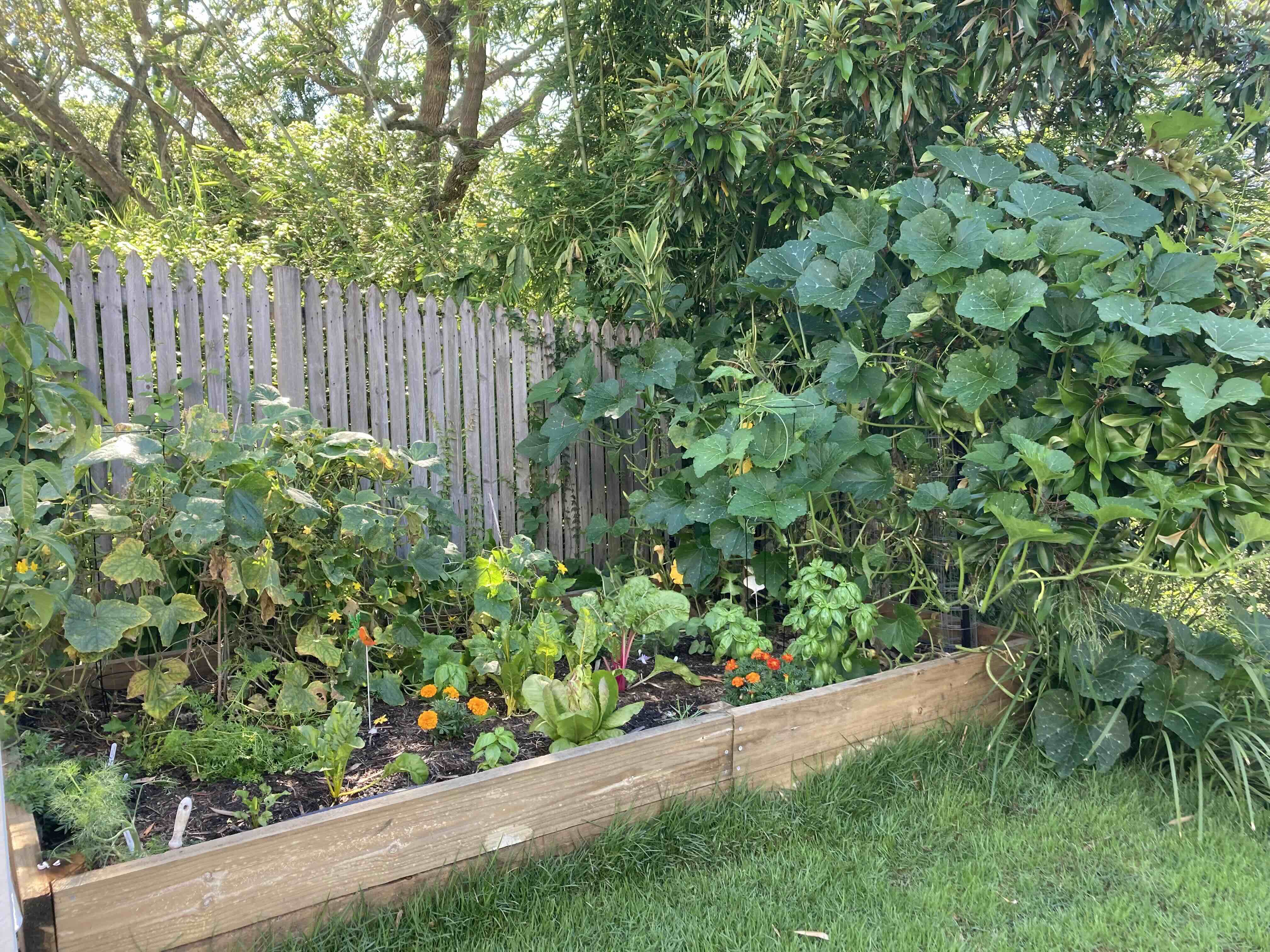
Helen’s garden

I kept thinking of my garden as I read Kirby and Shepherd’s rich and brilliant book. The authors encourage us to think about WPS as a policy ‘ecosystem’ and the while a garden and ecosystem are not true synonyms, garden metaphors seem easy to reach for. Kirby and Shepherd stress in the book, and more explicitly in their earlier article (2000), that an ecosystem model is not meant to imply naturalist tendencies of evolution or teleological design. Rather an ecosystem approach enables an emphasis on relationality, reproduction, and plurality as constitutive features of a policy ecosystem such as WPS.

In Governing the Feminist Peace, Kirby and Shepherd draw on decades of individual and joint work on, around, and in ‘the WPS agenda’; their eyes more attuned than many to what is present in its specificity and diversity. In this way, it is a pleasure to be guided by these two authors-slash-policy-ecologists through an environment we might think we are familiar with in our own relational encounters with the actors and artifacts of the agenda, yet be taken down paths, into unexpected clearings, and to be directed to pause and notice what we might otherwise walk past.

It is a monumental task that Kirby and Shepherd have set themselves, and one they execute compellingly. Convincingly demonstrating the limitations of understanding WPS as a norm, they instead invite us along as they become ‘policy ecologists’ to account for the myriad complexities, contradictions, tensions, and co- or parallel- trajectories of all that lies within what gets called ‘WPS’. The ‘bricolage’ approach they adopt enables them to move between the macro and micro of the ecosystem, highlighting moments, events, and lineages as offering lessons on the vitality and failure of actors’ efforts within the policy ecosystem. This results in brilliant accounts, such as that of the WPS resolution that ‘never was’, nuanced consideration of the potential and antagonisms of the favoured WPS policy vehicle of National Action Plans, and the historic and contemporary tensions of diverse actors in the ecosystem such as NATO and WILPF. These explorations demonstrate the success of the bricolage approach of mapping a policy ecosystem, working to make visible the wandering paths of the WPS ecosystem rather than the highway of WPS-as-norm/s.

In selecting just a few paths to wander down here, I offer three reflections: two short observations on the ephemeral nature of feminist peace in the book and on what gets (perhaps necessarily) missed by a focus on and through the documents of the WPS agenda, and a more meandering reflection on the generative potential of the fecundity of borderlands.

Continue reading

Governing the Feminist Peace to Deflect from Decolonial Peace in Africa

This third contribution to our symposium on Governing the Feminist Peace comes from Mohamed Sesay. Mohamed is Associate Professor and Coordinator of the African Studies Program in the Department of Social Science at York University in Canada. His research and teaching interests are in development, transitional justice, international criminal justice, rule of law, customary justice, peacebuilding, and post-conflict reconstruction particularly in sub-Saharan Africa. He is co-investigator for a UKRI GCRF project titled Land Policy, Gender Justice, and Dual Legal Systems. Earlier posts in the symposium can be found here and here.


Let me start by a somewhat unfamiliar account of conflict and violence in Africa. After almost a century of European colonization, anti-colonial struggles resulted in the political independence of African states, particularly in the post-World War II era. However, the end of direct colonialism did not amount to the decolonization of the structures established by violent colonial administrations. Rather, what followed the attainment of juridical-political independence is what postcolonial scholars call coloniality, i.e., “various colonial-like power relations existing today in zones that experienced direct colonialism” (Quijano 2007: 170). Independent nations in Africa did not effect any major ideological or structural break with the colonial state and all they did “was to expand the former colonial administrative and economic infrastructures” (Ogot and Ochieng 1995: XIII). Just as colonial governments relied on coercive structures to rule over their colonies, so too did their African successors embrace violence and militarism as the mechanism to shore up legitimacy deficits in the modern state. In the transition to the postcolony, “the predatory paradigm of governance was conveniently adopted…by the local political, economic, civil, and military elites” (Yusuf 2018:257). This underlining post/neocolonial condition as well as the paradigm of violence it engenders (Ndluvo-Gatsheni 2012, 2015) has remained not only at the root of many conflicts in Africa but also central to what makes peace elusive for ordinary Africans (Zondi 2017). Thus, Fonken Achankeng notes:

If the causes and consequences of the conflicts have their roots in colonialism, the process of decolonization and state formation and the ensuing crisis of nation-building, then any attempt to resolve the conflict must also transcend the concepts of new institutions that will increase participation, legitimacy, and redistribution, and good governance recipes to also address the root causes of the problem (Achankeng 2013:14)

To what extent does the feminist peace, promised by the Women Peace and Security agenda, account for this historical and contemporary reality of conflict and violence in Africa is the question I had in mind as I read Governing the Feminist Peace by Paul Kirby and Laura J. Shepherd. As the authors aptly note, Africa is a central part of the WPS ecosystem, with the Maputo Protocol to the African Charter on Human and People’s Rights on the Rights of Women in Africa, the Solemn Declaration on Gender Equality, and the Dar-es-Salaam Declaration on Peace, Security, Democracy, and Development becoming the earliest policymaking moves to institutionalize Resolution 1325 outside the United Nations. In addition to 32 national action plans (NAPs) adopted by African governments, regional organizations in Africa account for about half of the policy documents issued beyond the UN and its member states as the authors report. Indeed, this massive policy commitment makes Africa a “terrain of reproduction and contestation” of WPS beyond the “narrow diffusionist model” (p. 69) and I appreciate the authors’ efforts to represent Africa from this critical perspective. I cannot agree more that in the African context, policymaking moves such as NAPs can become a “key part of governing,” functioning as “a way of stultifying feminist peace, or interloping WPS into the machinery of the state” (p.119). Unlike women’s rights groups and activists who may contribute to WPS as a means to challenge domestic patriarchy, when the political class in Africa is at the forefront of promoting an agenda aimed at challenging their power, it is often a governing strategy to hijack its radical transformative mission.

Women serving in militaries that are part of US Africa Command (AFRICOM), 2017

That said, the post/neocolonial condition in Africa has not received the due attention it deserves in this book.

Continue reading

Governing the Feminist Peace: From Institutionalism to Ecology

This second contribution to our symposium on Governing the Feminist Peace comes from Nicole George at the University of Queensland. Nicole is Associate Professor of Peace and Conflict Studies at the School of Political Science and International Studies at the University of Queensland, where she is also Director of Research. Nicole’s research focuses on the gendered politics of conflict and peacebuilding, violence, security and participation. Since the early 2000s, she has conducted research in the Pacific Islands region focusing on gender politics, gendered security and post conflict transition in Fiji, New Caledonia, Bougainville and Solomon Islands.


In their new book, Governing the Feminist Peace (Columbia University Press, 2024). Paul Kirby and Laura Shepherd draw on the concept of a policy ecology to frame their powerful account of the institutionalisation of the WPS agenda. This approach allows them to tell a story of Women, Peace and Security (WPS) policy evolution that is characterised by competing interests and sites of influence. In addition to their analysis of the form and impact of the 10 UN Security Council resolutions on WPS since 2000, the  policy ecology methodology is deployed by Kirby and Shepherd to explain the proposed inclusions that were subsequently written out of WPS resolutions, the varying ways in which states have localised WPS through National Action Plans and the critique that has responded to WPS policy frames and implementation from within advocacy and academic circles.  

Governing the Feminist Peace, provides a  detailed, and powerful account of the ways that the feminist agenda for peace has been broadened and constrained through institutionalisation at international and national scales of policymaking. Chapter 4 maps the agenda as it is formally articulated in relevant policy documents produced by the UN itself, and within National Action Plan policy. It shows that the policy agenda is dynamic and responsive; one that has evolved, over time, to recognise   LGBTQI issues, the impacts of colonialism, the politics of race, and the standing of men and boys (75). This chapter also demonstrates how the agenda has been expanded to take in new considerations beyond those that were considered in the foundational resolution of 2000, including clauses on climate change, sexual and reproductive rights, the status of refugees and internally displaced peoples, or terrorism and political extremism (77). 

On the other hand, the challenges of institutionalisation are made clear through investigation of what Kirby and Shepherd refer to as  the “hegemonies” and “abolitions” that can also be traced within the WPS policy ecology (217). For example, the mapping exercise in Chapter 4 also shows, that although “new” issues of concern may be mentioned in WPS policy documents in the period from 2000-2020,  these  do not displace or challenge the prominence of references to sexual violence which remain consistent in policy documents throughout the period in question and equal in number to all other “new” issues mentioned in WPS policy documents.  This finding echoes a long-standing feminist critique of the ways the protection agenda has been used to reinforce the trope of gendered vulnerability and victimhood in conflict that concurrently diminishes women’s agency and capacities for leadership (e.g. Reilly 2018).

In later chapters, Kirby and Shepherd further document the lack of recognition given to indigenous knowledges within WPS policy as it has evolved since 2000, despite the fact that Indigenous peace processes are mentioned in the foundational UNSCR 1325.  The authors also contrast the ways in which feminist advocacy promoting disarmament or challenging the militarist underpinnings of defence alliances have become downplayed as NATO itself advances an “active embrace of the WPS agenda” (162). Contradictions also emerge.  For example the authors observe how WPS principles have been mobilised in the manner of “imperial feminism” to justify or legitimise the protection of women in Global South settings while “violence against women in the West is minimised, ignored and/or individualised” (169).  Further, the authors later observe the irony of a situation whereby WPS policy can define  violence against women as a global “security problem” yet also be harnessed to initiatives that reinforce and justify the  gendered “parameters of military expenditure and reasons of state” that have long been lamented by women peace activists (196).

While these arguments are powerful, as the chapters progressed, I also reflected on the ways in which they are resonate with research conducted by other feminist policy ecologists, who have studied the fortunes of gender policy reform in national and international politics.  I am referring here to feminist institutionalist scholarship that, since the early 2000s, has investigated how gender reforms are progressed in policy and the ways in which these reforms are nested within broader institutional contexts that produce their own gender logics (Mackay 2014, 549). In this light, I wondered if the story of hegemony and exclusion that Kirby and Shepherd draw out in their WPS analysis is simply an inevitable reality. 

Continue reading

Support the Troops: A Response

Rounding off this week’s symposium on Support the Troops: Military Obligation, Gender, and the Making of Political Community, Katharine Millar responds to commentaries from Mirko Palestrino, Pinar Bilgin, Cian O’Driscoll, and Ellen Martin and Chris Rossdale.


To begin, my immense gratitude to Pinar Bilgin, Cian O’Driscoll, Ellen Martin, Mirko Palestrino, and Chris Rossdale for their close reading, sharp observations, and thoughtful engagement with my work. It’s an intimidating pleasure to have scholars whose work I so value, and whose insights to which I’m indebted, discuss the book. They’ve given me a lot to think about which, over ten years into this project, is a real gift.

Much of the perceptive (and generous) commentary offers a push to clarify and (re)consider what the book does or does not do, does or does not include, and how its insights might be extended to related phenomena. Not unlike the intro to the forum, there are (at least) two ways of approaching this discussion.

The first, I think, is fairly formal answer about scope conditions, and the ambitions of the book to empirical and analytic generalizability. As the reviewers, note, the account of the “fracture” of the liberal military contract, and subsequent politics of supporting the troops, isn’t meant to be empirically generalizable beyond the US and UK. Likewise, I attend only to mainstream and elite discourses; I don’t include the perspectives of serving military personnel, or less organized resistance to the obligation to support the troops.

There are also several entailments of my argument the book doesn’t consider because, following its own logic of inquiry, it can’t. This is because, analytically, I’m interested in the problem that “support the troops” discourses work to solve: the legitimation and normalisation of citizens’ participation in collective violence for/by the state. Liberal democracies encounter a particular spin on this problem, as ideological commitments to autonomy, liberty, and equality sit uneasily with the expropriation of citizens’ time, labour, and lives in the form of military service. But all states encounter a version of this quandry; even in liberal democracies, “support for the troops” doesn’t manifest mechanistically or uniformly. And my account of “supporting the troops” is pitched at the level of a broad discursive formation, and the conditioning of social intelligibility, rather than an interrogation of the intentionality and experiences of “support” of specific individuals. (This latter is incredibly interesting; a discourse analytic approach just can’t get there).

Continue reading

Refusing to Support the Troops

The last but not least in our commentaries on Katharine Millar’s Support the Troops: Military Obligation, Gender, and the Making of Political Community (with a reply by Katharine to follow tomorrow). Ellen Martin is a PhD candidate in the School of Sociology, Politics and International Studies (SPAIS) at the University of Bristol. Her research is critiquing military power in Britain, with a particular focus on the ways in which the British public diversely perform militarism in their everyday spaces. She is interrogating the discourses employed by military charities to question how these organisations contribute to making war and violence possible. She is also exploring how the British public engages with these discourses, and militarism more broadly, because the ways in which militarism manifests as normal and desirable to British people is central to its operation. With the aim of interrogating and destabilising military power, her research contributes to ongoing conversations in feminist IR and Critical Military Studies. Chris Rossdale is Senior Lecturer in Politics and International Relations at the University of Bristol. They write about social movements, rebellious politics, and militarism and state violence, including in Resisting Militarism: Direct Action and the Politics of Subversion. They are interested in the relationship between political struggle and critical theory, and their current research considers the arms trade within the context of police power and abolition and explores the contested political status of ‘rebellion’ in the contemporary era.


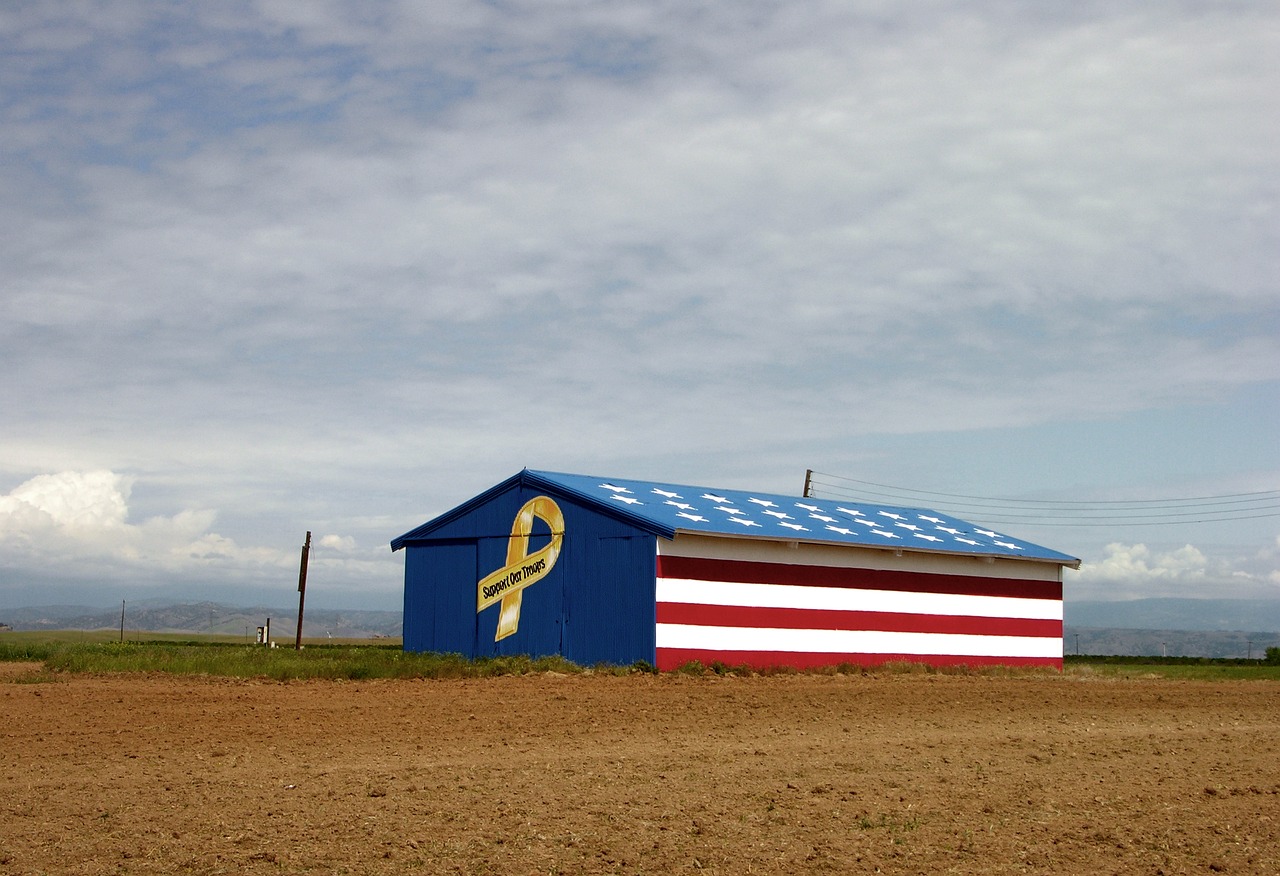
Support the Troops opens with an anecdote about the small town in Canada where Katharine Millar grew up. In 2001 Canada deployed forces to Afghanistan, and a number of enlisted young men from the town found themselves unexpectedly sent to war. Their families gave out yellow ‘support the troops’ ribbon magnets for local people to put on their cars. Millar recalls her parents, sceptical of the intervention, navigating the expectations accompanying the ribbon and its awkward invocation. They displayed the ribbon out of some sense of obligation and genuine care for the local boys overseas, while being uncomfortable with its implications, and seemingly content to let the ribbon disappear once the temperature had fallen.

The book does the impressive job of taking these quotidian gestures of solidarity and tying them to the imperial violence at the heart of the liberal social order. Taking a particular but persistent social discourse, it traces the historical emergence of an imperative that has become central, even foundational, to liberal politics. Elegantly and incisively, Millar shows the workings of the discourse as it has diffused through and become a standard of legitimate speech within contemporary political life. ‘Support the troops’ emerges as a “gendered, racialized logic of violent political obligation” (167) that is ideally positioned to manage civilian anxieties following the end of conscription, while carefully transferring questions of complicity and empire into expressions of care and solidarity within the state. The discourse conceals the harms of war while awkwardly reproducing the liberal community. Making its argument with clarity and force, and showcasing the power of rigorous feminist poststructural analysis, the book is a landmark intervention in scholarship on liberalism, war and violence.

Millar lays a particularly important challenge for anti-war politics. While many expressions of the imperative to ‘support the troops’ are delivered with a clear desire to promote wars, the book shows that the discourse is also central to anti-war politics. As demonstrated by their calls to ‘support the troops: bring them home’ and ‘support the troops, not the war’, opponents of contemporary wars are compelled to frame their opposition in terms of support for the troops. Drawing on her extensive study of discourse from newspapers, state documents and NGO websites, Millar argues that almost half of the incidences of the support the troops discourse in the UK and US come from an anti-war position. It emerges as an apparently necessary element of attempts to criticise wars, in a manner that reveals the discourse as a condition of intelligible political speech and reasonable dissent. If you want to speak politically, you must support the troops; if you don’t support the troops, you’re not a meaningful part of the political community. The problem here is that ‘support the troops’ is an inherently martial discourse. It reproduces the troops as the ideal citizen, solidifies the martiality of the liberal order, and reproduces the hierarchy between ‘our’ troops and others suffering in war (often at the hands of ‘our’ troops). In this respect, anti-war politics faces a trap: frame opposition to wars through support for the troops, and so reproduce the liberal martial order even in the midst of opposing a particular war; or don’t, and be expelled from the terrain of reasonable political speech.

Continue reading

Which Troops, What Support?

The third commentary in this week’s symposium on Katharine Millar’s Support the Troops: Military Obligation, Gender, and the Making of Political Community, from Cian O’Driscoll. Cian is Associate Professor in the Department of International Relations at Australian National University. His principal area of research is the intersection between normative international relations theory and the history of political thought, with a particular focus on the ethics of war. His published work examines the development of the just war tradition over time and the role it plays in circumscribing contemporary debates about the rights and wrongs of warfare. These themes are reflected in his two monographs: Victory: The Triumph and Tragedy of Just War (Oxford, 2019) and The Renegotiation of the Just War Tradition (Palgrave, 2008). Cian has also co-edited three volumes and his work has been published in leading journals in the field, including International Studies Quarterly, the European Journal of International Relations, the Journal of Strategic Studies, the Journal of Global Security StudiesReview of International StudiesEthics & International Affairs, and Millennium. He was the Principal Investigator on an ESRC project entitled Moral Victories and was a 2019 ISRF fellow. Cian is also currently the Chair of the International Ethics section of the International Studies Association.


Kate Millar’s Support the Troops is one of those books that leads you to look at the world in slightly different way than you did before. It offers a very rich account of how the StT discourse mobilises and sustains a very particular vision of civil-military relations—with implications for how we understand the nature of the modern liberal democratic state. I won’t summarise the book here, however, or even engage it in any direct way. Rather, what I want to do is think with it, extend it, and use it as a generative platform from which to reflect on four matters that are perhaps best described as orthogonal to Millar’s interests.

Seeing Both Sides

The first is the story of Willie Dunne. We don’t really meet anyone like Willie Dunne in Support The Troops, primarily because he’s fictional, after a fashion, but also because he doesn’t (straightforwardly) come from the US or the UK, which are the main sites for Kate’s analysis. Dunne, you see, is a character in Sebastian Barry’s celebrated novel about Irish soldiers serving in the British Army in World War One, A Long Long Way.  

Though fictional, Dunne’s story is rooted in the history. Dunne was one of 200,000 Irishmen—many of them of green, nationalist background—who responded to the call made in August 1914 by John Redmond, the leader of the Irish Parliamentary Party in Westminster, for the men of Ireland to fight for the British Army in Europe. “I say to the government that they may withdraw every one of their troops from Ireland,” Redmond had declared. “I say that the coast of Ireland will be defended from foreign invasion by her armed sons, and for this purpose armed nationalist Catholics in the south will be only too glad to join arms with the armed Protestant Ulstermen in the North.”[i] Over 30,000 Irishmen would subsequently die on the Western Front in the service of the British Army. Dunne would not die in Flanders; a different fate awaited him. He would be among the soldiers who happened to be home on furlough in Dublin in April 1916—a significant date in Irish history. In the wrong place, at the wrong time, he found his leave terminated early, as he was redirected by the Crown to Dublin City centre to put down by force what would later come to be known as the Easter Rising.

Continue reading

The International in Support the Troops

The second commentary in our ongoing symposium on Katharine Millar’s Support the Troops: Military Obligation, Gender, and the Making of Political Community. Pinar Bilgin is a professor of International Relations at Bilkent University, Ankara. She is the author of The International in Security, Security in the International (Routledge, 2016) and Regional Security in the Middle East: A Critical Perspective, 2nd ed. (Routledge, 2019). www.pinarbilgin.me


“Support” has emerged as “the new service” following a moment of disconnect with the troops in the UK and the US, we learn from Kate Millar’s book, Support the Troops. How about other parts of the world that apparently experienced no such disconnect? Support the Troops makes no claim to explain what happens outside the US and UK cases. But I wonder if, by missing aspects of the international, we’re missing a part of the condition of possibility of all this? In what follows, I will consider the international that has allowed for “support” to emerge “as the new service” in some parts of the world, even as others continue to serve and support in some other parts of the world.

Millar acknowledges that “StT discourses—almost uniformly—fail to engage with the international” in that Iraqi, Pakistani, and Afghan civilians killed by the wars are rarely mentioned” (175). But then, inter-state wars do not exhaust the international. The author also considers the colonial background. “These states— the US, UK, and others with pervasive support the troops practices, notably Canada and Australia—are also unified by their status as colonial states”, she notes (177). Indeed, following Tarak Barkawi’s argument in Soldiers of Empire, colonial military relations have shaped post-colonial military relations. Yet again, post-/colonial relations do not exhaust the international.

The international in Support the Troops can also be located in post-World War II relations between ‘Europe’ and ‘non-Europe’. When I write ‘Europe’, I refer to Western Europe and North America as the geographies that are put at the centre by those who are carriers of this particular way of relating to the world (Bilgin). Support the Troops underscores the self/other dimension of relations between the ‘Europe’ that left militarism behind and ‘non-Europe’, which seems to fail to do that, when it remarks that

The good story of liberalism is reinforced by the “bad story” of militarism, which align in their understanding of a stark differentiation between violence and formal politics: militarism occurs when something goes wrong with the institutional and normative separation of the civil from the military” (24).

But then, how did militarism come about in ‘non-Europe’?

Continue reading

Yellow Ribbons, Stickers, and Poppies. Is It Time To Support the Troops?

The first commentary in our symposium on Katharine Millar’s Support the Troops: Military Obligation, Gender, and the Making of Political Community (Oxford, 2022). After the author’s introduction yesterday, we turn to Dr Mirko Palestrino. Mirko is Lecturer in Sociology in the School of Politics and International Relations at Queen Mary, University of London. He researches the sociologies and politics of time and temporality, experiences and narratives of war, theories and practices of military victory, and the embodied politics of military training and deployment. His work has appeared in journals such as International Political Sociology and the Journal of Political Ideologies.

This post and all others in the symposium are also collected for easy reference here.


I walk past Islington Green in North London while on a break from writing this post. My mind is off, wondering, trying to disconnect from work. And yet, I cannot help but notice the multitude of poppy wreaths still adorning the war memorial in the park. Why are poppies still around, eight months past Remembrance Sunday? Why do I run into them now, while writing about Support the Troops? Carelessness of the municipality? Just old, plain serendipity? Perhaps so. Not if we follow Millar’s (2022) argument all the way through though.  

For Millar, poppies, yellow ribbons, bumper stickers, charities’ billboards, military ads, etc. are not simply the expression of heightened militarism or signs of an increasingly militarised society. Rather, they epitomise ‘support the troops’: a recent, yet dominant, discourse marking a transformation in ‘the normative structure of civil-military relations in the US and UK, as well as Western liberal democracies’ (p. 3). Supporting the troops is the new (necessary but not sufficient) condition for political membership and belonging, as well as “good” masculinity and personhood.

While the traditional social contractarian logic underpinning liberalism posited military service as a key condition for good citizenship (and masculinity), in the age of distant and forever wars fought by professional armies, the good liberal subject is “only” asked to support the troops, not to fight alongside them. Support, in a nutshell, ‘is the new service’ (p. 146). Islington Green’s poppy wreaths and other similar artefacts are a tangible reminder of these dynamics. In fact, they are the stuff that makes this shift possible in the first place.

Through a remarkably rigorous discourse analysis of an impressively vast corpus of sources, Millar demonstrates that ‘support the troops’ (StT) is much more than a catchy slogan or political invitation. ‘[S]upporting the troops’, she explains, ‘goes beyond what we might typically think of as militarism… it actively constitutes normative citizenship, the boundaries of the political, and the socially intelligible’ (10). Understood as discourse – or ‘discursive martiality’ (see pp. 35-36) – StT emerges as a thick bundle of social relations that are constitutive of political communities, gender norms, and normative expectations around the use of violence.

Continue reading

Support the Troops: Military Obligation, Gender, and the Making of Political Community

A new book symposium launches today, in which guest contributors consider Katharine Millar’s Support the Troops: Military Obligation, Gender, and the Making of Political Community (Oxford, 2022). Katharine is an Assistant Professor in the Department of International Relations at the London School of Economics. Her broad research interests lie in examining the gendered cultural narratives underlying the modern collective use of force. Her on-going research examines gender, race (particularly whiteness), militarism, and contemporary populism(s); gender and cybersecurity; and the politics of hypocrisy. Dr. Millar has also published on female combatants, gendered representations of violent death, military and civilian masculinity, and critical conceptions of militarism. Support the Troops won the 2023 Canadian Political Science Association Prize and received honourable mention in the 2023 LHM Ling First Book Prize from the British International Studies Association.

Commentaries will follow all this week, with a rejoinder from Katharine at the end.


There are two(ish) stories to tell about my recent book, Support the Troops: Military Obligation, Gender, and the Making of Political Community. Both are true. The first is the fairly classic identification of a social scientific puzzle. A variety of surveys show that in the years following the invasions of Iraq and Afghanistan, some reasonably large portion of citizens of the invading coalition states regularly thanked military personnel for serving in wars they themselves opposed. On its face, that seems surprising – a new iteration on the social scientific preoccupation with why people act inconsistently (or, if you like, though I wouldn’t put it this way, irrationally).

The second story is about being a teenager in rural Canada at the time of the invasion of Afghanistan. I watched the deployment of enlisted young men and the sudden, accompanying proliferation of yellow ribbons and calls to “support the troops” (StT). Back then, I was upset by the idea that to care for people you knew, you had to sign off on a war against people far away. From the perspective of the present, I see how our social relations were inflected by the war, as love for specific deployed young men, and concern for their families, came to be expressed in the display of symbolism assimilated to support for the military. Those practices arguably provide a fairly simple response to the first puzzle. People support the troops because they feel they should, because they love and care for military personnel, because they live in community. People support the troops because it seems right.

That last bit brings me to another, perhaps less salutary story (story three? story 2.5?) about the framing of my argument. When I began the research that would become the book, academic and policy experts were politely skeptical that “supporting the troops” was interesting or important. As with people in my hometown, it seemed obvious to them that, in the context of a contested war, people would support the troops. In their reading (note how I’m sneaking the alternative explanation in early), supporting the troops was just an epiphenomenon of the unpopularity of the war in Iraq. In hindsight, the iteration of normalized morality of supporting the troops across my Canadian hometown and my professional academic context in the UK speaks to the hegemony and blurry, transnational boundaries of StT, as well as its entanglement with liberal democracy. At the time, though, I was just mad. And a significant motivation for the project became establishing that “supporting the troops” mattered as a distinct socio-political phenomenon in its own right.

Continue reading

The Ideal International Institution: A Response

The concluding post from the author herself, drawing our symposium on The Ideal River to a close. Dr Joanne Yao is Senior Lecturer in International Relations in the School of Politics and International Relations at Queen Mary, University of London. Previously, Joanne taught at Durham University and the LSE, where she completed her PhD in 2017. Joanne was also one of three editors of Millennium: Journal of International Studies for Volume 43 (2014-2015) and is currently a member of Millennium’s Board of Trustees.Her research centers on environmental history and politics, historical international relations, international hierarchies and orders, and the development of early international organizationsThe Ideal River is her first book; Joanne’s next project focuses on the history of Antarctica and early outer space exploration.


One question that repeatedly comes up from readers of this book is about its disciplinary identity. On the one hand, this is one of the book’s strengths – it seems to shapeshift across disciplinary boundaries and some of the central conclusions, particularly on the desire to control nature as a marker of a Western-led (imposed) modernity, might have been arrived at from a variety of different disciplinary starting points. On the other hand, this question puzzles me since the book is self-consciously situated in International Relations which is a clear path-dependent consequence of the intellectual riverbeds my own thinking has flown through. Perhaps what they wish to know is how did someone who started her academic life with the ‘Great Debates’ of IR end up contemplating the physical and metaphysical river (especially since I might have gotten ‘here’ more quickly and eloquently from elsewhere). But like all aspects of social and political life, we don’t get to re-run the experiment, and so this book is here, with its IR-warts and all. 

But aside from my own intellectually situatedness, this book is a work of IR because, alongside the three rivers, international institutions are also pivotal characters in my story. Perhaps starting from IR, this point is obvious, and I felt the harder sell was to illuminate my three rivers as worthy protagonists in a story about international order. For this, I might have neglected my other characters. 

Continue reading