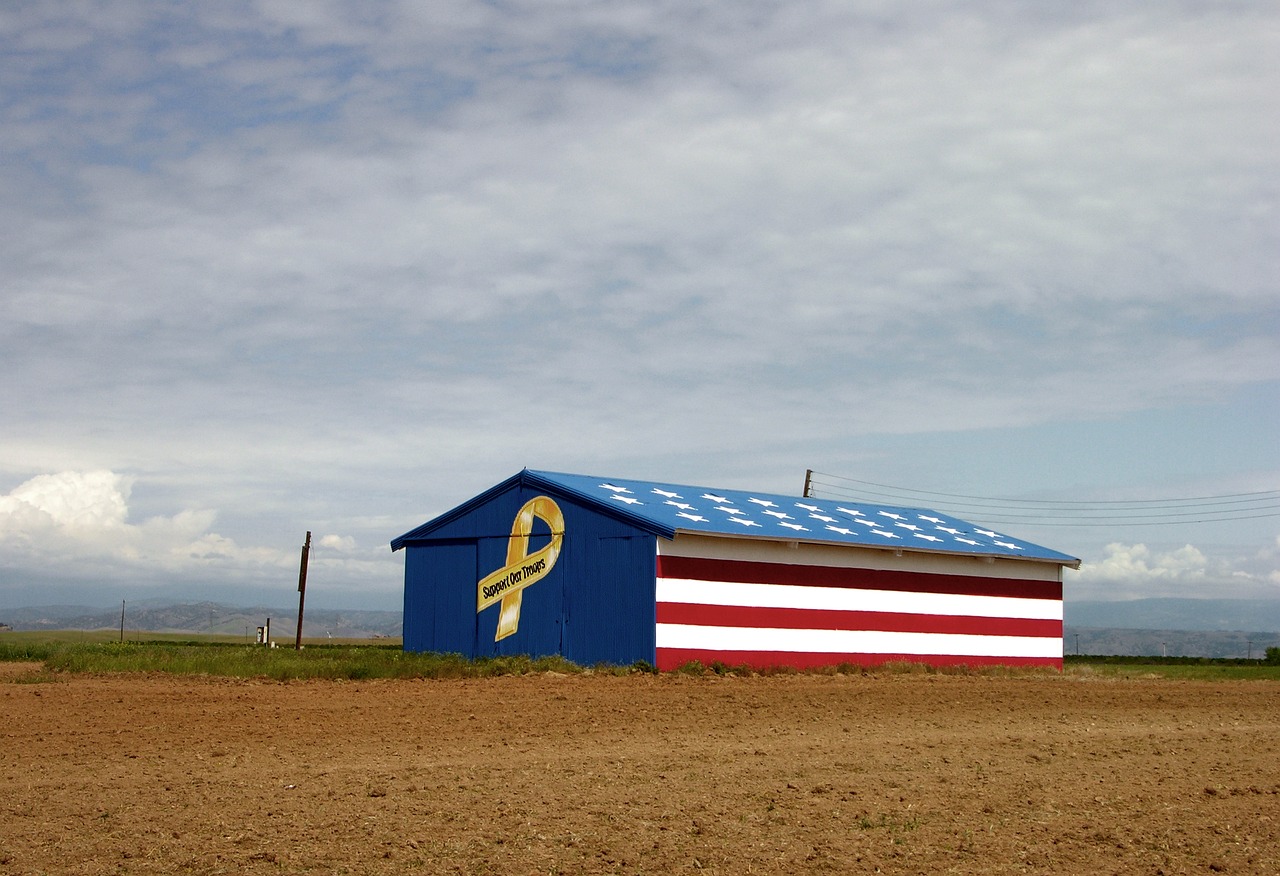
Support the Troops: A Response

Rounding off this week’s symposium on Support the Troops: Military Obligation, Gender, and the Making of Political Community, Katharine Millar responds to commentaries from Mirko Palestrino, Pinar Bilgin, Cian O’Driscoll, and Ellen Martin and Chris Rossdale.


To begin, my immense gratitude to Pinar Bilgin, Cian O’Driscoll, Ellen Martin, Mirko Palestrino, and Chris Rossdale for their close reading, sharp observations, and thoughtful engagement with my work. It’s an intimidating pleasure to have scholars whose work I so value, and whose insights to which I’m indebted, discuss the book. They’ve given me a lot to think about which, over ten years into this project, is a real gift.

Much of the perceptive (and generous) commentary offers a push to clarify and (re)consider what the book does or does not do, does or does not include, and how its insights might be extended to related phenomena. Not unlike the intro to the forum, there are (at least) two ways of approaching this discussion.

The first, I think, is fairly formal answer about scope conditions, and the ambitions of the book to empirical and analytic generalizability. As the reviewers, note, the account of the “fracture” of the liberal military contract, and subsequent politics of supporting the troops, isn’t meant to be empirically generalizable beyond the US and UK. Likewise, I attend only to mainstream and elite discourses; I don’t include the perspectives of serving military personnel, or less organized resistance to the obligation to support the troops.

There are also several entailments of my argument the book doesn’t consider because, following its own logic of inquiry, it can’t. This is because, analytically, I’m interested in the problem that “support the troops” discourses work to solve: the legitimation and normalisation of citizens’ participation in collective violence for/by the state. Liberal democracies encounter a particular spin on this problem, as ideological commitments to autonomy, liberty, and equality sit uneasily with the expropriation of citizens’ time, labour, and lives in the form of military service. But all states encounter a version of this quandry; even in liberal democracies, “support for the troops” doesn’t manifest mechanistically or uniformly. And my account of “supporting the troops” is pitched at the level of a broad discursive formation, and the conditioning of social intelligibility, rather than an interrogation of the intentionality and experiences of “support” of specific individuals. (This latter is incredibly interesting; a discourse analytic approach just can’t get there).

Continue reading

Governing Masculinity: A Call for Contributions

A two-day conference to be held at Queen Mary, University of London, 21-22 February 2024

Keynote by Professor Raewyn Connell

Deadline for abstracts: Monday 4 September 2023


Masculinity needs changing. As a manifestation of patriarchy, a predictor of violence, and a straight-jacket of identity, masculinity is widely identified as a culprit and symptom: problematic, traditional, ‘hyper’ and toxic. In response a loose network of feminists and allies, public health professionals, scholar-activists, social workers, civil society groups, international organisations and military and police forces have sought to reform masculinity for the better. Their efforts range from positive fatherhood campaigns to counter-terrorism measures, and from religious role models to queer theory. ‘Masculinity’ as a concept and configuration of practices is at the same time undergoing another round of crisis and change, split along axes of class, nation, racialisation, sexuality, gender identity and culture, torn between projects of restoration and abolition.

This two-day conference will gather academics, practitioners and activists to critically interrogate contemporary masculinity interventions in local, national and transnational layers. What new governance arrangements and sciences of public health are being formed? What power relations are at work, especially across shifting boundaries of global north and south? What is the role of specific political, economic and cultural institutions in propagating new varieties of good masculinity? How are these new masculine subjectivities being produced? And with what effects, whether generative, perilous or ambivalent? We hope that the conference will address these questions in relation to the production and/or policing of masculinity in its many variants, including (but not limited to) its traditional, trans, Black, ally, alt-right, postcolonial, hegemonic, survivor, migrant, postconflict, inclusive, violent, and toxic forms.

We invite contributions in three formats:

  1. Academic papers: Research from any disciplinary perspective on any aspect of masculinity interventions or the broader politics of changing or governing masculinities. Please submit a title and abstract of 200-300 words on the content of your paper. We anticipate that one outcome of the conference will be a journal special issue, with papers presented at the conference making up the majority of content.
  2. Reports from the field: Findings or reflections from practice and activism, addressing organisational models of change, successes or challenges in masculinity interventions, or personal experiences of transformative masculinity work. Please submit abstracts of 200-300 words including details of the intervention practice and experience plus any relevant support documentation (e.g. findings, theory of change, advocacy by your organisation or initiative).
  3. Creative: Media that capture some dimension of transforming masculinity. Please outline the content of the work, its medium (photography, film, poetry, etc.) and any space or technology requirements. Note that we are not able to pay screening or display fees without prior discussion.

The conference will take place at Queen Mary, University of London on Wednesday 21 and Thursday 22 February 2024. We are able to support a small number of international participants with flights, accommodation and visa costs, and to provide accommodation and travel support for a larger number of UK participants. Applicants are asked to indicate if they require flight, accommodation and/or visa support (if from abroad) or travel and/or accommodation support (if within the UK). For UK participants, priority will be given to early career and precariously employed participants.

Please submit abstracts by Monday 4 September 2023 to Paul Kirby (p.kirby@qmul.ac.uk) and/or Chloé Lewis (chloe.lewis@qmul.ac.uk). Inquiries in advance are welcome.

This call is also available as a PDF document.

This conference is an event of the UKRI GCRF Gender, Justice and Security Hub (http://thegenderhub.com / https://twitter.com/TheGenderHub).

Making and Breaking Families in Danish Nation-Building

A guest post from Malene H. Jacobsen. Malene is currently a Postdoctoral Fellow at the Department of Geography, Maynooth University, Ireland. Grounded in feminist political geography, Malene’s work focuses on war, displacement, and the lived experience of refuge. Over the years, her research has been supported by the US National Science Foundation, the Social Science Research Council, and the Danish Institute in Damascus. Malene has published peer-reviewed articles and chapters on issues related to forced migration, citizenship, and feminist methodologies. Funded by the Irish Research Council, her current research project “Precarious Protection: Syrian and Somali Struggles for Refuge in Denmark” explores the legal shift towards temporary refugee protection in Denmark. 


Babies, birth rates, and borders. Like many other countries with declining populations, Denmark has become increasingly anxious about falling birth rates and their repercussions for the viability of the country’s famed welfare state. To bolster fertility rates, several campaigns have been created to encourage young women and heterosexual couples to have (more) children, preferably early in their lives. For instance, in 2015, the Danish Public Broadcaster DR produced a Saturday evening program called “Bang for Denmark” (Knald for Danmark), which focused on how Danes could become more reproductive. The same year, the municipality of Copenhagen launched the “Count your eggs” (Tæl dine æg) campaign to encourage women to have children earlier in their lives. In 2016, the Danish travel company Spies aired commercials under the title “Do it for Denmark!” Using crude terms and questionable statistics, these commercials encouraged Danes to go on short getaways to Paris or to take active sport holidays to foreign destinations to increase their fitness and desire for sex. Spies linked foreign travel with fertility, claiming that 10% of Danes are conceived abroad. While acknowledging its own commercial interests in promoting foreign travel, Spies urged young Danes to “do it”, if not for the nation (fædreland) then for “mom”.

These commercials presented a specific imaginary of the Danish family. Spies used white actors and portrayed an idealized version of heterosexual coupledom by showing upper-middle class leisure activities including traveling to foreign destinations, doing yoga, playing tennis, and dining out. “Doing it for Denmark”, then, means (re)producing the white, heteronormative, bourgeois nuclear family. And these efforts seem to be working. Several of these campaigns claim that birth rates are on the upswing, even if they have yet to reach the state’s desired levels. However, Denmark’s celebration of fertility and the family does not extend to all intimate ties. Alongside its growing obsession with babies and birthrates, the project of reproducing the white, heteronormative, bourgeois nuclear family has also involved a range of policies and practices that regulate, separate, and preclude the intimate ties of racialized, colonized, queered, and other subaltern peoples.

If reproduction, as Sophie Lewis[i] has elaborated, is an irreducibly raced and classed project of social engineering, I argue that in the Danish context this project has long been and continues to be a distinctly geopolitical project of bordering and intimate separation. I develop this claim by exploring the forced separation of kin across borders using two examples, namely the repatriation of Danish citizen children currently living in prison camps in Syria and the Danish state’s attempt to strip Syrian refugees of their protection status. As I explore below, these examples remain hotly contested by politicians, NGOs, and legal practitioners, yet are rarely seen as connected. By bringing them together and situating them in Denmark’s long history of empire, I de-exceptionalize them as somehow isolated and unprecedented, and instead show how they are part of a broader project of racialized nation building.

Continue reading

Judith Butler Goes to Norway

A guest post from Ida Roland Birkvad. Ida is a PhD student in the School of Politics and International Relations at Queen Mary, University of London. Her thesis interrogates the concept of Aryanism, which she understands as a set of contingent and contradictory relations connecting India and Europe. Her broader research interests include global intellectual thought and history, and postcolonial theory.


Butler, Judith. 2020. Kjønn, Performativitet og Sårbarhet. Preface by Stine Helena Bang Svendsen. Translated by Lars Holm-Hansen.Oslo: Cappelen Damm, Cappelens Upopulære Skrifter. (147 pages)

For the very first time, the work of philosopher and queer theorist Judith Butler is being translated into Norwegian, in a publication encompassing extensive excerpts from her books Gender Trouble (1990), Giving an Account of Oneself (2005) and Notes Towards a Performative Theory of Assembly (2018).

Why is it that we had to wait until the year 2020 to be able to read Butler in Norwegian? One way to think about that question might be to interrogate the unheimlich nature of her work in a Norwegian context. How does Butler’s theories of the performativity and fiction of gender fare in Norway, a country where the most successful feminist movements have been those predominantly reformist in nature, concentrated around state-centric demands for ‘gender equality’? How is Butler read in a country whose feminist imaginaries can be said to be particularly ‘womb-centric’, with an often inbuilt ontological scepticism of genderbending impetuses such as Butler’s (Jacobsen in Bendixsen, Bringslid, and Vike 2017)? Poststructuralism, the theoretical impulse most central to her work, has also been comparatively late to arrive in Norway (Riiser Gundersen 2016). And when it appeared, along with its queer theoretical descendants, it was highly contested (Danbolt 2012).

This piece invites us to consider these questions, thinking both with Butler and her critics to examine the potentials and pitfalls of contemporary Norwegian political discourses on the relationship between political emancipation and ‘the body’.

Continue reading

Loving Exclusions: Marriage, Emotional Attachments and Global Inequalities

A guest post from V. Spike Peterson. Spike is Professor of International Relations at the University of Arizona. She is a critical social theorist whose research interests stem from anti-war, civil rights and feminist activism in the US and many years of work/travel/residence ‘outside’ of the West. Background studies in anthropology, historical sociology and communications inform her work in IR, which queries how structural hierarchies of gender, sexuality, class, ethnicity/race and nation are historically produced, ideologically normalized, continuously intersecting, and potentially transformed. Her publications span genealogies of sex, family, science and state formation; critiques of informalization, global political economy and its in/securities; intimate-global relations, racial logics, citizenship regimes, alt-right nationalisms, and the politics of im/migration in our fraught neoliberal, neo-imperial present. Her most recent work aims to raise critical awareness of how power relations of privilege operate to reproduce intentional and – surprisingly and importantly – unintentional resistance to transformative social change.


Ah, love! Fairy tales and romantic comedies promote living the quest for love and its idealized consummation in the ‘happily ever after’ of married life. What could be better than love? The ‘sanctity of marriage’ and ‘love of family’ are touted by conservatives, love of god by religious believers, love of one’s nation by patriots, love of oneself by self-help manuals and consumerist advertising, and love of prosperity by economists. Academics too are on board, urging closer attention to emotional investments and erotic practices in studies of social life, and asking how institutions idealizing love also foster inequalities and exclusions. I explore here the loving exclusions of marriage: the state-sanctioned institution widely presumed to epitomize love, its passionate commitments, and its importance for happy couples, healthy families, thriving communities, and stable nations.

Lauren Berlant observes that ‘intimacy builds worlds,’1 and I argue that the intimacy of marriage has built a world of inequalities. The heteropatriarchal premises of marriage are deeply ingrained, not only in laws but in hearts and minds worldwide. Given these premises, it is no surprise that feminists and queers have developed trenchant critiques of the institution. I endorse these critiques but argue that even more is at stake: that the institution of marriage produces not only inequalities of gender and sexuality but also, and inextricably, of race, class and national prosperity. That these inequalities are geopolitically problematic is readily acknowledged, but how marriage figures in producing, exacerbating or complicating them is rarely addressed. The point is not to judge individuals – who have varying reasons for supporting and/or participating in marriage – but to critically assess the political work that institutions do.

I recap several entwined inquiries: how marriage matters constitutively to the intergenerational continuity of states/nations; how Eurocentric manipulation of marriage figures in producing modernity’s ‘race difference’; and how fluid, ‘mobile essentialisms’ of race matter affectively, culturally and materially in our colonial present of increasing global inequalities, migration pressures, nationalist populisms and xenophobic hostilities. The hope is to illuminate unfamiliar terrain: how marriage historically and currently re/produces inequalities through the state/nation’s regulation of sexual practices, ethnic/racial relations, resource distributions, and citizenship (hence, im/migration) options.2

Continue reading

Shelter in Place: The Feminist and Queer Insecurities of ‘Home’

The third in our series of teach-ins and interventions on the coronavirus crisis,, from Catherine Baker. Catherine is Senior Lecturer in 20th Century History at the University of Hull, where her current projects include relationships between the military and popular culture; the cultural politics of international events (including the Eurovision Song Contest); LGBTQ politics and identities since the late Cold War, including queer representation in media; and ‘race’ in the Yugoslav region. Her most recent publication is the edited collection Making War on Bodies: Militarisation, Aesthetics and Embodiment in International Relations (University of Edinburgh Press, 2020).


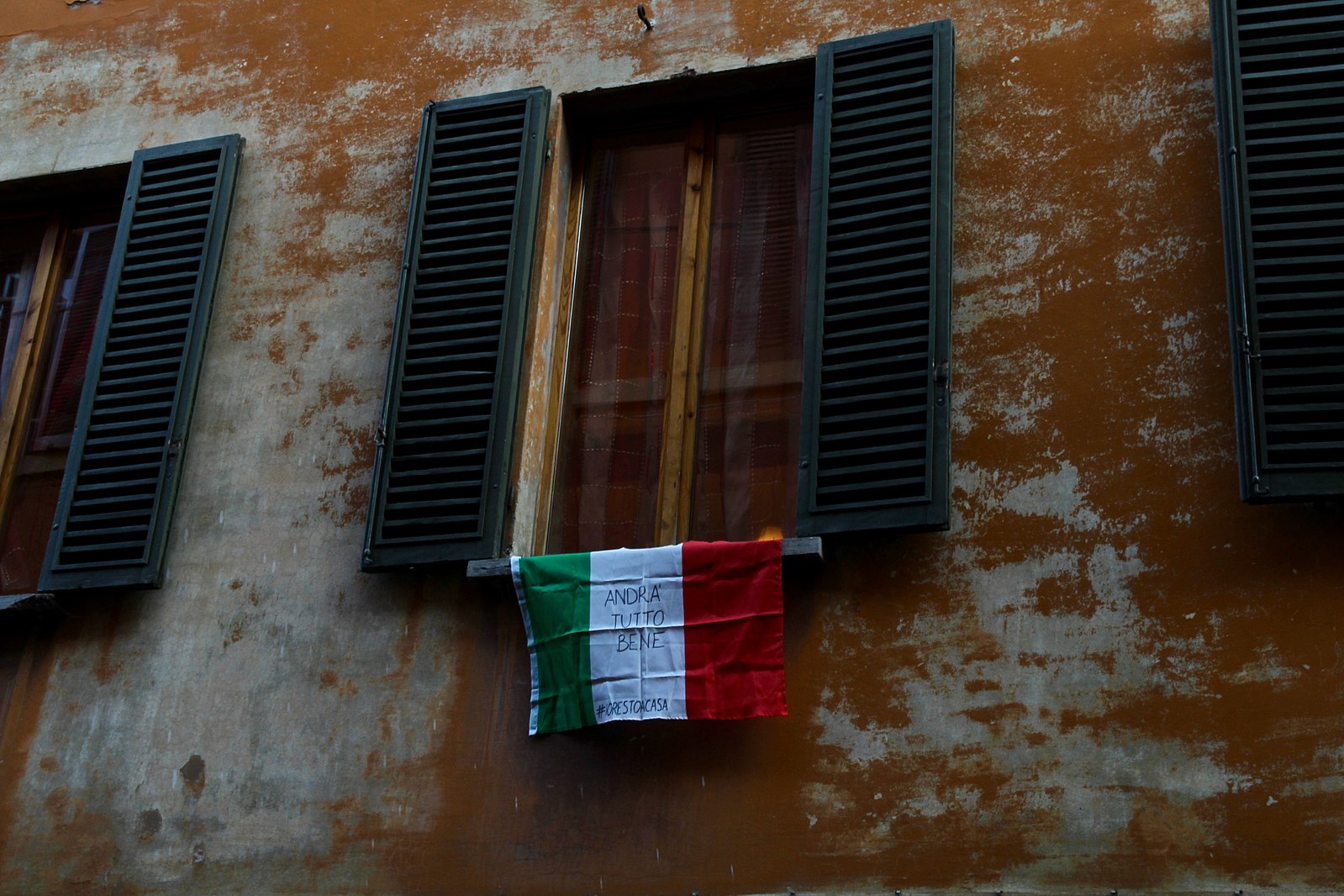
Italian Corona Flag


The UK government message is plain, stretched out over socially-distanced podiums at press conferences: ‘Stay home, protect the NHS, save lives.’

Other national leaders and US state governors have similarly appealed to the public to respect emergency shelter-in-place or lockdown regimes, police are patrolling the streets to enforce orders for people to remain indoors, social media users have framed staying at home as a communitarian effort through hashtag campaigns such as Italy’s #iorestoacasa (‘I’m staying at home’), and celebrities are performing their contributions to public morale by sharing video messages filmed in their well-appointed homes.

But feminist and queer understandings of security remind us that even in a global pandemic home can be the least secure place of all, through the forms of structural and physical violence that manifest within.

Homes themselves will be worsening the health of those living in conditions which are too cramped to distance or isolate themselves safely, those suffering the mental health consequences of not having private space or guaranteed access to the open air, and those whose housing depends on informal agreements with arbitrary or discriminatory landlords in the midst of a global economic shutdown. All these circumstances, which can be seen as structural violence, are more likely to affect individuals who have been racialised into stigmatised minority groups, queer and trans people with limited access to employment protections, and migrants kept out of stable housing by the enforcement of the ‘everywhere’ or ‘polymorphic’ border.

Continue reading

Some Thoughts on ‘Toxic Masculinity’

A guest post from four friends of the blog on the topic of (toxic) masculinity. Maria Tanyag is a Lecturer at the Department of International Relations, Coral Bell School of Asia Pacific Affairs, Australian National University. Twitter: @maria_tanyag. Ibrahim Bahati is Mastercard Foundation Graduate scholar at the American University of Beirut, Lebanon. Twitter: @Bahabris. David Duriesmith is Development Fellow at the School of Political Science and International Studies, The University of Queensland. Twitter: @DavidDuriesmith. Marysia Zalewski is Professor of International Relations in the School of Law & Politics at Cardiff University, UK. Twitter: @ProfMarysiaZed. Each shared their thoughts and reflections on two questions – (i) How do you understand the idea of ‘toxic masculinity’? and (ii) What can ‘we’ do about [toxic] masculinity?


How do you understand the idea of ‘toxic masculinity’?

Maria

I have many reservations about the increasing use of ‘toxic masculinity’ (noted in 2018 as the word of the year by Oxford Dictionaries). As a ‘buzzword’ it simply depoliticises wider inequalities and individualises and de-contextualises what specifically constitutes the ‘toxic’ in/with/through masculinit(ies). And for me, it is no coincidence that toxic has attracted wider applications to some of its original uses in relation to health and the environment at precisely a time when we are observing the rise of extremist ideologies, reversals in women’s and human rights, and environmental degradation. If we work with the feminist idea of a ‘continuum of violence’ we might be able to articulate how toxicity occurs on multiple levels or scales, as well as how it has come to represent a multi-dimensional phenomenon. The term toxic might reveal how it is not just individuals that incite a range of bodily harms, but also to gradual depletions in health and the environment. All of these are linked to power structures and embodied in gendered ways.

In my research on women’s bodily autonomy in the Philippines, I find that in social media, concepts such as toxic relationships, toxic politics, toxic workplaces, and even toxic ‘national’ culture (as in ‘toxic Filipino culture’) are increasingly used. I find this notion that there are toxic aspects of culture that can go hand in hand with nationalist sentiments and representations of ‘Pinoy Pride’.[1] I myself have started using ‘toxic’ in making sense of polarised politics in the Philippines under Duterte. Toxic is a very appropriate word to describe how my body reacts to hearing him speak and upon seeing images of him particularly as he interacts with women. Consequently, part of self-care for me has been to ‘detoxify’ or unplug from watching local news from time to time, though I know friends who do the opposite. They ‘rant’ or vent through social media to ‘purge’ the toxins out of their system.

Continue reading

Property Abolitionism: Race, Colony, Body, Land

For the final post in our symposium on Colonial Lives of Property, Brenna Bhandar replies to her interlocutors. Brenna is Senior Lecturer in Law at SOAS, University of London. She is author of Colonial Lives of Property: Law, Land and Racial Regimes of Ownership (DUP: 2018) and co-editor (with Jon Goldberg-Hiller) of Plastic Materialities: Politics, Legality and Metamorphosis in the Work of Catherine Malabou (DUP: 2015). She is currently completing Thinking Liberation: anti-racist feminist practice, a book on critical race feminisms with Rafeef Ziadah.


Thanks to all five contributors for these incredibly thoughtful interventions. It is a real gift to have such expansive and thorough responses to one’s work, and to have been given the opportunity to consider the questions they raise about the potential for some of the ideas in the book to travel into domains unexplored in the text. It is impossible to respond to each of the issues raised, but I have chosen 4 different themes to discuss which I think connect many of the articles.

One of the themes arising from the responses to the book is a question about the extent to which the concept, “racial regimes of ownership” is adequate to grasp the realities of colonialism outside of the sphere of British colonial and imperial rule.  To what extent has the co-emergence of racial subjectivities and capitalist property relations been a central part of the advent of colonial modernities beyond the settler colony?

Continue reading

States and Stilettos

The last commentary in our forum on Parashar, Tickner and True (eds.) Revisiting Gendered States: Feminist Imaginings of the State in International Relations from Shine Choi. Shine is Lecturer in Politics and International Relations at Massey University, where her work focuses on North Korea, visuality and aesthetics. She is also an Associate Editor for the International Feminist Journal of Politics and a co-editor of the Creative Interventions in Global Politics book series. Her recent publications include ‘Questioning the International: (Un)making Bosnian and Korean Conflicts, Cinematically’, (with Maria-Adriana Deiana) in Trans-Humanities Journal. The complete set of posts in this series is available here.


Choi Shoe

In the Afterward essay to Revisiting Gendered States, Christine Sylvester suggests feminists focus on people’s experiences of the state, and as an aside, also asks us to take off our stilettos. Taking the state as an agent or structure in our studies impedes feminist objectives; it is too snug with power even if we critique it. Fashion choice is telling.

This is now the second time, in the last month, that a feminist IR reading has nudged me, as a parenthetical in a larger argument, to reconsider my fashion choice in wearing heels. And now that I think about it, I recall at least two other conversations with academics (one was a fellow IR theory friend, the other a colleague in anthropology who has now retired) where they confide how they would personally never wear heels because their colleagues would never take them seriously if they did. I had assumed their colleagues in reference were men but now I am not so sure.

These shared assumptions about heels – and stilettos perhaps being an extreme, and as a result, an easy type of heels to dismiss – in these conversations/readings are curious. They got me wondering why serious thinking, and more importantly, serious feminist politics cannot be done wearing heels. This is not the lesson we are learning from drag queens about stilettos, and I cannot help but wonder why it takes drag queens to teach us that serious affective embodied thinking and doing do happen in most ridiculous of heels, full makeup and by ‘eccentric’ looking people. Why do we have all these social, cultural gendered ideas around what serious work/wear look like?

Continue reading

States of Intersection: Beyond womenandchildren

The next commentary on Revisiting Gendered States: Feminist Imaginings of the State in International Relations (the full series is here).


Although it can no longer be claimed with any credibility that gender is at the fringes of International Relations as a discipline, consistently excellent and adequately nuanced analyses of the gendered nature of IR and its touchstone – the state – are still few and far between. In a field otherwise saturated by liberal feminism focused largely on the West (the US, the UK and Western Europe to be precise), Swati Parashar, J Ann Tickner and Jacqui True’s Revisiting Gendered States: Feminist Imaginings of the State in International Relations provides a refreshing change. Bookended by an incisive forward by Spike Peterson and a compelling, almost poetic afterward by Christine Sylvester are eleven ‘substantive’, and uniformly thought-provoking chapters. In less than 200 pages the contributions to Revisiting Gendered States manage to traverse the whole spectrum of issues sacralized by IR: state formation, borders and bordering practices, terrorism, security, identity and belonging.

The text reopens the discussion the seminal Gendering States: Feminist (Re)visions of International Relations Theory published in 1992 and edited by Spike Peterson, initiated. Gendered States has the same point of departure – an examination, and concomitant critique of the centrality of the masculine, patriarchal state in IR but it does so in a distinctly 21st century context. The state is no longer a blackhole or a rarefied rational actor, but rather a set of complex and often confused practices: an effect, symptom and perpetrator of globalisation, securitisation, and nationalism. The chapters are truly global in scope, drawing on case studies from Indonesia, Sri Lanka, India, the Middle East, Indonesia and Australia. The contributions are not merely empirically heterodox, they are also theoretically pluralist, drawing variously on queer theory, assemblage theory, affect theory and postcolonialism alongside more mainstream IR theory. Continue reading