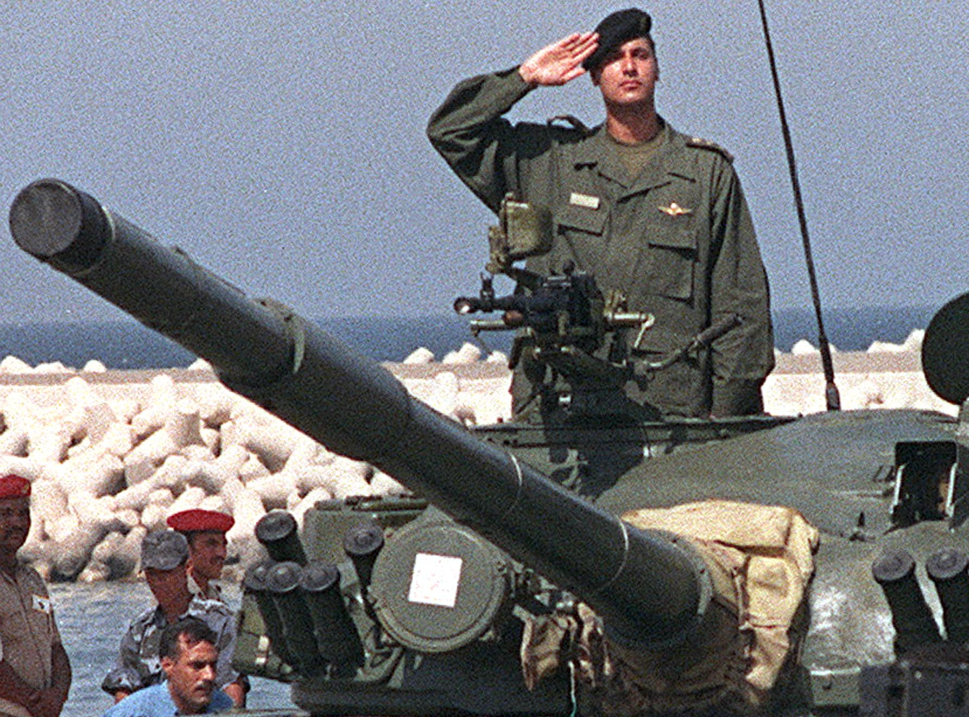
The Qaddafi Controversy, Regurgitated

You might have thought that the realities of muscular interventionism in Libya had by now trumped the apologetics of constructive engagement. But Benjamin Barber has other ideas. His counter-attack to the nay-sayers deploys several connected themes, all of which appeal, once again, to the purported political realism of befriending Saif Gaddafi and the corresponding idealism and naivety of opposing such benevolent stewardship.

First, the attacks on the fortunate son have been “overwrought”, and have materially endangered the chances of peace by pissing him off. Second, Saif remains “a man divided, torn between years of work on behalf of genuine reform that at times put him at risk”, and thus still open to our charms. Third, he is even now working for civil society and democracy, pressuring his father to release journalists and in effect continuing the work of his foundation as a fifth column within the regime. Yes, Saif has been naughty (I’m not angry, I’m just disappointed), but his intentions are still at least partly good, and failure to achieve a better Libya through a rapprochement with him ultimately condemns we who would rather cling to the saddle of our high-horse than descend into the messy realities of progress.

The riposte is bold, and at least has the merit of maintaining the original analysis, no matter how much short-term developments may seem to degrade it. But the rationalisation, wrapped in what Anthony Barnett so aptly characterises as a ‘cult of sincerity’, falls somewhat short. The central meme, repeated by David Held, represents Saif Gaddafi as an enforcer-cum-reformer of near schizophrenic proportions. While it is (now) readily admitted that he is personally responsible for human wrongs, it also becomes necessary to insist on his internal, and magnificently cloaked, commitment to human rights. This may work for those who knew him personally and remain invested in his personal quirks and charms, but can hardly stand as a recommendation for his role as good faith mediator. As Barber himself argues (with a different intent and a suspect logic) if Saif is both revolution and reaction then he is also neither, and therefore a cipher for the projection of political fantasies.

These justifications repeat binaries of politics/morality and realism/idealism in dismissing critics (we were engaged in a calculated politics while you luxuriate in abstract ethics). Yet they also almost attempt, ham-fisted and inchoate, to escape them. After all, the defence is not that Saif is merely our bastard. Nor is it that he is a true rebel son, prepared to overthrow not only the personal dynamic of filial submission but also the political fatherhood of little green books, torture prisons and outré couture. He is said to be both, flickering and indistinct, as if this commends him. As if he can only change things because he is the natural heir of the old order. He moves between our worlds, you see. A Venn-diagrammed endorsement.

Continue reading

The Qaddafi Controversy

Saif Gaddafi (PhD, LSE, 2008) has lost a lot of friends recently. Even Mariah Carey is embarrassed by him now. The institution to which I have some personal and professional attachment is implicated in a number of intellectual crimes and misdemeanours, as may be a swathe of research on democracy itself. Investigations are under way, by bodies both official and unofficial. All of this now feels faintly old-hat (how much has happened in the last month?), even rather distasteful given the high politics and national destinies currently in the balance. So let the defence be pre-emptive: the academy has political uses, and those with some stake in it need feel no shame in discussing that. If crises are to be opportunities, let us at least attempt to respond to them with clarity and coherence. After all, our efforts are much more likely to matter here than in self-serving postures as the shapers of global destiny.

Saif’s academic predicament is both a substantive issue in its own right and a symptom. As substance, there is now a conversation of sorts around complicity and blame. Over the last weeks, David Held has appealed for calm and attempted a fuller justification of his mentorship (Held was not the thesis supervisor and Saif was not even a research student in his Department at the time, although he, um, “met with him every two or three months, sometimes more frequently, as I would with any PhD student who came to me for advice”). Most fundamentally, it was not naivety but a cautious realism based on material evidence that led a pre-eminent theorist of democracy to enter into what we could not unreasonably call ‘constructive engagement’. [1]

Held characterises the resistance of Fred Halliday to all this as reflecting his view that “in essence, [Saif] was always just a Gaddafi”, which of course makes him sound like someone in thrall to a geneticist theory of dictatorship. The actual objection was somewhat more measured, and, if only ‘in retrospect’, entirely astute:

Continue reading

Excuses In Our Sleep: Libya, the Arms Trade, Universities and the Political Economy of Human Rights

A common purpose
Gains value as a common goal
Let’s flail together
If we must flail at all.
Deep in the heart of the battle
Caught in the switch of the flow
Freedom from notes, she sells freedom from songs
She sells freedom and arms Eritrea.
I could have made these excuses in my sleep
As if anyone had doubted them at all
But if we arm Eritrea we won’t have to pay her
And everyone can go home.

Future Of The Left, ‘Arming Eritrea’ (2009)

This now fairly-widely disseminated video of Saif Gaddafi brandishing his militarised manhood and promising death can only fuel the paroxysms of guilt and denial afflicting those previously enamoured of him. Not a topic to be neglected, fersure, and one that will be returned here at The Disorder Of Things soon (I promise). But there is another element at play, and one rather more materially linked to massacre and repression. Where are the guns coming from?

Last month, The Guardian engaged in one of its periodic moments of data-explication, borrowing somewhat from Dan O’Huiginn to set out which regimes get UK arms exports, and how much. Since David Cameron is unashamed in his claims that we’re merely helping democracies protect themselves (barring minor hiccups), the numbers and relations make interesting reading. The conventional (if perhaps flawed) metric for such political goods as freedom and democracy is that provided by Freedom House. The top five Middle East and North African beneficiaries of UK military export licences in 2009-2010 were Algeria (£270 million), Saudi Arabia (£64 million), Libya (almost £34 million), the United Arab Emirates (almost £16 million) and Jordan (£12 million).

Every single one is listed as ‘Not Free’ in the Freedom House Index for 2010.

Continue reading

Libya and the Temptations of Geo-Political Reason

While Libya quakes, an assorted commentariat tussles over the legacy of the new military humanism and its possible revival. That such statements are now tempered with a caution absent for Kosovo and its successors mitigates matters somewhat, but not much. Despite the disavowal and dissimulation, the conclusions reached are much the same. Something must still be done. There is an obscenity about this rush to engage in geo-political reason, to pronounce on real and illusory national interests, to play soldier by speculating on where to move the battalions on the great chess board of high politics. In periods of less emergency, we might speak of a complex weaving of beliefs and interests, of competition between economic, military and political logics, or of international statecraft as a particular and peculiar kind of practice. But in the face of NFZ+, RPGs and UNSCRs, such vulgar and academic maneuvers appear to be surplus to requirements, for the cheer-leaders as much as for the poo-poo-ers.

But the advocates and the critics are closer now too. Both want the revolution to succeed. Both are wary or hostile to the rationales of power. Both see the possibility of a sub-optimal partition or stalemate. And both are engaging in some wishful thinking, whether by assuming that the authorisation of the UN or the absence of explicit lies will limit the reach of militarism or in simply asserting that the Revolution is on the verge of seizing the state without (faux) internationalism. Which isn’t to say that there aren’t some fairly compelling assessments available.

All of this opens up a space for further discursive refinements. We might do well to talk about the confusion between ad bellum and in bello concerns, or about the wisdom of replacing a concern with the consequences of intervention with a folk-psychological assessment of the true intentions of its instigators, as if the legacy of ‘muscular liberalism’ mattered more than the fate of those with some rather more pressing concerns.

But what of the sudden convergence around a statist geopolitics?  Continue reading

What We Talked About At ISA: The Monstrous Masculine: War Rape, Race/Gender, and the Figure of the Rapacious African Warrior

If there is something in these utterances more than youthful inexperience, more than a lack of factual knowledge, what is it? Quite simply it is the desire – one might indeed say the need – in Western psychology to set Africa up as a foil to Europe, a place of negations at once remote and vaguely familiar in comparison with which Europe’s own state of spiritual grace will be manifest.

Chinua Achebe, ‘An Image of Africa’ (1978)

Sometimes it seems that we’re merely Constructions made out of yarn, paper & wood with threads rising from our toes and fingertips. We pretend to talk and act as though we were alive but actually we don’t have any choice in the matter. Some secret power directs us.

Evan S. Connell, The Diary Of A Rapist (1966)

1. Rape, Ultra-Violence and Beethoven

When we speak of men in feminism, we might speak generally or specifically, of properties of maleness and masculinity or of things done by particular men (and usually some combination of the two). What is at stake is the distinction between masculinity as a set of internal properties and as a set of relational, and hence contingent, ones. Although this can be taken as denying any substance at all to that category ‘man’, it is perhaps just as well to say that we all build our own subdivided orders of maleness – from men we know, knew, or think we are; from our salient models of true and false and ambiguous masculinity; from the postures and poses we take as appropriate towards them; and from the frames we adopt for dealing with variety, with all the space for the exemplar, the exception, the masquerade and the average that they bring.

The monstrous masculine is one such model, or rather a set of models united by family resemblance. An object of horror, the monstrous masculine is a repository for tropes that identify the hideous excesses and obscene pleasures of maleness. Channelling Barbara Creed (and some Sjoberg and Gentry), it is a set of tropes and themes in our imaginaries of social action, frequently evoking, among others, ideas of a limitless and aggressive sexuality, a cold and calculating self-regard and/or a submerged, if frequently actualised, hatred of women and Woman that borders on the instinctual. In accounts of wartime sexual violence, this figure of the rapacious warrior (usually African) comes to be represented in terms of the calculating soldier-strategist (who chooses rape as a hyper-efficient means to an accumulatory end); the angry soldier-rapist (expressing a deep desire and sexuality); or the habitual soldier-ritualist (enacting the memes and symbolic imperatives of a community, culture or even race).

Think of the figure of the unreason-laced psychopath rapist, whether in the version Joanna Bourke examines as the ‘rapacious degenerate’ or that which Susan Brownmiller addresses as the ‘police-blotter rapist’: “[t]he typical American perpetrator of forcible rape…little more than an aggressive, hostile youth who chooses to do violence to women”. Such protagonists are common in popular representations of rape. In A Clockwork Orange, Alex and his droogs prowl the streets and lanes of town and country, opportunistically submitting the unlucky to attacks driven by a relentless juvenile machismo. And in the scandalous Irréversible, rape is also the product of a subterranean drive. ‘Le Tenia’ does not even search his victim for money as an afterthought – his priorities are only to enact his spontaneous lust and be called ‘daddy’ as he does so.

The monstrous masculine unites conceptions and intimations of masculinity as pathology. This is the Real of a “terrifying dimension, as the primordial abyss which swallows everything, dissolving all identities”. Put otherwise, it embodies in its most psychoanalytic inflection the idea (following Nick Cave) that the desire to possess her is a wound.

Continue reading

Serious Obstacles; Or, Why Is The UK Government Undermining International Protections Against Gendered Violence?

Today is the 100th International Women’s Day. The Government has been announcing its latest action plan on violence against women and girls (including some bold promises for increased funding for rape crisis centres) accordingly. But The Times reports that British officials have, in the same moment, been deliberately undermining a draft convention against violence against women at the Council of Europe. Specifically:

Britain objects to the words, “violence against women is understood as a violation of human rights”. Instead, it wants “violence against women constitutes a serious obstacle for women’s enjoyment of human rights”.

Even more damningly, our representatives apparently want the convention to apply only to gendered violence carried out in ‘peacetime’ and not to violations in war. Today’s Home Office announcements make reference to various avenues and promises of international ‘co-operation’, but say nothing about this specific charge. Media reports are similarly silent so far.

This is extraordinary. The timing is brutally ironic, although that is likely down to the Editors at The Times. But why would William Hague and co., newly championing freedoms elsewhere, suddenly seek to undermine international cooperation on this front?

Continue reading

It’s Not About You: US Media Bias and Egyptian Protests


Nice piece on Al Jazeera by Mohamed Shokeir that takes the US media to task for its coverage of Egyptian protests.

He asks some important questions about US conceptions of “Arab Anger”, the lack of solidarity with a people fighting an oppressive regime and the myopic US-centric narratives that have dominated the news.

Egypt and the Failure of Realism

Update (19/05/11): A revised and expanded version of this post has been published in The Journal of Critical Globalisation Studies (Volume 4), which you can access for free here.

I’ve hesitated to comment on events unfolding in Egypt (and in the wider region, from Tunisia to Yemen). Not only do I lack any special knowledge of events but many others have said all that I would say with greater skill and clarity. Yet, a sense of solidarity with protesters and my frustration with the commentary on events leads me to offer a few thoughts on the ambiguous role that appeals to “realism” are playing in the response to the actions of the protestors and the government in Egypt.

As the protestors and Mubarak’s goons wait it out in Tahrir Square, the rebellion against the president has entered a key phase. Will the threat of continued violence give Mubarak the space he needs to solidify his power till next year, and in the process avoid the thorough changes the Egyptian people are demanding? As protestors face violence, exhaustion and deprivation the prospect of compromise must seem more desirable than before. The time seems ripe for expressions of support from key states and leaders.  The protestors need our support; it’s much easier for Mubarak to play for time from the presidential palace than for protesters in the streets, but the men and women able to make a difference do not use their voices to share in democracy’s street-choir. And these moral midgets are attended to by their Lilliputian advisors, who counsel patience, restrain and reform that preserves stability.

When Keeping It Real Goes Wrong

Barak Obama has clearly mastered the dark art of evasive support, leaving no doubt that he’s all for Egyptian democracy that doesn’t change too much, too fast, and, most importantly, doesn’t compromise the key strategic interests of the US.

The administration’s restraint is also driven by the fact that, for the United States, dealing with an Egypt without Mr. Mubarak would be difficult at best, and downright scary at worst. For 30 years, his government has been a pillar of American foreign policy in a volatile region, not least because of Egypt’s peace treaty with Israel. American officials fear that a new government — particularly one dominated by the Muslim Brotherhood or other Islamist groups — may not honor the treaty signed in 1979 by Mr. Mubarak’s predecessor, Anwar el-Sadat. (NY Times)

Predictably, Joe Biden made the point with less tact, but perhaps more truth, when he expressed his insensibility to the crimes of Mubarak against his own people.

Asked if he would characterize Mubarak as a dictator Biden responded: “Mubarak has been an ally of ours in a number of things. And he’s been very responsible on, relative to geopolitical interest in the region, the Middle East peace efforts; the actions Egypt has taken relative to normalizing relationship with – with Israel. … I would not refer to him as a dictator.”

Continue reading

Memo from an Old Contrarian: Hitchens on Revolution, Islamism and More-Or-Less Benign Dictatorship

No one really knows what will come of ongoing events in Tunisia and Egypt (and Yemen and Palestine, &c.). A plethora of under-qualified voices are currently vying for interpretative hegemony, not to mention secure plottings of the various ‘implications’ for the US, global order and the very meaning of freedom in the 21st century. What will it mean for the Mammonites currently scrambling behind the curve? Will the language of ‘partnership’ and ‘reform’ contain the unrest?

It will surely not be long before someone frames the last days’ clashes in Alexandria as the eventual outcome of bombs over Baghdad. I have no particular interest in indulging such faux-talking-head insta-response. What did catch my attention was an especially contrary and confused statement from Christopher Hitchens, billed at Slate as an encouragement to juvenile Tunisia and then at The National Post as a qualified defence of ‘civilized dictatorship’.

Continue reading

Martin Luther King as an international thinker?

Monday 17 January marked the official US holiday honoring Martin Luther King, Jr. While watching Monday’s Democracy Now! program, featuring substantive excerpts from King’s speeches,  the clarity with which he connected the domestic fight for equality to international politics, in particular poverty and war, struck me. The international aspects of King’s thinking, I believe, are important for two reasons.

King’s Radicalism

First, it challenges the interpretation of King as an insufficiently radical leader offered by some critics, and the co-option of King’s legacy not only by “moderate” liberals but also by conservative political figures in the US. King has become a symbol in the public consciousness of a safe reformism and a favorite icon for the type of liberal who abhors radicalism above any other political sin. As Michael Eric Dyson says, “Thus King becomes a convenient icon shaped in our own distorted political images. He is fashioned to deflect our fears and fulfill our fantasies. King has been made into a metaphor of our hunger for heroes who cheer us up more than they challenge or change us.”

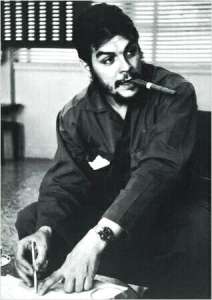
A personal anecdote to illustrate the point: a couple of years ago while handing over the editorship of Millennium to the incoming editorial team, one of the new editors commented on the large poster of Che Guevara that hangs on the Millennium office door. The Che poster, so far as I know, predates most of us currently associated with the journal, therefore I suggested it should stay. I then asked why Che should go. My colleague suggested that Che’s participation in revolutionary violence made him an inappropriate icon – in many academic disciplines this might be a rather devastating point, but International Relations is full of characters far more violent and less admirable than Comrade Che – see Paul’s post on Kissinger, for example.

When asked who might better grace the walls of the office my colleague suggested Martin King or Mohandas Gandhi (a political figure subject to a similar post-hoc liberal deification), with their key qualification as acceptable iconography being that they had not participated in political violence. While I have a great deal of sympathy for non-violence, my own introduction to both King and Gandhi came through the study of non-violence political strategy, the liberal (and I think my colleague would gladly accept that identification) embrace of King or Gandhi, paired with the repudiation of Che, is (unintentionally?) disingenuous.

It’s a disingenuous embrace because it insists that the first rule of acceptable political action is a renunciation of physical violence, while at the same time turning a blind eye to the violence institutionalized in the state through everyday police brutality and legalized/legitimized imperial warfare, as well as the structural violence inherent to global capitalism. This misses the radical content of non-violence as practiced by King and obscures the link that exists between non-violent agitation and armed resistance. The political commitments and motivations of King and Che are remarkably similar, even as their fundamental orientations (Marxism vs. Christianity) and tactics (non-violent direct action vs. guerrilla insurgency) diverged. Continue reading