Rape & Rape Prevention: A Cod-Evolutionary Perspective

Rape is an evolutionary adaptation. More than that, it now appears that anti-rape strategies are evolutionary too, which for women means increased strength at certain stages of the menstrual cycle, increased general distrust of men and hatred of black men in particular. Taking Darwin in vain, this is the argument put together by Jesse Bering at Slate.
We should probably start by getting our definitional house in order. In an admirable example of rigging the answer by misspecifiying the question Bering names rape as “the use of force, or threat of force, to achieve penile-vaginal penetration of a woman without her consent“. So men are biologically incapable of being raped, women incapable of raping, and the sexual-reproductive organs the only legible site for sexualised aggression (no anal here please!).

Hardly surprising, given this terminological firing gun, that rape emerges as a phenomena only comprehensible in procreational terms. This is a narrower agenda even than saying that it is somehow ‘evolutionary’, itself already less than saying it has something to do with ‘biology’ (the possibility of rape being about ‘sex’, socially understood, or ‘power’ stands at yet further removes).

The quality of proof offered doesn’t fare much better. Take the study on racist attitudes and menstrual cycles, results we’re at risk of ignoring with our rampant ‘political correctness’ (*yawn*). Turns out women from this sample (77 white undergraduates) scored higher on fear-of-rape metrics of black men when they were most vulnerable biologically to impregnation. Bering takes this as supporting an evolutionary adaptation against ‘out-groups’, although he concedes that ‘cultural transmission’ may play a role.

The study itself suggests something rather less conclusive. It found that implicit race bias (non-conscious stereotyped associations of the form ‘black-physical’) was much more strongly correlated with rising fertility than explicit bias. Its metrics for race bias were all clearly consistent with a sociological or interpretive account of race (which is to say that race is a social, not a biological category, and that its meaning is historically and politically determined, not the outcome of adaptive ancestral behaviour). The data is also somewhat partial, as its relation to some wider questions. There is no comment on the fact that, for example, race bias remains fairly pronounced even where there is no ‘conception risk’, nor any significant attempt to cite work on general levels of race bias in general populations as a comparator or to examine variation among degree of bias in the women studied and the possible sources for those differences.
Continue reading

Intimate Dissidence: Assange, Foucault and (Feminist) Rape Discourse

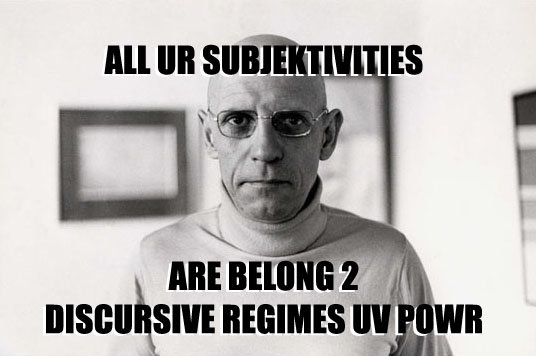
At Critical Legal Thinking, Narnia Bohler-Muller takes issue with the narrow legalism of the often ‘surreal’ commentaries on the Assange controversy. In amongst the denunciation and counter-denunciation she detects an undercurrent of disciplinary power. On this account, the apparently ‘very broad’ rape laws of Sweden, like efforts in South Africa to force HIV tests on rape suspects, enforce dichotomies under the guise of legal formality, and so cast the accused as impurities of the social body:

The argument is that the law is not an appropriate instrument to deal with matters of sexual intimacy as general principles can never do justice to the particularity of the situation and the nuances of sexual game-playing. Such is the forceful and violent nature of The Law. To depend on legal regulation to resolve all the complexities and quirks of human relations is a dangerous precedent and enforces the dualisms of guilt/innocence and normal/perverted. It is such dualisms that serve to re-produce Foucauldian ‘docile bodies’ that do not threaten or resist the status quo

…The problem is that in such a way harmless conduct may be punished merely because we do not approve of it. If Assange is HIV negative, which one assumes he is, and neither of the complaints fall pregnant, then his failure to wear a condom caused no harm. Or are we now choosing to punish potential harm or the risk of harm? Or, perhaps, punishing the failure to be a considerate lover, or the narcissism and promiscuity of a man who fucks helpless women and then leaves?

This ends up turning sexual assault into a form of dissent, a refusal “to express comfort with any kind of subservience to Authority“. As before, Assange is not really the issue, merely a bystander and stand-in. But, amidst her caution against law as a substitute for political critique and her rejection of marginalising discourse (points well-taken), Bohler-Muller’s use of him to mobilise broader arguments about a Foucauldian analytics of rape raises some stark problems. Continue reading

Feminist Fatigues; Or, What Can Feminism Be in International Relations?

What is feminist IR and what does it do? Not a new question, by any means, but one worth mulling over in light of Laura Sjoberg’s attempts to make the case, or just plain describe, feminist IR across several posts at The Duck Of Minerva, spurred on by some less than charitable peer reviews. The complaints, and the responses alternating between outright hostility, condescension and general bemusement, happily confirm critical (European) prejudices. The American mainstream doesn’t think something counts as a knowledge practice unless it can be co-opted into a regression analysis, and lacks what would pass as an undergraduate understanding of feminism elsewhere.

So far, so self-satisfying. Educational-cum-critical interventions of this kind clearly do have their place. As Joe put it to me, marginal and critical perspectives (no less than others) require constant re-inscription and repetition. Different students, different times, different world-historical events: all call for a re-engagement through our preferred lenses, which is how we absorb and become committed to them. It’s not enough for people to just be referred back to de Beauvoir or Enloe.

That said, these are also acts of performance. As Sjoberg herself notes, the conversation repeats itself. Repeats on itself, even. You Just Don’t Understand. Like an algorithmic inter-paradigm debate. The steps are as obvious and stale now as they were decades ago. Feminists are humourless; feminism is inherently a negative critique; there is no place for men in feminism; feminism isn’t really IR, even if it has some purpose somewhere;  feminism is obtuse; feminists lack research projects and cumulative understanding. A stack of intellectual veneers on one big trope of man-hating idealist sex-phobic anti-rationalist frigidity.

So why doesn’t the conversation ever seem to go anywhere? Continue reading

Protest: the legality of the Emergency Budget’s gender impact, Monday 6th December

Even a top line assessment of the budget measures show 72 per cent of cuts will be met from women’s income as opposed to 28 per cent from men’s. This is because many of the cuts are to the benefits that more women than men rely on, and the changes to the tax system will benefit far more men than women.

Support Fawcett’s bid for a judicial review of the budget

**JOIN US TO PROTEST OUTSIDE THE HIGH COURT**

12.30 pm – 2pm, Monday 6th December, Royal Courts of Justice, the Strand, London WC2A 2LL

Continue reading

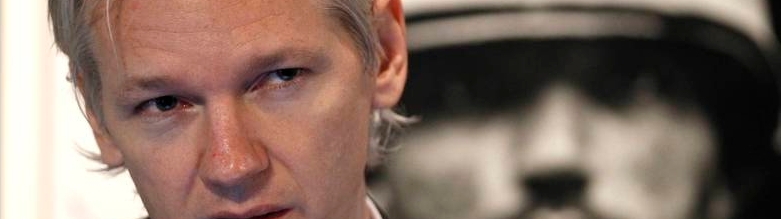
Julian Assange and the Spectre of Rape

One step took him through the roaring waterfall
That closed like a bead-curtain, left him alone with the writhing
Of what he loved or hated.
His hands leapt out: they took vengeance for all
Denials and soft answers. There was one who said
Long since, ‘rough play will end in tears’.

Cecil Day Lewis, Sex Crime (in Joanna Bourke, Rape: A History from 1860 to Present)

And so the Julian Assange Rape Thing rambles on. For some of those keen to defend wikileaks from a legitimacy-crisis-by-proxy, the allegations have invalidated themselves in even being stated. The timing is more than suspicious, and public incompetence reveals machinations behind the scenes. It’s a classic Kompromat, a transparent stitch-up.

The standard ‘rule of law’ holding position – let due process take its course before condemnation – is strangely ineffective in this situation. The taint of sex crime is almost a performative speech act. The suggestion passes the sentence, and trimmings like ‘alleged’ only reinforce the effect, which thrives on ambiguity. All that said, there are two elements to the defences of Assange that deserve unpicking.

The first is the unforgivable recycling of rape myths. Smear is followed by counter-smear. After all, one of his accusers is a radical feminist! And we all know what that means. More than that, a lesbian! Or perhaps not. Like many a spectre of the inconstant feminine before her, she is not what she seems. Her identity, like her allegation itself, hints at a mercenary cunning.

The second, and related, problem is that of the pure non-sexuality implicitly attributed to Assange. Profiles brim with Matrix-y tropes, or paint him as the new King of the Hackerati, like Johnny Lee Miller with long hair. He moves mysteriously, a homeless pilgrim, and needs only a coffee and a laptop to wreak havoc on those stale old boys at the Pentagon. More than once he is identified as a monk, if one who self-flagellates at the altar of techno-modernity. Pristine public service. Political heroes don’t fuck, let alone rape. All those mucky fluids pull them down from their symbolic perch.

Why are these responses necessary? Clearly they are stand-ins for our feelings about wikileaks itself, and for visceral identifications with, and reactions against, the figure of the rebel. They are moves to person-alise the political. Assange is an embodiment, and the enterprise for all concerned stands and falls on the robustness or weakness of his flesh. But it is obvious that the stakes are wider than that, and that ‘the debate’ about information and truth in war can hardly be settled in the courtrooms of Sweden.

Instead of holding on to an agnostic distance from the allegations, could we not better serve both anti-rape politics and free knowledge by cutting the moral link altogether? In rushing to quash accusations and to lambaste accusers, matters on which we can’t possibly speak with authority, we only confirm their wider political power. Why should the outcome of the case affect our view on wikileaks at all? Can we really be saying that our politics is that reductionist? Or our moral sense so basic that the revelation of wrong-doing would bring the whole edifice tumbling down? Rape is quite bad enough on its own without it having to act as a keystone for just conduct in war or the rights of an informed citizenry.


UPDATE (30 Nov): The stakes in the game of embodiment have just been raised. An Interpol arrest warrant has just been issued for Assange, not on any charges of treason, breaches of secrecy, or hacking, but for ‘sex crimes’.