What We Talked About At ISA: The U.S. Military-Industrial Complex, Part 2

Part two of a post on my presentation at this year’s ISA. Part one is here.


So what would be the normative-political case for the Military-Industrial Complex (MIC)? As Ledbetter notes, the defence industry never had a shortage of defenders, proponents, beneficiaries, and apologists. Various critiques of the MIC notwithstanding, numerous American commentators are now firmly united in the belief that their country needs a large defence budget in order to protect and project its identities and interests in the world. According to Maddow, this collective belief had a lot to do with the discursive and institutional success of the infamous “Team B” reports on Soviet power, which so profoundly enthused Ronald Reagan and his administration, leading to the gigantic military buildup in the 1980s. Maddow’s assessment is worth citing at length:

The Think Tanks and Very Important Committees of the permanent national security peanut gallery are now so mature and entrenched that almost no one thinks they’re creepy anymore, and national security liberals have simply decided it’s best to add their own voices to them rather than criticize them. But like we lefties learned in trying (and failing) to add a liberal network to the all-right-wing, decades-old medium of political talk radio, the permanent defense gadfly world can’t really grow a liberal wing. It’s an inherently hawkish enterprise. Where’s the inherent urgency in arguing that the threats aren’t as bad as the hype, that military power is being overused, that the defense budget could be safely and wisely scaled back, that maybe this next war doesn’t need us? The only audience for defense wonkery is defense enthusiasts, and they’re not paying the price of admission to hear that defense is overrated.

But knotted into the right-wing discourse on defence spending is a number of corollary arguments that are associated with a variety of lefty positions in the U.S. context.  America’s mainstream media outlets rarely fail to acknowledge how the twinning of the country’s economic and armed forces not only creates high-skilled jobs, but also – and critically – keeps them in the country. The move is mainly rhetorical. Not only have successive U.S. administrations encouraged American defence industry to globalize, but there is also little evidence to suggest that defence spending creates more jobs relative to spending on, say, health care or education (see, for example, Pollin and Garrett-Peltier, 2011). I would suggest, then, that what lies behind contemporary pro-MIC arguments is, in fact, a creative and complex combination of certain economic theories, (realist?) beliefs in war (or the threat of war) as a manifest destiny of the international system, as well as an overarching (liberal?) commitment to a powerful, sovereign state capable of exercising global leadership (aka., a “force for good”, in still favoured New Labour parlance.)

Let us revisit the pro-MIC rhetoric from the era of “Team B.” In a footnote, Ledbetter directs the reader to The Lonely Warriors (1970) by John Stanley Baumgartner, who is described as “one notable true defender of the MIC.” Written by an expert in public management and business administration, Baumgartner’s book makes three arguments for the MIC: 1) defending the free world is a moral thing to do (“Sputnik is only one example of the reasons for MIC”); 2) by definition, defence is a big enterprise and all big enterprises (directly or indirectly, the MIC employs one in ten Americans) occasionally make big mistakes, especially when they respond to the murky and changing specifications set by the government (“the tiger” or “the monster”) and its contracting officers; and last, 3) “unconscionable profit” is not so unconscionable in comparative terms (profit on sales, profit on investment, price/earning ratios etc. tend to be below the industrial average).
Continue reading

What We Talked About At ISA: The U.S. Military-Industrial Complex, Part I

Earlier this year, the U.S. government set out to reduce its vast defence budget. On 5 January, Barack Obama became the first U.S. president to hold a press conference at the Pentagon. What prompted it was the release of Sustaining U.S. Global Leadership: Priorities for 21st Century Defence, a “strategic guidance” document outlining the national blueprint for “deterring and defeating aggression,” while reducing record budget deficits “through a lower level of defence spending.” (The document also attracted much media attention because it offered a rare glimpse into the strategic thinking of a president who seems to refuse to be associated with a “doctrine.”) In his State of the Union address three weeks later, Obama reinstated his belief that paring defence sending could help “pay down our debt.” The Pentagon’s FY2013 budget projection followed on 13 February, with a request for $614 billion in funding: $525 billion for the base budget and $88 billion for the so-called overseas contingency operations. FY2012 budget request, the Pentagon noted, was bigger.

Pundits in the US have been debating the meaning of the coming defence cuts, starting with the question of whether there will, in fact, be any cuts in the first place. This debate will probably intensify as the election date approaches, although, indicatively, Obama’s strategic guidance contains no “East of Suez” moments, and his Pentagon speech was a candid expression about the need to stay the course: “Over the next 10 years, the growth in the defence budget will slow, but the fact of the matter is this: It will still grow, because we have global responsibilities that demand our leadership… I firmly believe, and I think the American people understand, that we can keep our military strong and our nation secure with a defence budget that continues to be larger than roughly the next 10 countries combined” (emphasis mine; also, “10” appears to be way too low).

Much remains to be said about the type, magnitude, and sequence of the coming changes to America’s defence, and the electoral 2012 will be too short to say it all. The first round of projected budget cuts (“$487 billion”) takes into consideration the provisions of the self-flagellating Budget Control Act from August 2011. The second round of cuts (“$500 billion”) refers the so-called automatic sequestration cuts, also specified in the Act, which will take effect in January 2013 if Congress does find “alternative” ways to control the budget. U.S. Secretary of Defense Leon Panetta described these automatic cuts as the “doomsday scenario,” a label that Congress’s bipartisan supercommittee will no doubt keep in mind as it looks for those alternatives (such as, for example, legislation to reverse the Act). In the end, what will change is the ordering of America’s military priorities, but not the militarization of America’s “global responsibilities” (to use Obama’s own label) as such. Behind it, after all, are multiple and reinforcing structural factors that make real cuts difficult. One of them is “defence industry,” which some pundits and watchdog organizations like to call, somewhat retrospectively, the “military-industrial complex” (MIC).

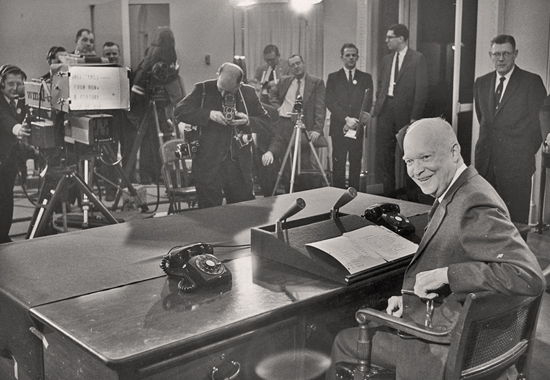
As a conceit, the MIC goes back at least to World War I, but it is popularly dated to Eisenhower’s ‘Farewell Address’ in 1961. As far as US presidential speeches/speechwriting goes, Eisenhower’s was a tour de force in every respect, but the reason why we read it today – or, rather, search for it on YouTube – is for the parts where the president urges the American citizens to pay attention to the “conjunction of an immense military establishment and a large arms industry [that is] new in the American experience,” while advising the American government to “guard against the acquisition of unwarranted influence, whether sought or unsought, by the military-industrial complex.”

Continue reading

Human Rights Contested – Part II

This is a continuation of my previous post

Who Are Human Rights For?

All of the authors take account of the ambiguous history of human rights, in which they can be said to have inspired the Haitian, American and French revolutions, while also justifying the counterrevolutionary post-Cold War order dominated by the United States. Yet recognising this ambiguity without also acknowledging the distinctive reconstruction of contemporary human rights that makes them part of a neo-liberal international order and the unequal power that makes such a quasi-imperial order possible would be irresponsible. A primary contribution made collectively by these texts is that they clearly diagnose the way human rights have been used to consolidate a particular form of political and economic order while undercutting the need for, much less justification of, revolutionary violence. Williams says of Amnesty International’s prisoners of conscience, who serve as archetypal victims of human rights abuse,

the prisoner of conscience, through its restrictive conditions, performs a critical diminution of what constitutes “the political.” The concept not only works to banish from recognition those who resort to or advocate violence, but at the same time it works to efface the very historical conditions that might come to serve as justifications – political and moral – for the taking up of arms.

Human rights, then, are for the civilised victims of the world, those abused by excessive state power, by anomalous states that have not been liberalised – they are not for dangerous radicals seeking to upset the social order.

Continue reading

Human Rights Contested – Part I

This post (presented in two parts) is drawn from a review article that will be forthcoming in The Journal of Intervention and Statebuilding, which looks at a recent set of critical writings on human rights in order to consider the profound limitations and evocative possibilities of the contested idea and politics of human rights.

Human Rights in a Posthuman World: Critical Essays by Upendra Baxi. Oxford: Oxford University Press, 2009.

Surrendering to Utopia: An Anthropology of Human Rights by Mark Goodale. Stanford, CA: Stanford University Press, 2009.

The Divided World: Human Rights and Its Violence by Randall Williams. Minneapolis, MN and London: University of Minnesota Press, 2010.

After Evil: A Politics of Human Rights by Robert Meister. New York, NY: Columbia University Press, 2011.

The central tension of human rights is that they propagate a universal and singular human identity in a fragmented political world. No one writing about human rights ignores this tension, but the most important question we face in judging the value of human rights is how to understand this tension and the divisions it creates. The expected divisions between good and evil, between moral universalists and dangerous relativist, between dignified interventionists and cowardly apologists, have long given shape to human rights, as both an ideal and a political project. Seeing the problems of (and for) human rights in these habituated ways has dulled our capacity for critical judgment, as few want to defend evil or violent particularisms or advocate passivity in the face of suffering. Even among serious and determined critics our inherited divisions are problematic (and increasingly over rehearsed), whether we think of human rights as the imposition of Western cultural values, or in terms of capitalist ideology serving the interests of neo-liberal elites, or as an expression of exceptional sovereign power at the domestic and global levels. The ways that these divisions deal with the tension at the heart of human rights misses the ambiguity of those rights in significant ways.

     Rather than trying to contain the tensions between singularity and pluralism, between commonality and difference, in a clear and definitive accounting, the authors of the texts reviewed here allow them to proliferate. Rather than trying to resolve the problem of human rights, they attempt to understand human rights in their indeterminate dissonance while exploring what they might become. To create and invoke the idea of humanity is not a political activity that is unique (either now or in the past) to the ‘West’. The people most dramatically injured by global capitalism sometimes fight their oppression by innovating and using the language and institutions of human rights. Political exceptions – the exclusion of outsiders, humanitarian wars and imperialist conceits – are certainly enabled by the same sovereign power that grants rights to its subjects, which is a metaphorical drama all too easily supported by human rights, but it is only a partial telling of the tale, a telling that leaves out how human rights can reshape political authority and enable struggles in unexpected ways. The work of these authors pushes us to reject the familiar divisions we use to understand the irresolvable tension at the centre of human rights and see the productive possibilities of that tension. If human rights will always be invoked in a politically divided world, and will also always create further divisions with each declaration and act that realises an ideal universalism, then our focus should be on who assumes (and who can assume) the authority to define humanity, the consequences for those subject to such power, and the ends toward which such authority is directed. Continue reading

Book launch: A Liberal Peace?

Tuesday 14th February 2012, 5.30pm-7.00pm

Westminster Forum, 5th Floor, Department of Politics and International Relations, University of Westminster, 32-38 Wells Street, London W1 (nearest tube Oxford Circus)

Panel with Editors David Chandler and Meera Sabaratnam, followed by publisher’s reception

All welcome

The 1990s was a weird decade for all kinds of reasons. The dice that were thrown into the air as the Soviet Union retreated landed in a particularly intriguing configuration for those politicians, public functionaries and academics from wealthy countries and institutions concerned with ‘peace’ and ‘development’. Their missions, marginalised for decades under concerns for national (i.e. military) security, were quite suddenly elevated as symbols of the new world order and installed as defining foreign policy priorities of wealthy states. Continue reading

Looking Beyond Spring for the Season: Echoes of Time Before Tahrir Square

This is the fifth and last part in a series of posts from Siba Grovogui, Professor of International Relations and Political Theory at John Hopkins University. The first part is here; the second here; the third here; the fourth here. The series considers the character and dimensions of the tension between the African Union and ‘the West’ over interventions in Africa. As before, responsibility for visuals adheres solely to Pablo K.


It would be disingenuous to relate events in North Africa and the Middle East (or MENA) today without reference to the media. Here too, there are many possible angles to examine. I will focus on the institutional support that the media provide in shaping consensus in support of foreign policy. In this regard, so-called mainstream Western media and networks (BBC, CNN, Fox, RFI and the like) have played a significant role in generating domestic support for the Libyan campaign. The media find themselves in the contradictory positions of both providing sustenance to foreign policy rationales and reporting on government actions. In this role the media either wittingly or unwittingly assumed the position of justifying contradictory Western foreign policy aims while trying to satisfy the needs of their audiences (especially domestic constituencies and home governments) for information from the front. Consistently, the media often generate sympathy for foreign actors or entities that either support Western interests or have affinities for Western values.

This role is not without a cost, especially when foreign policy actions, including wars, fail to attain their objectives. When the outcome of foreign policy proves disastrous, Western media also have an inexhaustible capacity to either ignore their prior support for the underlying causes or to reposition themselves as mere commentators on events over which they had no control or could not prevent. Increasingly, these tendencies have spread around the world as evidenced in the techniques and styles that have propelled the Qatari-based Al Jazeera into prominence as key contender in the emergent game of production, circulation, and consumption of foreign policy-concordant images for their affective and ideological effects.

So it is not surprising that the backdrop and background scenarios for most reporting on the 2011 revolts in MENA are dimensions of Orientalism, of which they are many. But the most constant is one of autocratic ‘barbarism’. In this regard, the discourses and media techniques for creating and supporting sympathetic figures are just as constant (or invariable) as Western states rationales for intervention. The media-hyped stories of Oriental despotism that preceded Operation Desert Storm, when the US expelled Iraq from Kuwait, have provided the template. During that event, for instance, media feted their viewers with stories of invading Iraqi hordes storming through hospital only to disconnect incubators and let helpless infants die a slow death. These and many stories of heroic bids by US soldiers to prevent such barbarism were later discredited but not the other horrific stories which convinced US citizens of the need to wage war on Saddam Hussein’s occupying army. In the Libyan case today, one of the earlier images of the aura of impunity created by Gaddafi was that of a Libyan female lawyer who was allegedly raped by Gaddafi’s forces. There was also a reported event of military takeover of a hospital.

Continue reading

Looking Beyond Spring for the Season: Democratic and Non-Democratic Cultures

This is the fourth part in a series of five posts from Siba Grovogui, Professor of International Relations and Political Theory at John Hopkins University. The first part is here; the second here; the third here. The series considers the character and dimensions of the tension between the African Union and ‘the West’ over interventions in Africa. As before, responsibility for visuals adheres solely to Pablo K.


It is not accurate to say that the African Union has been indifferent to the conflict in Libya. If there has been silence in Africa, it has to do with the extent to which the ‘maverick’ Colonel (Gaddafi) has angered some of his peers over the years by interfering in the affairs of such states as Nigeria, Liberia, Burkina Faso, Sierra Leone and others, with disastrous effects. Even when, as in Sudan and Uganda, officeholders have welcomed his entreaties, large segments of the populations have not appreciated them. Yet, regardless of their personal views of Gaddafi and their political differences with him, African elites and populations have yearned for a more positive, conciliatory, and participatory solution to outright regime change or the removal of Gaddafi preferred by the West. This variance, I surmise, comes from a positive understanding of postcoloniality that include forgiveness, solidarity, and democracy and justice, as exhibited in post-apartheid South Africa and post-conflict Liberia, Angola, Mozambique, and the like.

In opting for negotiated mediation and a new constitutional compact, therefore, the African Union (or AU) aimed to foster a different kind of politics in Libya – admittedly one that has escaped many of the states endorsing that position. As articulated by Jean Ping, the Secretary General of the AU, the Libyan crisis offered an opportunity “to enhance a self-nourishing relationship between authority, accountability and responsibility” in order to “reconstitute African politics from being a zero sum to a positive sum game” toward one “characterized by reciprocal behavior and legitimate relations between the governors and the governed.” Mr. Ping added two other dimensions to his vision. The first is an acknowledgement that events in Libya point to the fact that all Africans “yearn for liberty and equality’ and this yearning is “something more consequential than big and strong men.” The second is that Africa’s destiny should be shaped by Africans themselves based on an actualized “sense of common identity based, not on the narrow lenses of state, race or religion, but constructed on Africa’s belief in democracy, good governance and unity as the most viable option to mediate, reconcile and accommodate our individual and collective interests.”

Coming from a politician, these words may read like slogans. But the uniform refusal of the AU to endorse Western intervention tells another story. Continue reading

Looking Beyond Spring for the Season: The West, The African Union, and International Community

This is the third part in a series of five posts from Siba Grovogui, Professor of International Relations and Political Theory at John Hopkins University. The first part is here; the second here. The series considers the character and dimensions of the tension between the African Union and ‘the West’ over interventions in Africa. As before, responsibility for visuals adheres solely to Pablo K.


The oblivion of commentators to these possible African objections has been less than helpful to understanding the actualized Western intervention itself; emergent African ideas on democracy and security; and the actual place of international morality in international affairs. Underlying the African apprehension to military intervention is a long-standing tension between international organizations that represent Africa, on one hand, and self-identified representatives of the West, on the other, over the meaning of international community as well as the source, nature, and proper means of implementation of the collective will. The dispute over the meaning of international community and the collective will has been particularly salient in Africa because, as a political space, Africa has been more subject to military interventions than any other geopolitical space in the modern era. These interventions have reflected contemporaneous relations of power, permissible morality, and objects of desire: from proselytism to fortune-seeking, trade, extraction of raw material, and the strategic pursuit of hegemony. Indeed, it is hard to remember a time since the onset of the slave trade when there was no open conflict between the majority of its states and the West over some dimensions of global governance that implicated the notion of the commons or international community.

The postcolonial era has not brought about any change to this situation. Since the end of World War II and the institution of the United Nations system, the plurality of African political entities have confronted self-appointed representatives of the West over the ethos of UN procedures (involving transparency and open access to the channels of decision-making) and the mechanisms of dispute mediation (including the determination of the principles and applicability of humanitarian interventions in a number of cases). One need only recall the political, legal, and military confrontations between African states and former Western colonial powers over Apartheid South Africa’s mandate over South West (which involved the legality and morality of colonial trusteeship); the French war on Algeria (which involved the legality and legitimacy of settler colonialism); the wars of decolonization in the former Portuguese colonies of Angola, Guinea Bissau, and Mozambique (which involved the principles of majority rule through open elections which communists might win); the unilateral declaration of independence by the white minority in Southern Rhodesia (which involved the principle of white-minority rule in postcolonial Africa); and the legality and morality of apartheid (which involved the principle of self-determination and majority rule). The underlying antagonisms contaminated deliberations throughout the UN system (particularly General Assembly proceedings) and involved all major issues from the Palestine Question to the Law of the Sea to other matters of trade and intellectual property. They reached a climax at the time of exit of the US and Great Britain from UNESCO, which was then directed by Ahmadou Mathar Mbow, a Senegalese diplomat and statesman.

These and other contests have shared a few singular features. One is a Western insistence on representing the essential core and therefore will of something called international community. In any case, the label of international community has often been reserved for Western entities in relations to others, who remain the object of intervention on behalf of the international community. This is to say that the term ‘international community’ has had political functionality in relations of power and domination in which Europe (and later The West) subordinated ‘Africa’. The relevant tradition can be traced back to the opening moments of the modern era, particularly during the ascension of The West to global hegemony. While it has undergone changes over time, the embedded imaginary of international community and its will have been built around artificially fixed identities and politically potent interests. Accordingly, the identity of the West, and therefore the international community, flows from a theology of predestination, formally enunciated as the Monroe doctrine in the US or the Mission Civilizatrice in France.

Continue reading

Looking Beyond Spring for the Season: Common and Uncommon Grounds

This is the second part in a series of five posts from Siba Grovogui, Professor of International Relations and Political Theory at John Hopkins University. The first part is here. The series will consider the character and dimensions of the tension between the African Union and ‘the West’ over interventions in Africa. Responsibility for visuals adheres solely to Pablo K.


As I indicated in my last post, the decision by the African Union (or AU) to not endorse the current military campaign in Libya has been mistaken by many observers and commentators alternatively as a sign of African leaders’ antipathy to political freedom and civil liberties; a reflexive hostility to former colonial powers, particularly France and Great Britain; a suspicion of the motives of the United States; and more. The related speculations have led to the equally mistaken conclusion that the African Union is out of step with the spirit of freedom sweeping across the Middle East and North Africa (or MENA). The absurdity of the claim is that the only entity that imposed any outline of solution agreeable to Gaddafi has been the African Union and this is that Gaddafi himself would not be part of any future leadership of the country. But the AU has insisted on an inclusive negotiated settlement. The purpose of this series of essays is not therefore to examine the meaning and implications of the absence of ‘Africa’ on the battlefield of Libya, but to point to the larger geopolitical implications of the intervention for international order, global democratic governance, and the promotion of democratic ideals and political pluralism in the region undergoing revolution and beyond.

To begin, it is not just ‘Africa’, ‘African indecision’, and ‘African non-Normativity’ that are at stake in the characterization of African actions or inactions. Much of what is construed as ‘lack’ or ‘absence’ in Africa is also intended to give sustenance to the idea of the indispensability of the West – composed on this occasion by France, Great Britain, the United States, and tangentially Canada – to the realization of the central ends of the MENA Spring. The myth of the centrality of the West to the imaginary of freedom everywhere is inscribed in the name given to the events under description. In the US at least, the Arab Spring evokes many other ‘Springs’ all located in the West (including the 1968 Prague Spring or the 1989 collapse of the Soviet Union and its satellite states). Likewise, ‘Jasmine’, the emblem of the Tunisian revolt has been advanced as evocative of the Ukrainian ‘Orange’ and other colour-coded European events. These allusions have justifications but they are seldom evoked comparatively to elucidate the originality and specificity of the MENA revolutions. In this latter regard, even the suggestion of an Arab Spring assumes that the majorities in the countries involved are Arab. This is not always the case in North Africa but Orientalism obliges!

The fact is that the ongoing revolutions in MENA are at once specific and universal in their own ways. Continue reading

Looking Beyond Spring for the Season: An African Perspective on the World Order after the Arab Revolt

The first of a series of posts by Siba Grovogui, Professor of International Relations and Political Theory at John Hopkins University (followed by a second, third, fourth and fifth installment). He is the author of Sovereigns, Quasi-Sovereigns and Africans: Race and Self-Determination in International Law and of Beyond Eurocentrism and Anarchy: Memories of International Orders and Institutions, as well as a number of articles on race, sovereignty, postcoloniality and human rights and what the history of slavery tells us about the contemporary discourse of international politics. Reposted from The Contemporary Condition. Images by Pablo.


There is much misunderstanding today about the decision of African Union (AU) to not endorse the military intervention in Libya undertaken by France, Great Britain, and the United States in conjunction with a few Arab States. Speculations abound as to whether the uniform decision coming out of Africa indicates that the African Union is out of step with the spirit of freedom sweeping across North Africa and the Arab World; or whether the absence of Africa in the battlefield of Libya merely suggest military ineptitude and political bankruptcy. In fact, it is not accurate that the African Union has been indifferent to the conflict in Libya. The AU opted for mediation and negotiated constitutional compact, with the aim of fostering a different kind of politics. The uniform refusal of the AU to endorse Western intervention has two main explanations. The first is the practice of consensus in decision-making which has long history within Africa. The other is profound unease on the continent about the form and foundation of the intervention itself.

I suggest that there is continent-wide scepticism in Africa about Western leadership in the eras of global governance, the rule of (international) law, the status of international morality, and the future of global democracy. This development is the result of continental experiences with the modes of enactment and execution interventions in Africa. The African position arises therefore from doubt that the coalition of Western powers leading the military effort in Libya today can be trusted to not abuse legitimate anti-Gaddafi sentiments; to not instrumentalize international law and morality; and to not subvert UN procedures and the mechanisms of global governance in order to advance hegemonic agendas and parochial ‘strategic’ interests. In short, underlying the African objection to military intervention is a long-standing tension between international organizations that represent Africa and the self-identified ‘West’ around the representations of the will of the international community, the resulting global democratic deficit in times of intervention, and their effects on international morality, including the principles of humanitarianism.

In relating this conflict, I do not wish to speak for a uniformly-defined ‘Africa’ and/or for all African entities. Continue reading