White World Order, Black Power Politics: A Symposium

vitalis-e1458738905580This is the first post in the symposium on Robert Vitalis’s, White World Order, Black Power Politics: The Birth of American International Relations (Ithaca: Cornell University Press, 2015). Professor Vitalis (who also answers to ‘Bob’) teaches at the University of Pennsylvania. His first book, When Capitalists Collide: Business Conflict and the End of Empire in Egypt, was published in 1995. His second book, America’s Kingdom: Mythmaking on the Saudi Oil Frontier, published in 2005 was named a book of the year by The Guardian. He has been a fellow at the Woodrow Wilson International Center for Scholars (2009), Rockefeller Foundation (2003), the International Center for Advanced Study, NYU (2002), the American Council of Learned Societies (2002), and the MacArthur-SSRC International Peace and Security Program (1998). He was a MacArthur Award nominee in 1998. Below is his introduction to our symposium.

*Update*

Naeem’s response is here; Nivi’s is here and Srdjan’s is here.


80140100646100L

White World Order, Black Power Politics may well be the only book discussed in this symposium series that isn’t primarily concerned with theory, or at least the only one by an author who does not self identify as a theorist, teaching in a department that does not recognize what I do as “IR.”  It is also less an intellectual history, which might allow it to pass as theory, than it is an institutional history. So I am grateful for the interest in it here.

28522646._UY1280_SS1280_That said, it is indeed a critical history. The records of professors, schools, research organizations, and foundations in the early twentieth century United States reveal a past that bears scant resemblance to the “practitioner histories” or insider accounts of great debates invented about the discipline of international relations in the second half of the century, which are the ones most specialists tell themselves and their students until now. In fact, the more I learned and labored in the archives the more I came to see the problem as similar to the one I wrestled with in my last book, America’s Kingdom: Mythmaking on the Saudi Oil Frontier. The history that U.S. oil companies invented after World War II about their early and unshaken commitment to a “partnership in progress” with the Saudi people, at a moment when criticism of U.S. imperialism was on the rise in the Eastern Province and across the globe, is the one that books repeated uncritically for decades. The firms’ private records though revealed a dramatically different reality. I developed an account of the exploitative order in place in the oil camps, the racial science that justified it in the minds of the American engineers and managers, and the failed efforts of Arab and other workers to bring about its end. I likened what I did in that book to “reverse engineering” particular processes of mythmaking. I’ve done more or less the same thing for a sector of the U.S. academy in White World Order. Continue reading
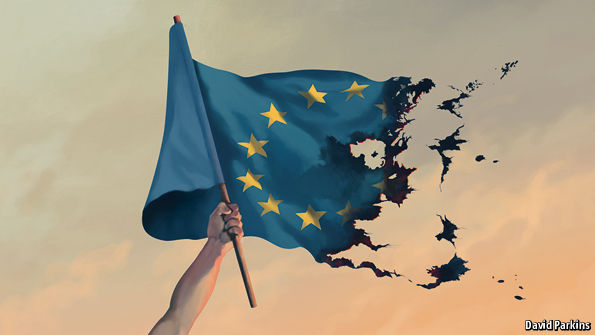

The EU Referendum: Brexit, the Politics of Scale and State Transformation

This is a post in our EU referendum forum. Click here for the introduction with links to all the contributions.


The choice facing Britain in the EU referendum is best understood, I suggest, using two concepts that I’ve used a lot in my work with Shahar Hameiri recently: ‘the politics of scale’, and state transformation. In a nutshell: the EU emerged through the rescaling of governance to inter-elite networks insulated – by design – from popular control, which lock in anti-democratic and conservative policies. Restoring popular control has to involve leaving the EU and revitalising national democracy in a progressive, internationalist direction.

In political geography, a ‘scale’ is a defined socio-political space, which is usually located within one or more hierarchies of related spaces. Examples can include tiers of established governance – boroughs, cities, provinces, nations, and regions, for example. They could be defined ethnically or religiously – a parish, the ummah – or even environmentally – habitats, bio-regions or the global environment. What’s fundamentally at stake in the EU referendum is the primary scale at which British citizens should be governed: the national (Brexit) or the regional scale (Bremain). The scale of governance is contested because different scales involve different configurations of actors, resources, power relations and opportunity structures, privileging some interests and agendas over others.

In the post-war decades, the entire Western-led global economic and political order was designed to consolidate the nation-state as a ‘taken-for-granted’ scale and space of governance. Within Western states, a new Fordist-Keynesian bargain was struck between key social forces, brokered by corporatist states: capitalists bought social peace from labour in exchange for steady expansion in wages and living standards. The Bretton Woods settlement supported this by restricting international finance and regulating currencies, which helped states plan their economies. The postwar order thus upheld ‘the primacy of national economies, national welfare states, and national societies managed by national states concerned to unify national territories and reduce uneven development’, as Bob Jessop puts it. Even the early phase of European integration was designed to support national development, thereby securing ‘the European rescue of the nation-state’.

This consolidation of the national scale and its associated institutions afforded unprecedented access to policymaking for organised labour. Moderate trade unions were directly inserted into decision-making forums alongside government bureaucrats and business representatives. Ordinary people could also hold governments to account through democratic practices. In this peak era of state sovereignty, lines of responsibility and accountability were clear.

This all began to change in the 1970s. That decade’s crisis of capitalist profitability eroded the basis of the Fordist-Keynesian social compact, which shattered amidst renewed labour insurgency. The new right’s solution to the crisis was to smash organised labour, deregulate industry and finance, and restore capitalist hegemony on the basis of a neoliberal social order. Scale was a crucial element in this struggle. The quest for nationally-based development was essentially jettisoned in favour of what we now call ‘globalisation’: the transnationalisation of investment, production and consumption. Allowing investment to flow globally – to wherever had the most ‘competitive’ wages and operating environment – was a vital means to erode the power of organised labour.

Continue reading

The EU Referendum: The EU Mirage

This is the first post in a Disorder forum on the EU referendum. Click here for the forum introduction with the links to the other posts.

Chris BickertonOur first guest author is Christopher J. Bickerton. Chris is University Lecturer in politics at POLIS and an Official Fellow at Queens’ College, Cambridge. He has taught at Oxford, the University of Amsterdam and Sciences Po in Paris. He is author of European Union Foreign Policy: From Effectiveness to Functionality (Palgrave Macmillan, 2011), European Integration: From Nation-States to Member States (Oxford University Press, 2012) and, most recently, The European Union: A Citizen’s Guide (Penguin, 2016). Chris is a regular contributor to Le Monde Diplomatique and The Wall Street Journal, and has written for the Financial Times, New York Times and Foreign Affairs.


 When I am asked to describe the EU, I often say that it is a bit like a mirage. We all know how a mirage works. From far away, the image is clear and strong. As you get closer, it starts to wobble and shimmer until eventually, it disappears.

The EU is like that. Seen from national capitals, from London, Paris, Berlin, Rome, Bratislava or Madrid, it looks clear and distinct. It has its own institutions, its own buildings, even its own legal order. It can punish national governments for over-spending and close national banks. But as you get closer to Brussels, this image begins to wobble. Finally, when you are really up close, it disappears altogether.

What is left are our own national leaders – Merkel, Hollande, Renzi, Cameron – taking decisions between themselves in meetings closed to the general public. We also find our own civil servants and fonctionnaires filling the Thalys trains, the TGVs and the Eurostar, travelling from their own capitals to Brussels to take part in working group meetings that craft and shape EU legislation. Some power is delegated to EU institutions but it is closely policed by member states.

Traditional EU institutions, like the European Commission, have lost much of their power in recent decades, with a leading role played by the European Council which is made up of heads of state and government. Even an institution like the European Central Bank, with its shiny new headquarters in Frankfurt, is far weaker than many think. Its new powers were foisted onto it by national governments keen to distance themselves from the responsibility of solving the Eurozone’s economic and financial crisis.

Looking at the EU as a whole, we cannot say that it stands above its member states, dominating them and issuing orders that national governments must comply with. In fact, the EU is these member states. But why doesn’t it look that way? Continue reading

The HE Green Paper: (Don’t) Read it and Weep – Part 2: Completing the Market

This post continues where Part 1 left off.

The real goal of the green paper is to accelerate the formation of a fully functioning market in HE – as has already been discussed elsewhere by the brilliant Andrew McGettigan. The opening move was HEFCE’s QA consultation earlier this year which, as I explained on TDOT, was an attempt to dilute quality standards to make it easier for ‘alternative’ (i.e. private) providers to enter the market. Whereas HEFCE hid behind technocratic jargon, however, the green paper openly announces the government’s ‘clear priority’ to ‘widen the range’ of HE providers (p.50). ‘Our aspiration is to remove all unnecessary barriers to entry’ and create a ‘level playing field’ (p.42).

Continue reading

The Perpetual Financial Crisis of UK Higher Education

Higher Education in Britain – particularly in England – is now clearly in perpetual financial crisis. This may seem an odd claim, since universities appear to have higher incomes than ever, and are sitting on vast cash reserves. But this superficially calm macro-level picture obscures the broiling chaos at the micro level. Universities, and particularly their individual departments, have been deliberately exposed to enormous year-on-year fluctuations in their incomes – potential and actual – that vitiates any attempt at rational planning and leaves financially strapped units particularly vulnerable to savage, short-term cuts designed to rebalance the books.

The latest move in this direction comes in a remarkable missive from the Higher Education Funding Council for England (HEFCE) which, on instruction from the government, is cutting £150m in funding to English universities — not just in future financial years, but the present academic year (2014-15) and the next (2015-16). That means universities will not receive the funding they anticipated, and planned for, even for the year to September, let alone for the following year.

Continue reading

Capitalism: A History of Violence

Alexander Anievas and TDOT resident Kerem Nişancıoğlu introduce their new book How The West Came to Rule: The Geopolitical Origins of Capitalism.


‘For the last two decades, challenges to the inequalities and injustices of capitalism have been casually dismissed by a status quo swimming in hubris. From Margaret Thatcher’s infamous proclamation that ‘there is no alternative’ to Francis Fukuyama’s declaration of the ‘end of history’, the study and critique of capitalism has been relegated to margins of public discourse. More recently, Mark Hunter argued that any attack on capitalism is ‘an attack on human nature’, thereby reaffirming the now centuries-old conceit that capitalism is as ‘natural and organic’ as living and breathing.

However, as stock markets came crashing down in 2008, the force of history reasserted itself in a series of revolutions, square occupations, anti-austerity protests, strikes, riots, and anti-state movements taking place from London to Ferguson, Athens, Cairo, Istanbul, Rojava, Santiago and beyond. Such movements have torn at the certainties of ‘capitalist realism’ and started sporadically – if inconsistently – challenging such long-held ‘common sense’ truisms and the power structures that bolster them.

howthewest

Continue reading

Post-Election Politics: Where Next for Britain?

Following the Radical Left Assembly #2 last weekend, Nivi and Kerem caught up with Luke Cooper to discuss the implications of the Conservative Party majority for British politics. What does the election result tell us about the political composition of Britain? What is the significance of the Tory pledge for a referendum on the EU? And what future is there for a politics of the Left?

Open Letter In Support of Surrey Politics Department

Last week, members of the Politics Department at the University of Surrey were told by their managers that they would be effectively closed down in the summer, with a reduction of 14 staff to five teaching-only posts, and no guarantee of employment for anyone presently in the Department. The Department had been ranked 6th in Politics in this year’s Guardian Subject League Table, 4th in the NSS 2014 with an overall satisfaction rate of 97%, and 17th in the Complete University Guide 2014. Thanks to a rapid reaction and online campaign immediately following this, as well as discussions with the Political Studies Association over the last week this decision appears to be under review. The initial proposal however remains on the table at the time of writing.  To follow unfolding events, please go to the Facebook page set up by a support group, and follow the Twitter account @surreypolgrads. Many are using the hashtag #savesurreypolitics.

The below is an open letter originating from members of the Department of Politics and International Studies at SOAS, University of London.

Update 26th March: following much enthusiasm, the open letter is now available for all to sign and we have edited according. Please respond in the comments section with your name, role and institution where relevant, and do forward to colleagues.

Continue reading

Dispatches from the Robot Wars; Or, What is Posthuman Security?

Audra MitchellA guest post from Audra Mitchell, who is Senior Lecturer in International Relations at the University of York. Audra is a Fellow of the Independent Social Research Foundation (2014-15) and has held or will hold visiting fellowships at the Universities of Queensland, Edinburgh and Melbourne. She is the author or editor of three books: International Intervention in a Secular Age: Re-enchanting Humanity? (Routledge, 2014); Lost in Transformation: Violent Peace and Peaceful Conflict in Northern Ireland (Palgrave, 2011) and (ed. with Oliver Richmond) Hybrid Forms of Peace: From the ‘Everyday’ to Postliberalism (Palgrave, 2011), as well as articles in Security Dialogue, Review of International Studies, MillenniumBritish Journal of Politics and International Relations, Third World Quarterly, and Alternatives, amongst others. She blogs at Worldy IR. Audra’s current research project explores how mass extinction challenges the ontological and ethical underpinnings of ‘security’.


“So when are the intergalactic robot wars coming?” This is a question I’ve been asked (more than once) by colleagues who’ve heard that I’m working on posthumanist thought and international security. The implication is that what I’m doing is a kind of science fiction. Well, there’s definitely science (including robots – see below) and a rich fictional literature to draw on, but it’s not taking place in a galaxy far, far away. It’s very much rooted in, and attuned to, this planet.

‘Posthuman security’ is an umbrella term I’m using to talk about a recent surge in thinking and writing at the nexus of posthumanist philosophy, security and ethics. It starts from the proposition that international security is not solely a matter of securing human lives and bodies. Diverse beings other than humans are implicated in the conditions of (in)security. Whether other animals, machines, networks, minerals, water, ecosystems or complex assemblages thereof, a wide range of beings other than humans shape the contexts of (in)security and the ways that we define them. This, in turn, challenges the engrained notion that the human is the ultimate referent object of security, ethics and philosophy.

Mojave Desert Ecology

Indeed, another question I get asked frequently is “are you critiquing human security?” The answer is both yes and no. The norm of human security epitomizes a humanist turn in the last two decades of international thought, also reflected in the fields of humanitarianism and norms such as Responsibility to Protect. These frameworks have carved out a space for themselves within international ethics by framing a specific image of the human individual as the focal point of security, ethics and, by extension the universe. So, of course, adopting a post-human (or more-than-human) approach to security means challenging and deconstructing these influential paradigms. But this new discourse is not simply a critique of existing frameworks. Posthuman security thinking offers a number of distinct, positive contributions to international security, ontology and ethics.

The term itself is highly contestable – and should be contested. Continue reading

A Crisis of Immediacy

I wonder if other writers feel as though they are throwing words by the hopeful fistful into a void, into the place where an audience might be. This hoped-for-reader is on my mind because I feel I should apologise for having taken so long to think these thoughts and align them so that I can throw them into that void.

There is no reason for apologies, however, because my hoped-for-reader doesn’t know that my current thoughts are inspired by a planned but only partly written series of posts from two-and-a-half years ago. Yet I feel I am writing an overdue assignment on the last day of class.

My thoughts are not timely. I worry this means they are no good. This is a strange feeling, to worry not that the words that carry our thoughts are inadequate but rather that they have gestated too long, such that tossing them into the void ceases to be a hopeful act of communication and becomes rather like dropping a crumpled page into the nearest bin.

Artwork from wraphome.org

Artwork from wraphome.org

Those many months past I wanted to write more about the economic crisis, about the disaster in the making that was “austerity”. In particular I wanted to consider what virtues might help us to navigate what seemed an all-encompassing crisis. But the moment has passed, surely. Right? There’s talk now of recovery even in Britain and signs of changing attitudes in Europe. Continue reading