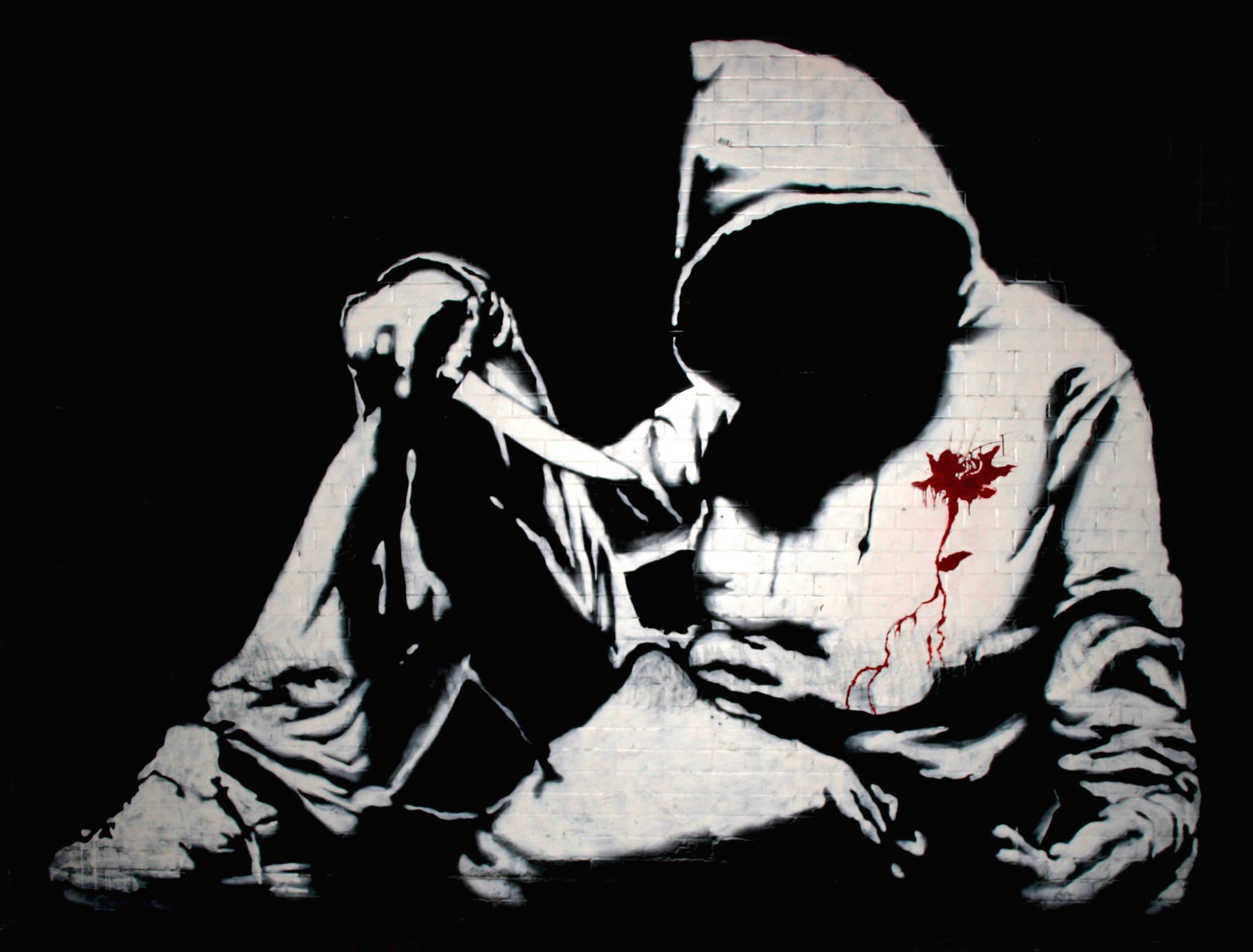
Reading violence: what’s political about the London riots(?)

To reiterate somewhat, there is a politics to these riots. Panicking, political leaders and many others, have queued up to deny this, labelling it “pure violence,” “criminality, pure and simple“, or “mindless violence“. Over and over again, the distance between the rioters and the ‘community’ or ‘Londoners’ has been set up and reinforced. This is not without some public backing. After all, many Londoners are, rightly, angry, frightened, upset, frustrated, shocked and saddened by the sight of homes and businesses not just smashed but burning voraciously into the night whilst looters showed off their new gear. We were a world away, it seemed, from the specific, dignified, coherent demands for justice being made by Mark Duggan’s family and their supporters. Many asked themselves: what do they want? The answer seemed to be: trainers. What could be political about stealing from Foot Locker?

First things first. This post is not about constructing a narrative of social apologia via moral determinism – i.e. the idea that people couldn’t help themselves, or were bound to do it by their economic status etc. Between this and the ‘mindless violence’ line of argument, there are plenty of fools (sadly many, powerful, wealthy, and in charge of your country) trading in pretty stupid accounts of human behaviour and social causation. Continue reading

Interrogating Democracy in World Politics

After a lengthy gestation Interrogating Democracy in World Politics is now available from Routledge. The edited volume, which Meera, Laust Schouenborg and myself put together, features a set of critical essays examining the meaning and role of democracy in world politics by top thinkers in the field. We’re obviously very excited to see our names on the front of a book and to continue exploring a topic that began as a special issue (Vol. 37, No. 3) of Millennium: Journal of International Studies back in 2009. For the moment you can preview our introduction to the book on the Routledge website to get a taste of what’s on offer.

IDWP

LSE Occupied!

More breaking news. Today LSE students occupied in protest at education cuts, demanding that LSE management produce at least some murmurs of opposition before the Parliamentary vote next Thursday.

Follow here, with updates here. Petition of support here.

Manifest

It is curious how little countenance radical pluralism has ever had from philosophers. Whether materialistically or spiritualistically minded, philosophers have always aimed at cleaning up the litter with which the world apparently is filled. They have substituted economical and orderly conceptions for the first sensible tangle; and whether these were morally elevated or only intellectually neat they were at any rate always aesthetically pure and definite, and aimed at ascribing to the world something clean and intellectual in the way of inner structure. As compared with all these rationalizing pictures, the pluralistic empiricism which I profess offers but a sorry appearance. It is a turbid, muddled, gothic sort of affair, without a sweeping outline and with little pictorial nobility.

-William James, A Pluralistic Universe (1909)

The splinter in your eye is the best magnifying-glass.

– Theodor W. Adorno, Minima Moralia: Reflections On A Damaged Life (1951)

Utopias afford consolation: although they have no real locality there is nevertheless a fantastic, untroubled region in which they are able to unfold; they open up cities with vast avenues, superbly planted gardens, countries where life is easy, even though the road to them is chimerical. Heteropias are disturbing, probably because they secretly undermine language, because they make it impossible to name this and that, because they shatter or tangle common names, because they destroy ‘syntax’ in advance, and not only the syntax with which we construct sentences but also that less apparent syntax which causes words and things (next to and also opposite one another) to ‘hold together’.

Michel Foucault, The Order Of Things (1966)

Ring the bells that still can ring
Forget your perfect offering
There is a crack in everything
That’s how the light gets in

Leonard Cohen, ‘Anthem’, The Future (1992)

– Pablo, Joe & Meera