Libyan cash and the LSE: a deeper problem

As Qaddafigate rolls on, and its luminaries publicly distance themselves or fall on their swords, a repeated line marks the public justification: there was no influence over research, there was no influence over research, there was no influence over research.  This is, as far as anyone can see, true – there is no evidence, even in the most scathing denunciations, to suggest that there was any attempt to influence the outcomes of the research programme. Even so, the School have rapidly appointed an investigation into this very issue.

Whilst many have been relieved by this, I find myself more deeply disturbed. Why is it that the regime of an eccentric and violent autocrat can slide into bed so easily with a research programme on governance and democratisation? Continue reading

Men In High Castles: The Politics of Speculative Fiction in International Relations

(Man, one assumes, is the proper study of Mankind. Years ago we were all cave Men. Then there is Java Man and the future of Man and the values of Western Man and existential Man and economic Man and Freudian Man and the Man in the moon and modern Man and eighteenth-century Man and too many Mans to count or look at or believe. There is Mankind. An eerie twinge of laughter garlands these paradoxes. For years I have been saying Let me in, Love me, Approve me, Define me, Regulate me, Validate me, Support me. Now I say Move over. If we are all Mankind, it follows to my interested and righteous and rightnow very bright and beady little eyes, that I too am a Man and not a Women, for honestly now, whoever heard of Java Woman and existential Woman and the values of Western Woman and scientific Woman and the alienated nineteenth-century Woman and all the rest of that dingy and antiquated rag-bag? All the rags in it are White, anyway. I think I am a Man; I think you had better call me a Man; I think you will write about me as a Man from now on and speak of me as a Man and employ me as a Man and treat me as a Man until it enters your muddled, terrified, preposterous, nine-tenths-fake, loveless, papier-mâché-bull-moose head that I am a man. (And you are a woman.) That’s the whole secret. Stop hugging Moses’ tablets to your chest, nitwit; you’ll cave in. Give me your Linus blanket, child. Listen to the female man. If you don’t, by God and all the Saints, I’ll break your neck.)

Joanna Russ, The Female Man (1975)

The wordless histories of walking, dress, housing, or cooking shape neighbourhoods on behalf of absences; they trace out memories that no longer have a place… They insinuate different spaces into cafés, offices, and  buildings. To the visible city they add those ‘invisible’ cities about which Calvino wrote. With the vocabulary of objects and well-known words, they create another dimension, in turn fantastical and delinquent, fearful and legitimating.

Michel de Certeau, Heterologies (1986), cited in Carolyn Nordstrom, Shadows 0f War

In ‘A Scanner Darkly’, as in ‘The Spy Who Came in from the Cold’,  all intersubjective relations devolve into webs of suspicion and betrayal. It goes with the territory, and the territory is nowhere – an existential East Berlin where everything you do has to be deniable. You’re guided by the grim categorical imperative which agents ignore at their peril: act as if the person to whom you are talking to will sell you out. If they haven’t fucked you over yet, just wait… If they don’t fuck you over, you’ll do it to yourself… Before long, you split in two, like Arctor, and then there’s no way back (all the king’s horses and all the king’s men … ). But total mental breakdown is the best cover of all (‘they can’t interrogate something, someone, who doesn’t have a mind’). Double agents, double lives, shivering on street corners, not sure if you’re the Man or waiting for the Man, but you’re always waiting… Cold war and junkie Cold, cold efficiency (‘I am warm on the outside, what people see. Warm eyes, warm face, warm fucking fake smile, but inside I am cold all the time, and full of lies’), the duplicities and self-deceptions of the addict doubling those of the spy in deep cover.

Mark Fisher, ‘Mors Ontologica’

Social reality is lived social relations, our most important political construction, a world-changing fiction. The international women’s movements have constructed ‘women’s experience’, as well as uncovered or discovered this crucial collective object. This experience is a fiction and fact of the most crucial, political kind. Liberation rests on the construction of the consciousness, the imaginative apprehension, of oppression, and so of possibility. The cyborg is a matter of fiction and lived experience that changes what counts as women’s experience in the late twentieth century. This is a struggle over life and death, but the boundary between science fiction and social reality is an optical illusion.

Donna Haraway, ‘A Cyborg Manifesto’ (1991)

These extracted sentiments cast a weird light on some recent examinations of Science Fiction and international politics. An emergent sub-sub-field its own right, the interface of SF and IR at first sight signifies the expanding openness of the discipline to the hitherto forbidden joys of aesthetics and culture [1]. Yet, despite nods to various low-political concerns, the more obvious, and better-worn, link between this social science and that culture is to trace a commonality of geo-political units and event cycles. Space opera empires, inter-galactic wars and cross-species diplomacy order the day in a game of analogues.

This incipient tendency indicates a rather different path than that suggested by the self-image of the cultural turn. Continue reading

Of Consensus and Controversy: The Matrix Reloaded

This is the fourth and final post in a series of responses to Patrick Thaddeus Jackson’s recent book The Conduct of Inquiry in International Relations. Paul began the discussion with comments on the problems of boundary setting, Joe followed up with an interrogation of the nature of Jackson’s pluralism, and Nick most recently gave an exposition of a missing methodological position in the typology.  We look forward to a reply from PTJ himself in the near future.


In this post, with the pleasure and pain of coming last in a hitherto excellent series, I want to tease out several issues that struck me in the reading of Jackson’s Conduct of Inquiry, which specifically relate to the success of the central typology, a possible alternative and the ‘science’ debate in this context.

I confess to having begun my reading of this work very sceptically – although not because of any doubt about the author or importance of the subject matter. Rather, like Joe, I doubted whether there would be much of interest for me as one whose work does not have too much invested in the ‘science’ claim as it stands in the mainstream IR debates. Whilst, along with my colleagues, and as I will discuss below, I remain unconvinced about the use of the term ‘science’ amongst other things, I found the book engrossing, stimulating, erudite and brilliantly argued.  The marketing people are free to recommend it particularly for graduate students, although my own view is that it contains very important intellectual challenges for the whole field at all levels. It is no small achievement that it reaches Jackson’s stated ambition to provide a platform for a much better philosophical conversation about inquiry than we have had thus far.

Perhaps controversially, however, I cannot pretend to have emerged from the book wholeheartedly sharing Jackson’s enthusiasm for the kind of pluralism in the field of IR that he aims to promote. I respect the sentiment and the generosity of spirit in which it is made, and I do recognise that it is essential for keeping important conversations on track, and that this is the best way forward for a less introspective discipline. Yet I feel myself torn, as perhaps critical pluralists are fated to be, between a desire to fight false dogmas and respect reasonable differences.  In some senses, it is Jackson’s own critical reading of different positions that subversively feeds this tension.

I. Of knowing and being: some questions

I was struck in the early set-up of the book by the distinction between scientific and philosophical ontologies upon which the central typology is built. Briefly, according to Jackson, scientific ontologies specify the catalogue of objects of investigation – states, individuals, classes etc. – whilst philosophical ontologies relate to the ‘hook-up’ between mind and world. Jackson presents this in a 2×2 matrix, with which I am sure readers are by now familiar:

Jackson’s key claim is that as researchers our methodologies flow logically from where we sit on these philosophical-ontological issues, and as such should not all be evaluated on neopositivist claims of how valid ‘science’ proceeds. Whilst I accept the broad point, what I want to pursue in more detail is whether this typology does in fact get to the heart of the core wagers that underpin each ontological position in the matrix. Continue reading

Inference and Scientific Progress in International Relations

This is the third in a series of posts by several of us at The Disorder Of Things on Patrick Thaddeus Jackson‘s The Conduct Of Inquiry in International Relations: Philosophy of Science and Its Implications for the Study of World Politics. Paul started things off with his post setting up Jackson’s methodology of politics in order to ask important questions about the politics of Jackson’s methodology. Joe continued with his post and a discussion of the relationship between the scientific and the normative, and their institutionalization within IR. Next week will see a final post, followed by a reply by Jackson himself.

Update (17 Feb): Meera’s post is now up.


Inference and Scientific Progress in International Relations

From a philosophy of science perspective, IR discussions on methodology and epistemology have always struck me as a bit bizarre. The outdated nature of most debates and the odd use of labels like ‘positivism’ have made IR philosophy of science too often seem like a muddled confusion, rather than an insightful debate. So it’s hard to overstate how fantastic it is to see a book like Patrick Thaddeus Jackson’s – precisely because it weaves skillfully through rigorous philosophy of science, and doesn’t remain bound by IR’s idiosyncratic frameworks of debate. I find myself highly sympathetic to a lot of what Jackson argues for in this book, and am a strong proponent of methodological pluralism. There are two major points I think Jackson’s book neglects though – one is more based upon my own philosophical position (an external critique), while the second is a problem more or less within Jackson’s position (an internal critique). In what follows I try to examine some missing elements of Jackson’s book, and suggest what might be an alternative approach. [1]

On Monism and Dualism

Jackson begins by setting out a 2×2 matrix of different fundamental philosophical orientations (‘wagers’). These are considered ideal types that help to clarify the vast field of philosophy of science. The first distinction is between mind-world dualism and mind-world monism. It is a distinction concerning the relationship between the researcher and his or her object. The second distinction is between what Jackson calls phenomenalism and transfactualism – or what might be also known as instrumentalism versus realism about scientific objects. The former sees empirical data as all that can be legitimately said to exist, whereas the latter argues we can deduce the existence of unobservable entities as well.

Phenomenalism Transfactualism
Dualism Neopositivism Critical Realism
Monism Analyticism Reflexivity

The 2×2 matrix: A scholar’s best friend.

As Jackson is clear about the ideal-type nature of this categorization, I don’t want to criticize that aspect. Rather, my point is that in his discussion of mind-world dualism and monism Jackson leaves aside one crucially important position (and the position undertaken by many in the so-called ‘speculative realist’ movement). [2] Whereas Jackson sets the empiricist, explanation-based, ‘scientific’ perspectives on the side of mind-world dualism, he sets the social constructivist, understanding-based perspectives on the side of mind-world monism. The former tries to bridge the gap between mind and world by creating accurate representations. The latter asserts that all of reality is intertwined with linguistic and conceptual baggage. (36) (This is precisely what Quentin Meillassoux will call the ‘correlationist’ position: the reduction of Being to the relation between mind and world. )

Continue reading

Freeing the Pluralist Imagination, or on the wisdom of escaping Weber’s “Iron Cage”

This is the second in a series of posts by several of us at The Disorder Of Things on Patrick Thaddeus Jackson‘s The Conduct Of Inquiry in International Relations: Philosophy of Science and Its Implications for the Study of World Politics. Paul started things off with his post setting up Jackson’s methodology of politics in order to ask important questions about the politics of Jackson’s methodology. The next few weeks will see further posts, followed by a reply by Jackson himself.

Update (3 Feb): Nick’s post is now up, to learn about material monism and the philosophical power of beards read it here.

Update (17 Feb): Meera’s post is now online, in which she threatens the stability of the matrix.


A broad definition of science, by design, does not provide us with any standards for good research, or indeed any specific advice for how to go about doing research, beyond the two basic admonitions to focus on factual knowledge of the world, and to separate this activity logically and conceptually from the promulgation of normative judgments and partisan-political stances. (25)

Patrick Jackson, The Conduct of Inquiry in International Relations

My comments on Jackson’s book need to be put in a personal context. I have no interest in claiming the title of “science” for my work or “scientist” for myself. Further, I do not consider my primary vocation the production of empirical knowledge. Instead, my work is “normative” and focused, most broadly, on how we think about the ethical dimension of world politics. Finally, I do not self-identify as a participant in the discipline of “International Relations,” nor as a “political scientist;” the tradition of scholarly work identified as “International Relations” is compromised by its statist foundations and the historically positivist pretensions that motivated the move to a science of politics are unsustainable in my estimation.

This raises an obvious question: why am I commenting on a book about the conduct of scientific inquiry in International Relations (IR)?

A Personal Anecdote

While at a conference in Ljubljana, Slovenia, I had an argument with my friend, Laust Schouenborg, about the nature of social science. Sitting in a Soviet-era housing block converted into a budget hotel, watching the sun go down behind the park, I was rhetorically ejected from academia.

Our argument began when Laust, after reading Chris Brown’s International Relations Theory: New Normative Approaches, suggested (contra Brown) that because there are no standards of what constitutes a “good” normative argument, the study of ethics had no place in IR, and that scholars concerned with making arguments about how politics should be, had no place in academia.[1] The modern university is a place for scientific study and those who were not practicing science should, he claimed, be relegated to the political and cultural spheres.

This line of reasoning shocked me, but it was only the culmination of a disciplining process I experienced in my first two years as a PhD student in the International Relations Department at the LSE. Even as many members of faculty supported my work, I was constantly asked why I was studying in an IR department and some “colleagues” suggested that my research was value-less as scientific work – whatever its virtues as polemic or sermon.[2]

These experiences have left me with two abiding intellectual concerns about the conduct of social inquiry. The first is to challenge the institutional privilege bestowed upon those conducting their inquiry as “science.” On this concern, Jackson and I share considerable ground, as his critique of exclusive definitions of scientific inquiry deflates dominant pretensions and advocates for a more inclusive study of world politics. And I must give credit where it is due: Jackson doesn’t suggest that my kind be thrown from the ivory tower – just given separate offices. The second concern is deeper and more contentious: to challenge the notion that the ethical questions that interest me can and should be separated from scientific inquiry into world politics. On this point Jackson and I share less ground, and for this reason the bulk of my comments will focus on how and why Jackson separates the “scientific” and the “normative” in his pluralist approach to IR.

Aside from satisfying very personal concerns, I offer this response to Jackson’s book because his generous orientation, stated most forcefully in the concluding chapter, invites engagement. Along with analyzing Jackson’s essentially Weberian account of a pluralist science of IR, and suggesting that a fuller account of social inquiry should bring together ethical and empirical inquiry, my most substantive critique is that the pluralism Jackson defends is partial and continues to discipline the study of world politics in an unsustainable way – a critique that, if correct, undermines a central aim of his project.

Continue reading

Demarcation Problems: ‘The Conduct Of Inquiry’ Between Politics & Methodology

This is the first in a series of posts by several of us at The Disorder Of Things on Patrick Thaddeus Jackson‘s The Conduct Of Inquiry in International Relations: Philosophy of Science and Its Implications for the Study of World Politics, released last year to considerable critical acclaim. The next few weeks will see further posts, followed by a reply by Jackson (or PTJ) himself. Taken together, we hope they go some way to meeting the challenge, to paraphrase PTJ himself, of emerging from splendid isolation to engage in some contentious conversations on inquiry.

UPDATE (24 Jan): Joe’s call to free the pluralist imagination is now up.

UPDATE (3 Feb): Nick’s speculative realist examination of inference, progress and materialist monism is now available.

UPDATE (17 Feb): Meera’s further untangling of ‘science’ and challenge to the stasis and status of reflexivism completes this round of responses.

UPDATE (14 March): PTJ has begun his reply.


Conclusion: neither science nor the methodology of research programmes provides arguments against anarchism. Neither Lakatos nor anybody else has shown that science is better than witchcraft and that science proceeds in a rational way. Taste, not argument, guides our choice of science; taste, not argument, makes us carry out certain moves within science (which does not mean that decisions on the basis of taste are not surrounded by and entirely covered by arguments, just as a tasty piece of meat may be surrounded and entirely covered by flies). There is no reason to be depressed by this result. Science, after all, is our creature, not our sovereign; ergo, it should be the slave of our whims, and not the tyrant of our wishes.

Paul Feyerabend, ‘Theses on Anarchism’ (1973), For & Against Method (with Imre Lakatos)

I: Conducts Of Inquiry

Paul Feyerabend’s Dada-ist approach to the philosophy of science was informed by a hostility to singular conceptions of the world, a rejection of rigid prescriptions for the correct character of knowledge and a healthy scepticism towards how people thought their forms of inquiry worked. Setting himself against method, he argued that ‘science’ has no common structure and that no general laws can explain its success or prescribe its methods. The growth of knowledge has not only historically been associated with a disrespect for prevailing methodological rules, it in fact requires such violation (whether deliberately or unwittingly).

Patrick Jackson’s The Conduct Of Inquiry attempts both to expand and to limit the knowledge practices counted as legible and legitimate in International Relations. Like Feyerabend (and Imre Lakatos and Thomas Kuhn and Karl Popper for that matter), Jackson evinces a healthy distrust of hard, fast or easy judgements about truth, reality and research procedure. And so he both avoids making the argument for a particular philosophical perspective with which to forge ‘better’ IR and eschews usual schemas that start with the putative ‘fundamentals’ of ontology and epistemology. Instead he offers a Weberian ideal-typification of methodologies (not methods), intended not as a menu of coherent and precise options but as a useful typology of functional categories (on which more in a moment).

The conception of methodology proffered is an expansive one, taken to designate ‘the logical structure and procedure of scientific inquiry’, but not the actual nature of reality and knowledge or the correct technique for a particular problem. Four commitments to philosophical ontology organise the options, generating four methodologies through their various combinations. The purpose is not somehow to test between them, but to reveal their assumptions and explain how they hang together as philosophical wagers. Hence the need to discuss the forms of faith and commitment that under-gird our styles of research.

So, in one sense, we could read PTJ as speaking with Feyerabend in demonstrating that “all methodologies, even the most obvious ones, have their limits…like an undercover agent who plays the game of Reason in order to undercut the authority of Reason (Truth, Honesty, Justice, and so on)“.

This intervention is much needed. Continue reading

The Racial Empire of International Relations

Primarily, our action is based on national self-interest. In other words, it is patriotic. A certain limited number of persons are fond of decrying patriotism as a selfish virtue, and strive with all their feeble might to inculcate in its place a kind of milk-and-water cosmopolitanism. These good people are never men of robust character or imposing personality, and the plea itself is not worth considering. Some reformers may urge that in the ages’ distant future patriotism, like the habit of monogamous marriage, will become a needless and obsolete virtue; but just at present the man who loves other countries as much as he does his own is quite as noxious a member of society as the man who loves other women as much as he loves his wife. Love of country is an elemental virtue, like love of home, or like honesty or courage. No country will accomplish very much for the world at large unless it elevates itself. The useful member of a community is the man who first and foremost attends to his own rights and his own duties, and who therefore becomes better fitted to do his share in the common duties of all. The useful member of the brotherhood of nations is that nation which is most thoroughly saturated with the national idea, and which realizes most fully its rights as a nation and its duties to its own citizens.

Theodore Roosevelt, The Monroe Doctrine (1896)

Roosevelt’s imperial condescension is but one of the historical anecdotes mobilised in a recent paper by Robert Vitalis to trace the legacy of empire and race in the development of International Relations as a discipline. Although eschewing a direct critique of the contemporary field (since “the likelihood is small that self-identified specialists in international relations will seek out an account of the discipline’s past in a journal that has no standing in the field”), he nevertheless provides a wealth of historical detail on the complicity of scholarly ancestors in ‘colonial administration’ and its attendant euphemisms.

Take A. Lawrence Lowell, a political ‘scientist’ who went on become President of Harvard and used that lofty perch to impose a  dormitory colour bar for freshman in 1915 (and a man now also revealed as the convener of homophobic secret trials). A proponent of professionalised training for colonial administrators, Lowell also set legal arguments before Congress explaining that the requirements of the Constitution need not be upheld in those violently-acquired territories where the racial capacities of the indigenes fell short of proper statehood. And, like a rather more recent over-flattered Harvard globetrotter, he was particularly interested in the wisdom to be gleaned for such bold endeavours from British experiments

Or take the institutional delivery rooms of International Relations itself. At the first ever APSA conference in 1904, ‘Colonial Administration’ was designated one of the five fundamental branches of Politics. One prominent speaker that September was William Frank Willoughby, an APSA founder, its 10th President, and the author of Territories and Dependencies of the United States (1905). He crafted this work in a particularly applied setting (pay heed ye  assembled bridgers of theory and practice), serving as both Treasurer and Secretary of Puerto Rico from 1901-1907. It seems reasonable to assume that auto-ethnographic reflexivity did not feature heavily in his work. A decade later he became director of a new research body, soon re-christened as The Brookings Institution.

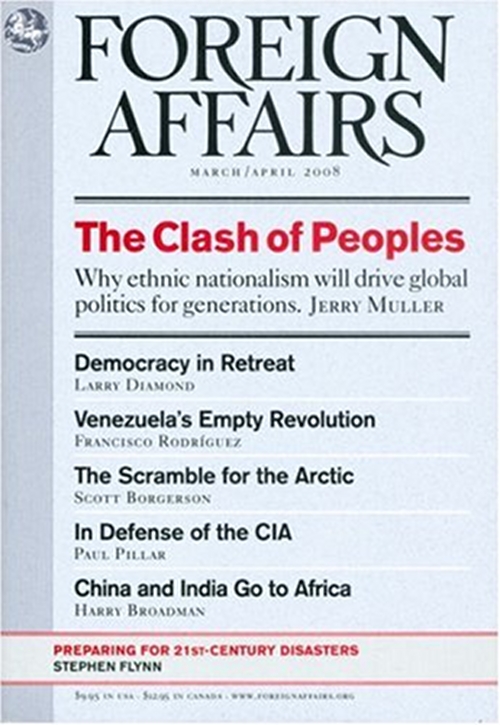
And what of our learned fora? Perhaps most symbolically of all, the debates over the proper governing of lesser peoples were carried out in the discipline’s first publication, The Journal of Race Development. It was founded in 1910 by G. Stanley Hall, who headed up a centre on the psychology of the races at Clark University, and who also pioneered the idea that the developmental stages of individual humans mirror the hierarchies of race, with children being to adults as savages are to the civilized. The twist being that in 1922 The Journal of Race Development became Foreign Affairs, still the go-to publication on global ‘administration’ (although this particular legacy is mysteriously absent from its current autobiography).

Several general themes emerge from the detail. First, far from positing states as the central actors of global politics, the comprador intellectuals of the early 20th century saw race, both within and without the United States, as the salient frontier. The earliest IR scholars all included American racial relations (to wit, the Southern ‘Negro problem’) within their disciplinary remit. In a racial supremacist twist on W.E.B. Du Bois’ ‘colour line’ “the world’s biological boundaries mattered much more to theory-building than did territorial boundaries”.

Second, the centrality of race as a category was not a mere function of scientific ignorance. Continue reading

Feminist Fatigues; Or, What Can Feminism Be in International Relations?

What is feminist IR and what does it do? Not a new question, by any means, but one worth mulling over in light of Laura Sjoberg’s attempts to make the case, or just plain describe, feminist IR across several posts at The Duck Of Minerva, spurred on by some less than charitable peer reviews. The complaints, and the responses alternating between outright hostility, condescension and general bemusement, happily confirm critical (European) prejudices. The American mainstream doesn’t think something counts as a knowledge practice unless it can be co-opted into a regression analysis, and lacks what would pass as an undergraduate understanding of feminism elsewhere.

So far, so self-satisfying. Educational-cum-critical interventions of this kind clearly do have their place. As Joe put it to me, marginal and critical perspectives (no less than others) require constant re-inscription and repetition. Different students, different times, different world-historical events: all call for a re-engagement through our preferred lenses, which is how we absorb and become committed to them. It’s not enough for people to just be referred back to de Beauvoir or Enloe.

That said, these are also acts of performance. As Sjoberg herself notes, the conversation repeats itself. Repeats on itself, even. You Just Don’t Understand. Like an algorithmic inter-paradigm debate. The steps are as obvious and stale now as they were decades ago. Feminists are humourless; feminism is inherently a negative critique; there is no place for men in feminism; feminism isn’t really IR, even if it has some purpose somewhere;  feminism is obtuse; feminists lack research projects and cumulative understanding. A stack of intellectual veneers on one big trope of man-hating idealist sex-phobic anti-rationalist frigidity.

So why doesn’t the conversation ever seem to go anywhere? Continue reading

LSE Occupied!

More breaking news. Today LSE students occupied in protest at education cuts, demanding that LSE management produce at least some murmurs of opposition before the Parliamentary vote next Thursday.

Follow here, with updates here. Petition of support here.

Ethics of Austerity 3: Cynicism, Sincerity and Fear

“You ain’t never been no virgin, kid, you were fucked from the start.”

-Titus Andronicus, “A Pot in Which to Piss

Police Vodafone protesters oxford street

Police protect Vodafone store from the threat of public exposure of truth.

And you have to wonder what it will take for serious people to realize that punishing the populace for the bankers’ sins is worse than a crime; it’s a mistake.

Paul Krugman

Of obedience, faith, adhesiveness;

As I stand aloof and look there is to me something profoundly

affecting in large masses of men following the lead of those who

do not believe in men.

-Walt Whitman, “Thought”

Hypothesis

The winter air has turned cold enough, has pressed in with its full weight, so that there is no more space for lies. The truth of crisis is that the powerful and the wealthy do not take responsibility, they assign it; they do not suffer their follies or their sins, they pay their penance in the currency of our lives.

We’ve spent the last few years living with the anxiety of impending doom, spurred on by hustlers of panic, addled prophets of economic Reformation, and Janus-faced managers of public interest.

Yet, despite the prolonged disaster-foreplay, the consummation of this crisis was always going to be “us against them” and never “we’re all in it together.” Continue reading