Julian Assange and the Spectre of Rape

One step took him through the roaring waterfall
That closed like a bead-curtain, left him alone with the writhing
Of what he loved or hated.
His hands leapt out: they took vengeance for all
Denials and soft answers. There was one who said
Long since, ‘rough play will end in tears’.

Cecil Day Lewis, Sex Crime (in Joanna Bourke, Rape: A History from 1860 to Present)

And so the Julian Assange Rape Thing rambles on. For some of those keen to defend wikileaks from a legitimacy-crisis-by-proxy, the allegations have invalidated themselves in even being stated. The timing is more than suspicious, and public incompetence reveals machinations behind the scenes. It’s a classic Kompromat, a transparent stitch-up.

The standard ‘rule of law’ holding position – let due process take its course before condemnation – is strangely ineffective in this situation. The taint of sex crime is almost a performative speech act. The suggestion passes the sentence, and trimmings like ‘alleged’ only reinforce the effect, which thrives on ambiguity. All that said, there are two elements to the defences of Assange that deserve unpicking.

The first is the unforgivable recycling of rape myths. Smear is followed by counter-smear. After all, one of his accusers is a radical feminist! And we all know what that means. More than that, a lesbian! Or perhaps not. Like many a spectre of the inconstant feminine before her, she is not what she seems. Her identity, like her allegation itself, hints at a mercenary cunning.

The second, and related, problem is that of the pure non-sexuality implicitly attributed to Assange. Profiles brim with Matrix-y tropes, or paint him as the new King of the Hackerati, like Johnny Lee Miller with long hair. He moves mysteriously, a homeless pilgrim, and needs only a coffee and a laptop to wreak havoc on those stale old boys at the Pentagon. More than once he is identified as a monk, if one who self-flagellates at the altar of techno-modernity. Pristine public service. Political heroes don’t fuck, let alone rape. All those mucky fluids pull them down from their symbolic perch.

Why are these responses necessary? Clearly they are stand-ins for our feelings about wikileaks itself, and for visceral identifications with, and reactions against, the figure of the rebel. They are moves to person-alise the political. Assange is an embodiment, and the enterprise for all concerned stands and falls on the robustness or weakness of his flesh. But it is obvious that the stakes are wider than that, and that ‘the debate’ about information and truth in war can hardly be settled in the courtrooms of Sweden.

Instead of holding on to an agnostic distance from the allegations, could we not better serve both anti-rape politics and free knowledge by cutting the moral link altogether? In rushing to quash accusations and to lambaste accusers, matters on which we can’t possibly speak with authority, we only confirm their wider political power. Why should the outcome of the case affect our view on wikileaks at all? Can we really be saying that our politics is that reductionist? Or our moral sense so basic that the revelation of wrong-doing would bring the whole edifice tumbling down? Rape is quite bad enough on its own without it having to act as a keystone for just conduct in war or the rights of an informed citizenry.


UPDATE (30 Nov): The stakes in the game of embodiment have just been raised. An Interpol arrest warrant has just been issued for Assange, not on any charges of treason, breaches of secrecy, or hacking, but for ‘sex crimes’.

Zero-Level Protest, the Student Movement and the Spectacle of Politics

I agree with Joe.

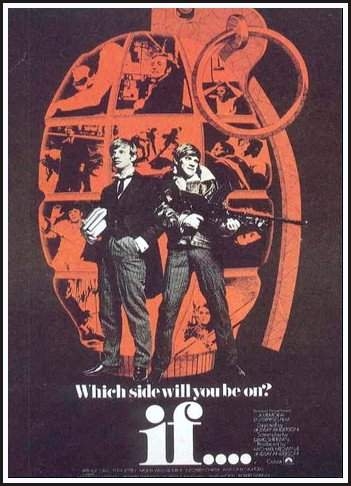
The fall-out from Wednesday’s fees protest has congealed into some familiar oppositions. On the one side, we have disavowal. The violent minority, undermining the broad case against cuts, inarticulate in their regression to a juvenile acting-out. On the other side, affirmation. The real vandals are Clegg and Cameron, the insurgents were the epiphenomenal expression of legitimate mass anger, and broken glass is the not-that-unfortunate substratum of all great political movements.

These are not morally equivalent narratives. The case for the disavowers is built on a palpable desire to appeal to bureaucratic reasonableness, and to present the case in terms sympathetic to the cadences and tones of power, as if the problem was one of flawed communication. More ‘rational debate’ please! More damagingly, the internal disciplining necessary to any movement conceived of as a Party is already under way. Bad protester, good protester. Wayward foot-soldier, clear-sighted leader. There was a serious message, and the hijackers lost it.

This is nonsense. That the march was larger than expected would have made news, barely. But the aerial shots of Westminster, and the collections of amusing signs and fancy dress, would have concurred fully with the established parameters, the well-worn rituals, of polite English disagreement. There would have been patronising cod-support about how polite the young are these days and Mock-The-Week non-jokes about the difference between Parisian insurrectionists and London shufflers. In such symbolic space, and especially on The Right, the trope of the feckless student is impermeable to disproof. This is the mistake of those scrambling for respectability. No amount of denouncing The Crazed Vandals Of Millbank will make the cause of education palatable (although those heading up the NUS will ascend, like those before them, into the lower ranks of party politics).

Slavoj Žižek put the appropriate response nicely:

“You could have delivered the same message without violence”. Fuck them, of course you can deliver the message. But nobody would hear the message. This is what they like, that 100 people gather and write a message and then you don’t even get the bottom note [in the day’s paper]…You have to break some windows to get the message through.

This is true enough, but should already alert us to some dangers, and to the necessity of overcoming the choice between affirmation and disavowal. Continue reading

Fred Halliday and ‘The Mid-Atlantic Journal of Inverted Abstraction’

The next few days at LSE will see a number of events celebrating the life, and exploring the ideas, of the late Fred Halliday. Indulging in some narcissism-by-proxy, we’re pointing out that there’s an early assessment of his intellectual trajectory and legacy by Alex Colás and George Lawson freely available from Millennium (already mentioned elsewhere).

The Mid-Atlantic Journal of Inverted Abstraction was an imaginary output for work Halliday deemed excessively introverted or self-regarding. There is some argument to be had about that attitude to (some) theory. But not now. Instead, a few other choice Fred-isms:

History repeats itself: the first time as tragedy, the second time as farce, the third time as a fad in IR theory.

The ESRC is a four letter word.

One good post-graduate seminar is worth a thousand anti-ageing creams.

In his less charitable moments, he is said to have spoken of ‘Floor 7 Disease’, referring to the Millennium office, as a catch-all for the navel-gazing abstracters in our midst. It seems appropriate to point that many of the other Millennium articles currently (if temporarily) freed from the tyranny of the paywall, to my mind at least, resist such a dismissal. I would particularly recommend Gideon Baker‘s historical-reconstruction-cum-Derridean-intervention on hospitality and haunting in the colonial encounter:

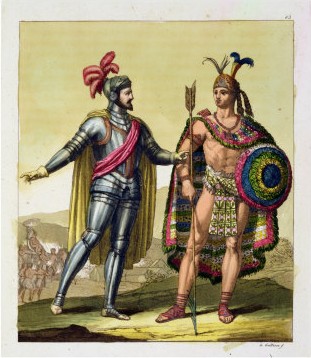
The neglected history of hospitality teaches us that unconditional hospitality, such as that which Montezuma showed to Cortés, can unleash an annihilating violence in which sovereignty and identity, much more than being ‘problematised’, are obliterated in an orgy of violence. The ghost of Montezuma reminds us that unlimited hospitality is haunted too. The Spanish, totalling around 300 men, were outnumbered a thousand to one; Montezuma could have prevailed and his homeland could have survived, at least for a time, if he had not offered an unconditional welcome.

Beware the Academic Troll-Master!

But I see motivating students, passing on enthusiasm, as the first and most important task of a teacher. (Which isn’t to say that one has to blindly encourage everything a student says or writes; far from it.) That’s why I would say that one of the most despicable figures in the academic bestiary is the Troll-Master: the figure who feeds on the crushed enthusiasm of belittled students. The easiest way to win a cheap kind of respect is by adopting a nothing-can-impress-me hyper-critical stance, doused in cool weltweltschmerz, finding fault everywhere, handing out praise and encouragement only very rarely; it’s a transparent tactic, but one that works surprisingly well, and not only on jejune students, but also on very accomplished people, even those who have written a number of books. Often, the Troll-Master’s own intellectual project will be mediocre and/or suspended – it’s clear that all their libidinal energy is tied up in enslaving students into neurotic servitude. Troll-Masters can permanently insinuate themselves into students’ heads, but usually their power depends upon the hothouse claustrophobia of the university department – they are village despots, whose charismatic tyranny seldom works outside their own turf. If they have a long-term effect, it is only to produce more grey vampires.

K-Punk, ‘Break Through in Grey Lair’

One temptation is the patronizing attempt to over-identify with the imperative “not to learn” supposedly possessed by students. We could call this the “slacker” temptation – of course all students want to do is smoke dope and play Playstation! This model of teaching presupposes two intellectual classes: those who (contingently) want to learn (the lecturer him- or herself) and those who do not (most students, and by extension, most everybody). This approach is a kind of mastery, disavowed in this case and all the more pernicious for it – I know enough to tell you that you do not need to know. It is the supercilious attitude of the newspaper columnist who chucks in references to Marx, postmodernism, etc. before airily informing the less-informed reader that he or she doesn’t need to bother finding out anything about them for him- or herself. Equality of intelligence is here smothered by the laziness, not of the students, but of the teacher, who churns out information without really believing that the audience will be interested in receiving it. As Rancière puts it, “explication is the work of laziness”. The fear masked here, both by assuming student apathy and by preserving the knowledge you yourself possess, is the idea that actually there is nothing “special” about your capacity to learn…

…We must acknowledge a changed landscape: not exclusion, straightforwardly, but a peculiar form of staggered expansion. The supposedly elite institutions are still there at the top, the old-boys and girls networks still churning out elite fodder for the same kinds of jobs – politics, diplomacy, high-end culture industry work, etc. At the same time, the expansion of higher education and the re-branding of ex-Polytechnics as universities in the UK has created a situation in which no one need be excluded. It is no longer a question of keeping them out, but of ensuring they go where they are supposed to. A further change comes at the economic level. As noted, fees have created a kind of split-subject of the university: the “client” who pays for a service and yet is still a subject “supposed to be criticized” or even failed. Endless feedback forms, along the lines of customer satisfaction surveys, entail that students are supposed to know how well that which they don’t yet know is being conveyed.

Nina Power, ‘Axiomatic Equality: Rancière and the Politics of Contemporary Education’

The University, Limited.

The double assault of the Browne Report and Wednesday’s Comprehensive Spending Review have understandably led to despair and anger among academics in the humanities and social sciences. The reasons are manifold: the apparent belief by Cable and Willetts that only science matters, an insidious privatisation of public institutions, further debt for those least able to pay, massive cuts in teaching budgets, and education as a source of funds for bank bail-outs, not to mention rank hypocrisy from men educated for free and now pulling up the ladder while telling the rest of us that their schemes are not only fair, but progressive too.

This knot of anxiety deserves some dissection. The necessity, in the midst of a storm, for calm and sober reflection. Such is my rhetorical mode today. The main strand of existing critique centres on the implications for inequality. Higher fees, under such an account, can only increase the unwillingness of the poorest to attend universities, and so transform them into bastions of privilege.

But this isn’t quite right. Continue reading

‘The only answer was slaughter, and the only way to do it was fast’; In which others read the autohagiography of Anthony Charles Lynton Blair so I don’t have to

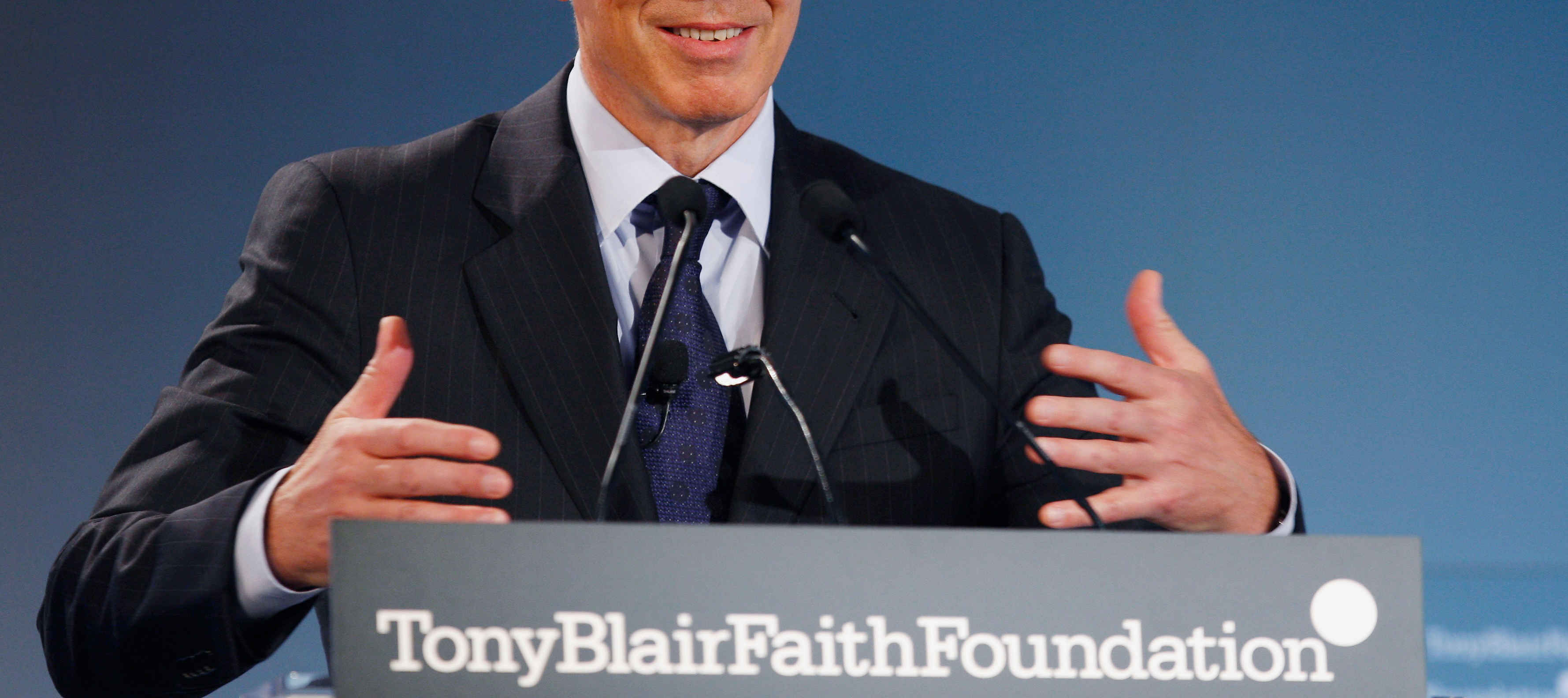
The publication of Blair’s recollections and rationalisations has been a gift to many of us. Not content with the material for satire he provided during office, he has now furnished us with further damning evidence in his own hand. A weighty (non est) mea culpa. Pat psychologising, quasi-religious conviction, the hamfisted use of historical analogy and that overwrought prose (now infamous: “I needed that love Cherie gave me, selfishly. I devoured it to give me strength. I was an animal following my instinct, knowing I would need every ounce of emotional power to cope with what lay ahead“). All of this has enabled some incisive commentary, and some barely contained rage: Tony as Captain Stanhope; Tony as the ‘preacher on a tank’ (Dick Cheney’s apposite barb); Tony as delusional Christ-Pope in waiting.

Three thoughts. First, there is the question of how we can now read Blair, and Iraq as the exemplar of his style of thought. What were the mechanisms that allowed the clear advice of experts of all stripes, and the opposition of most of the population, to be translated into an unbending commitment to the projection of American power? A familiar answer is that the New Labour project was driven by the energies of Blair’s religious (or religious-like) faith, his commitment and earnestness and belief. But the scene set by A Journey and its deconstructions is far more prosaic. On the one hand, there is plenty of garden-variety ‘misperception’. Actors chose the analogies that fit their pre-established understandings, over-emphasised the pressures for action in their calculations, and failed in their responsibility to examine situations from more than one angle. These are the kind of slippages that pop up enough for some systems- and cognitively-minded scholars to trace their role in wars across the ages.

On the other hand, there is Blair’s extraordinary decisionism. Something must be done, and someone must do it. But this is in some ways the reverse of a faith-based politics. It was not belief that guided Blair, and certainly not carefully delineated actions set out by dogma or doctrine. It was the absence of such a schema which mattered, at least on his own account. “The pieces are in flux”. Hence the insistence on leadership, on grasping the truth and necessity of the moment. What continues to intrigue is this movement between an over-abundance of values and the hardened core of Machiavellianism. The necessity was never one dictated by the ends of justice, but only that of power and its demands.

Yes, ideology was at play. But structurally so. Not in the bible readings and personal psycho-dramas of two little rich boys from New Haven and Edinburgh, but in a much less appreciated, and much more insidious sense. A subjectivity with a sociology. There is something typically Žižekian about this apparent paradox. As with others nominally committed to grand projects, the issue is not one of hypocrisy, so much as of the means by which raw power and purity of purpose can be experienced as synonymous:

the figure of the ‘big Other’ as a background against which [to] exert… ruthlessness and drive for power. They had displaced their belief onto this Other, which, as it were, believed on their behalf. Continue reading

The Nu-Bureaucratic Zombie Academy

Whither UK academia? Last month scientists blossomed with anger when Vince Cable, a man of advanced learning no less, wildly misrepresented the state of research excellence. Such a transparently false ’empirical’ case for cuts depends heavily on the trope of pointless, money-sucking academics [1], as if billions in state rescue packages had been precipitated by feckless spending on the Large Hadron Collider. Although social science and humanities is a sideshow [2], the claims are just as misleading for those of us working in politics, since 72% of the stuff we pump out is ‘world leading’ or ‘internationally recognised’.

The travesty of the RAE is what provides the commonsensical gloss for this redoubling of efforts to ‘magnitise’ investment, realise profit and ‘link to’ (read: subsidise) business. All of which conforms wonderfully to k-punk‘s diagnosis of capitalist realism, business ontology and nu-bureaucracy:

…the drive to assess the performance of workers and to measure forms of labour which, by their nature, are resistant to quantification, has inevitably required additional layers of management and bureaucracy. What we have is not a direct comparison of workers’ performance or output, but a comparison between the audited representation of that performance and output. Inevitably, a short-circuiting occurs, and work becomes geared towards the generation and massaging of representations rather than to the official goals of work itself. Continue reading

Manifest

It is curious how little countenance radical pluralism has ever had from philosophers. Whether materialistically or spiritualistically minded, philosophers have always aimed at cleaning up the litter with which the world apparently is filled. They have substituted economical and orderly conceptions for the first sensible tangle; and whether these were morally elevated or only intellectually neat they were at any rate always aesthetically pure and definite, and aimed at ascribing to the world something clean and intellectual in the way of inner structure. As compared with all these rationalizing pictures, the pluralistic empiricism which I profess offers but a sorry appearance. It is a turbid, muddled, gothic sort of affair, without a sweeping outline and with little pictorial nobility.

-William James, A Pluralistic Universe (1909)

The splinter in your eye is the best magnifying-glass.

– Theodor W. Adorno, Minima Moralia: Reflections On A Damaged Life (1951)

Utopias afford consolation: although they have no real locality there is nevertheless a fantastic, untroubled region in which they are able to unfold; they open up cities with vast avenues, superbly planted gardens, countries where life is easy, even though the road to them is chimerical. Heteropias are disturbing, probably because they secretly undermine language, because they make it impossible to name this and that, because they shatter or tangle common names, because they destroy ‘syntax’ in advance, and not only the syntax with which we construct sentences but also that less apparent syntax which causes words and things (next to and also opposite one another) to ‘hold together’.

Michel Foucault, The Order Of Things (1966)

Ring the bells that still can ring
Forget your perfect offering
There is a crack in everything
That’s how the light gets in

Leonard Cohen, ‘Anthem’, The Future (1992)

– Pablo, Joe & Meera