Excuses In Our Sleep: Libya, the Arms Trade, Universities and the Political Economy of Human Rights

A common purpose
Gains value as a common goal
Let’s flail together
If we must flail at all.
Deep in the heart of the battle
Caught in the switch of the flow
Freedom from notes, she sells freedom from songs
She sells freedom and arms Eritrea.
I could have made these excuses in my sleep
As if anyone had doubted them at all
But if we arm Eritrea we won’t have to pay her
And everyone can go home.

Future Of The Left, ‘Arming Eritrea’ (2009)

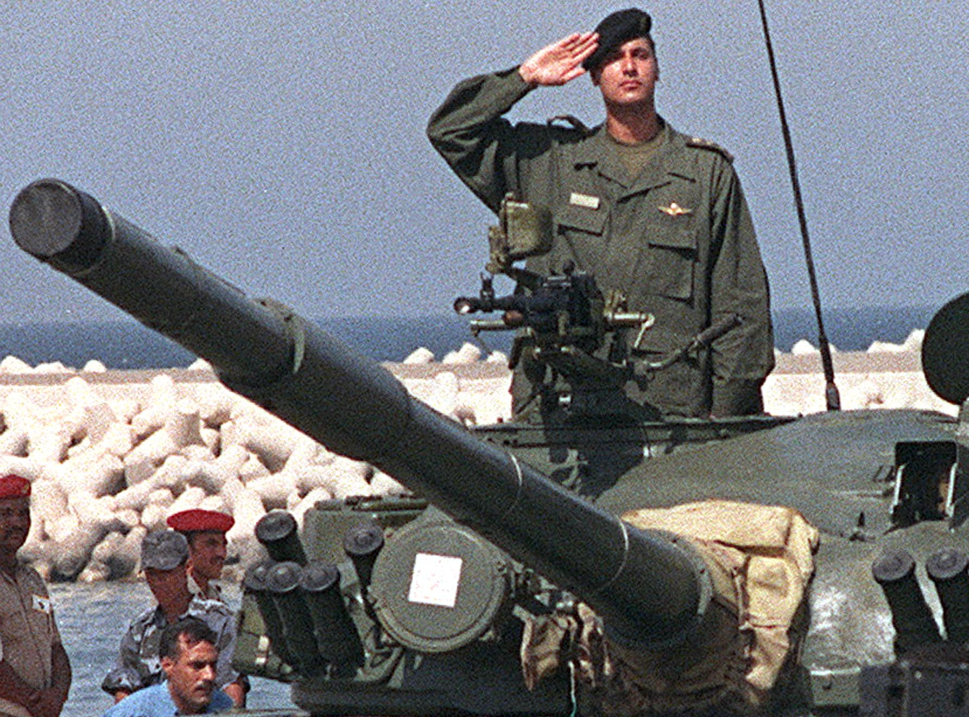
This now fairly-widely disseminated video of Saif Gaddafi brandishing his militarised manhood and promising death can only fuel the paroxysms of guilt and denial afflicting those previously enamoured of him. Not a topic to be neglected, fersure, and one that will be returned here at The Disorder Of Things soon (I promise). But there is another element at play, and one rather more materially linked to massacre and repression. Where are the guns coming from?

Last month, The Guardian engaged in one of its periodic moments of data-explication, borrowing somewhat from Dan O’Huiginn to set out which regimes get UK arms exports, and how much. Since David Cameron is unashamed in his claims that we’re merely helping democracies protect themselves (barring minor hiccups), the numbers and relations make interesting reading. The conventional (if perhaps flawed) metric for such political goods as freedom and democracy is that provided by Freedom House. The top five Middle East and North African beneficiaries of UK military export licences in 2009-2010 were Algeria (£270 million), Saudi Arabia (£64 million), Libya (almost £34 million), the United Arab Emirates (almost £16 million) and Jordan (£12 million).

Every single one is listed as ‘Not Free’ in the Freedom House Index for 2010.

Continue reading

Libya and the Temptations of Geo-Political Reason

While Libya quakes, an assorted commentariat tussles over the legacy of the new military humanism and its possible revival. That such statements are now tempered with a caution absent for Kosovo and its successors mitigates matters somewhat, but not much. Despite the disavowal and dissimulation, the conclusions reached are much the same. Something must still be done. There is an obscenity about this rush to engage in geo-political reason, to pronounce on real and illusory national interests, to play soldier by speculating on where to move the battalions on the great chess board of high politics. In periods of less emergency, we might speak of a complex weaving of beliefs and interests, of competition between economic, military and political logics, or of international statecraft as a particular and peculiar kind of practice. But in the face of NFZ+, RPGs and UNSCRs, such vulgar and academic maneuvers appear to be surplus to requirements, for the cheer-leaders as much as for the poo-poo-ers.

But the advocates and the critics are closer now too. Both want the revolution to succeed. Both are wary or hostile to the rationales of power. Both see the possibility of a sub-optimal partition or stalemate. And both are engaging in some wishful thinking, whether by assuming that the authorisation of the UN or the absence of explicit lies will limit the reach of militarism or in simply asserting that the Revolution is on the verge of seizing the state without (faux) internationalism. Which isn’t to say that there aren’t some fairly compelling assessments available.

All of this opens up a space for further discursive refinements. We might do well to talk about the confusion between ad bellum and in bello concerns, or about the wisdom of replacing a concern with the consequences of intervention with a folk-psychological assessment of the true intentions of its instigators, as if the legacy of ‘muscular liberalism’ mattered more than the fate of those with some rather more pressing concerns.

But what of the sudden convergence around a statist geopolitics?  Continue reading

What We Talked About At ISA: The Monstrous Masculine: War Rape, Race/Gender, and the Figure of the Rapacious African Warrior

If there is something in these utterances more than youthful inexperience, more than a lack of factual knowledge, what is it? Quite simply it is the desire – one might indeed say the need – in Western psychology to set Africa up as a foil to Europe, a place of negations at once remote and vaguely familiar in comparison with which Europe’s own state of spiritual grace will be manifest.

Chinua Achebe, ‘An Image of Africa’ (1978)

Sometimes it seems that we’re merely Constructions made out of yarn, paper & wood with threads rising from our toes and fingertips. We pretend to talk and act as though we were alive but actually we don’t have any choice in the matter. Some secret power directs us.

Evan S. Connell, The Diary Of A Rapist (1966)

1. Rape, Ultra-Violence and Beethoven

When we speak of men in feminism, we might speak generally or specifically, of properties of maleness and masculinity or of things done by particular men (and usually some combination of the two). What is at stake is the distinction between masculinity as a set of internal properties and as a set of relational, and hence contingent, ones. Although this can be taken as denying any substance at all to that category ‘man’, it is perhaps just as well to say that we all build our own subdivided orders of maleness – from men we know, knew, or think we are; from our salient models of true and false and ambiguous masculinity; from the postures and poses we take as appropriate towards them; and from the frames we adopt for dealing with variety, with all the space for the exemplar, the exception, the masquerade and the average that they bring.

The monstrous masculine is one such model, or rather a set of models united by family resemblance. An object of horror, the monstrous masculine is a repository for tropes that identify the hideous excesses and obscene pleasures of maleness. Channelling Barbara Creed (and some Sjoberg and Gentry), it is a set of tropes and themes in our imaginaries of social action, frequently evoking, among others, ideas of a limitless and aggressive sexuality, a cold and calculating self-regard and/or a submerged, if frequently actualised, hatred of women and Woman that borders on the instinctual. In accounts of wartime sexual violence, this figure of the rapacious warrior (usually African) comes to be represented in terms of the calculating soldier-strategist (who chooses rape as a hyper-efficient means to an accumulatory end); the angry soldier-rapist (expressing a deep desire and sexuality); or the habitual soldier-ritualist (enacting the memes and symbolic imperatives of a community, culture or even race).

Think of the figure of the unreason-laced psychopath rapist, whether in the version Joanna Bourke examines as the ‘rapacious degenerate’ or that which Susan Brownmiller addresses as the ‘police-blotter rapist’: “[t]he typical American perpetrator of forcible rape…little more than an aggressive, hostile youth who chooses to do violence to women”. Such protagonists are common in popular representations of rape. In A Clockwork Orange, Alex and his droogs prowl the streets and lanes of town and country, opportunistically submitting the unlucky to attacks driven by a relentless juvenile machismo. And in the scandalous Irréversible, rape is also the product of a subterranean drive. ‘Le Tenia’ does not even search his victim for money as an afterthought – his priorities are only to enact his spontaneous lust and be called ‘daddy’ as he does so.

The monstrous masculine unites conceptions and intimations of masculinity as pathology. This is the Real of a “terrifying dimension, as the primordial abyss which swallows everything, dissolving all identities”. Put otherwise, it embodies in its most psychoanalytic inflection the idea (following Nick Cave) that the desire to possess her is a wound.

Continue reading

Suggestion


Why can’t I walk down the street
Free of suggestion?
Why can’t I walk down a street
Free of suggestion?
Is my body my only trait
In the eyes of men?
I’ve got some skin
You want to look in
….
Suffer your words, suffer your eyes, suffer your hands
Suffer your interpretation of what it is
To be a Man
….
We don’t want anyone to mind us
Play the roles that they assign us
She does nothing to conceal it
He touches her because he wants to feel it
We blame her
For being there
But we are all here
We are all
Guilty

Fugazi, Suggestion (1989)

Serious Obstacles; Or, Why Is The UK Government Undermining International Protections Against Gendered Violence?

Today is the 100th International Women’s Day. The Government has been announcing its latest action plan on violence against women and girls (including some bold promises for increased funding for rape crisis centres) accordingly. But The Times reports that British officials have, in the same moment, been deliberately undermining a draft convention against violence against women at the Council of Europe. Specifically:

Britain objects to the words, “violence against women is understood as a violation of human rights”. Instead, it wants “violence against women constitutes a serious obstacle for women’s enjoyment of human rights”.

Even more damningly, our representatives apparently want the convention to apply only to gendered violence carried out in ‘peacetime’ and not to violations in war. Today’s Home Office announcements make reference to various avenues and promises of international ‘co-operation’, but say nothing about this specific charge. Media reports are similarly silent so far.

This is extraordinary. The timing is brutally ironic, although that is likely down to the Editors at The Times. But why would William Hague and co., newly championing freedoms elsewhere, suddenly seek to undermine international cooperation on this front?

Continue reading

Men In High Castles: The Politics of Speculative Fiction in International Relations

(Man, one assumes, is the proper study of Mankind. Years ago we were all cave Men. Then there is Java Man and the future of Man and the values of Western Man and existential Man and economic Man and Freudian Man and the Man in the moon and modern Man and eighteenth-century Man and too many Mans to count or look at or believe. There is Mankind. An eerie twinge of laughter garlands these paradoxes. For years I have been saying Let me in, Love me, Approve me, Define me, Regulate me, Validate me, Support me. Now I say Move over. If we are all Mankind, it follows to my interested and righteous and rightnow very bright and beady little eyes, that I too am a Man and not a Women, for honestly now, whoever heard of Java Woman and existential Woman and the values of Western Woman and scientific Woman and the alienated nineteenth-century Woman and all the rest of that dingy and antiquated rag-bag? All the rags in it are White, anyway. I think I am a Man; I think you had better call me a Man; I think you will write about me as a Man from now on and speak of me as a Man and employ me as a Man and treat me as a Man until it enters your muddled, terrified, preposterous, nine-tenths-fake, loveless, papier-mâché-bull-moose head that I am a man. (And you are a woman.) That’s the whole secret. Stop hugging Moses’ tablets to your chest, nitwit; you’ll cave in. Give me your Linus blanket, child. Listen to the female man. If you don’t, by God and all the Saints, I’ll break your neck.)

Joanna Russ, The Female Man (1975)

The wordless histories of walking, dress, housing, or cooking shape neighbourhoods on behalf of absences; they trace out memories that no longer have a place… They insinuate different spaces into cafés, offices, and  buildings. To the visible city they add those ‘invisible’ cities about which Calvino wrote. With the vocabulary of objects and well-known words, they create another dimension, in turn fantastical and delinquent, fearful and legitimating.

Michel de Certeau, Heterologies (1986), cited in Carolyn Nordstrom, Shadows 0f War

In ‘A Scanner Darkly’, as in ‘The Spy Who Came in from the Cold’,  all intersubjective relations devolve into webs of suspicion and betrayal. It goes with the territory, and the territory is nowhere – an existential East Berlin where everything you do has to be deniable. You’re guided by the grim categorical imperative which agents ignore at their peril: act as if the person to whom you are talking to will sell you out. If they haven’t fucked you over yet, just wait… If they don’t fuck you over, you’ll do it to yourself… Before long, you split in two, like Arctor, and then there’s no way back (all the king’s horses and all the king’s men … ). But total mental breakdown is the best cover of all (‘they can’t interrogate something, someone, who doesn’t have a mind’). Double agents, double lives, shivering on street corners, not sure if you’re the Man or waiting for the Man, but you’re always waiting… Cold war and junkie Cold, cold efficiency (‘I am warm on the outside, what people see. Warm eyes, warm face, warm fucking fake smile, but inside I am cold all the time, and full of lies’), the duplicities and self-deceptions of the addict doubling those of the spy in deep cover.

Mark Fisher, ‘Mors Ontologica’

Social reality is lived social relations, our most important political construction, a world-changing fiction. The international women’s movements have constructed ‘women’s experience’, as well as uncovered or discovered this crucial collective object. This experience is a fiction and fact of the most crucial, political kind. Liberation rests on the construction of the consciousness, the imaginative apprehension, of oppression, and so of possibility. The cyborg is a matter of fiction and lived experience that changes what counts as women’s experience in the late twentieth century. This is a struggle over life and death, but the boundary between science fiction and social reality is an optical illusion.

Donna Haraway, ‘A Cyborg Manifesto’ (1991)

These extracted sentiments cast a weird light on some recent examinations of Science Fiction and international politics. An emergent sub-sub-field its own right, the interface of SF and IR at first sight signifies the expanding openness of the discipline to the hitherto forbidden joys of aesthetics and culture [1]. Yet, despite nods to various low-political concerns, the more obvious, and better-worn, link between this social science and that culture is to trace a commonality of geo-political units and event cycles. Space opera empires, inter-galactic wars and cross-species diplomacy order the day in a game of analogues.

This incipient tendency indicates a rather different path than that suggested by the self-image of the cultural turn. Continue reading

The Anti-Feminist Backlash in an Age of Austerity

I suppose, in a way, British men are like white people were in Nineties South Africa or young Germans after the Second World War. We are expected to go through a period of atonement for the sins of our fathers. To be treated worse than we merit because of crimes previously committed in our name: in this case the crime of feeding, protecting, loving and nurturing women in accordance with our biological imperative. They don’t want that any more. They want to be linesmen. And so we have to let them tell us endlessly how they wish we were all dead.

Thus spake a gourmand and professional waffler last week, a child-of-privilege educated at Westminster and Oxford, who, despite these handicaps, manages to articulate for us the crisis of contemporary masculinity. Apparently two compatriots got caught up in some garden-variety lechery of the career-halting kind. Their trials and tribulations, although obviously upsetting for them on a personal level, at least had the merit for many of acting as a flashpoint for opposition. That is, a common-sense opposition to the political correctness surrounding the damages wrought on men by feminism and feminists. Finally, people can begin to speak out.

It is rather tempting to pursue the bizarre line of metaphorical reason here (if ‘sexist crimes’ are merely love expressed biologically, and if British men today are like post-fascist South Africans and Germans, does that make apartheid and Nazi rule the equivalents of a natural and benevolent stewardship? Did they even involve ‘real’ crimes?). But we should resist that. Coren is but a symptom, and should not detain us overlong in picking the low-hanging fruit. The triggering events are themselves already old news, the detritus of the news cycle now rendered especially vulgar and tattling by some actual struggles for justice.

The tropes at play have been with us for some time, inflecting what are essentially public relations SNAFUs with the full force of mythological sex wars. But these themes do seem to be becoming increasingly familiar. Those who grumbled about the rise of such minimal concessions as equal pay legislation in the halcyon days of economic vibrancy now have the pressures of austerity with which to buttress their case. Outrage at the redundancy of a favourite sports broadcaster spirals rather quickly into a diagnosis of women’s ‘special treatment’ in our society and the counter-sexism of a gender settlement in which men are no longer authorised to authentically, organically, just be themselves. Castrated. Emasculated. Prostrated.

Continue reading

Memo from an Old Contrarian: Hitchens on Revolution, Islamism and More-Or-Less Benign Dictatorship

No one really knows what will come of ongoing events in Tunisia and Egypt (and Yemen and Palestine, &c.). A plethora of under-qualified voices are currently vying for interpretative hegemony, not to mention secure plottings of the various ‘implications’ for the US, global order and the very meaning of freedom in the 21st century. What will it mean for the Mammonites currently scrambling behind the curve? Will the language of ‘partnership’ and ‘reform’ contain the unrest?

It will surely not be long before someone frames the last days’ clashes in Alexandria as the eventual outcome of bombs over Baghdad. I have no particular interest in indulging such faux-talking-head insta-response. What did catch my attention was an especially contrary and confused statement from Christopher Hitchens, billed at Slate as an encouragement to juvenile Tunisia and then at The National Post as a qualified defence of ‘civilized dictatorship’.

Continue reading