Has the Left given up on Economics?

With the biggest economic crisis since the Great Depression continuing to slowly unfold, one of the most surprising consequences has been a non-event: the dearth of high-quality economic theorizing in leftist groups. [1] This is in spite of the opportunity the crisis presents for alternative economies, and in spite of the economic conundrum that developed economies find themselves in: too indebted for stimulus and too weak for austerity. This differend between austerity and stimulus indexes the insufficiency of either and yet few have taken up the necessity of thinking proper alternatives.

The leftist response to the economic crisis has instead been mostly been to focus on piecemeal reactions against government policies. The student movement arose as a response to tuition fee and EMA changes; the right to protest movement arose as a response to heavy-handed police treatment; and leftist parties have suggested a mere moderation of existing government policies. The project to bring about a fully different economic system has been shirked in favour of smaller-scale protests. There is widespread critique, but little construction.

Admittedly, the left is not entirely devoid of high-level economic theorizing. Rather, the more specific problem is that those few who do such work are a relatively tiny minority and are typically marginalized within the leftist scene. The attention and effort of the leading intellects of leftism (at least in the UK) are on social issues, race issues, rights issues, and identity issues. All important, to be sure, but there is no equivalent attention paid to economic issues.

Continue reading

On the Abstraction of Contemporary Crisis

On the Abstraction of Contemporary Crisis
Or, Why Today Feels Different From the 1930s

One of the oddities of the ongoing economic crisis is its apparent separation from everyday life.[1] Consumers still consume, luxury items are still produced. Starbucks is still filled with coffee drinkers, and Apple still sells its overpriced goods. Scanning the media, one finds its coverage devoid of lengthy soup lines or surges in tent cities. While most have had to cut back on their indebtedness, there hasn’t been a collapse on the scale of the Great Depression. This is in spite of some measures suggesting the current crisis is as deep in some ways.


Continue reading

What We Talked About at ISA: Crisis Mapping and the Rise of Digital Humanitarianism (Part III)

This is the third of a three-part series on ‘what we talked about at ISA’. The first part on technology in International Relations can be found here. This second section on the decline of cognitive mapping is here. This final section covers the example of a particular technology being used to overcome deficiencies in cognitive mapping. (For the theoretical context, it’s well worth reading the second part of this series.) Much of the empirical research for this section stems from the work of Patrick Meier and others involved heavily in crisis mapping. Patrick’s website is a stellar resource for the changing digital nature of humanitarianism, and is highly recommended.


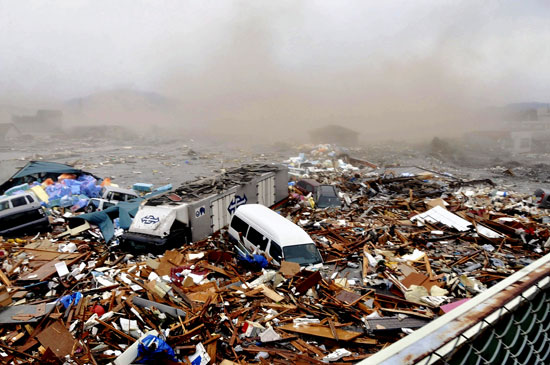
In the wake of the recent Haitian and Japanese earthquakes, the devastating tsunami in the Indian Ocean, and other major humanitarian disasters, increased global attention has been paid to the ways in which actors involved in humanitarianism can and should evolve to deal with these emergency situations. Media, international organizations, and non-governmental organizations have all reflected on the implications and path forward for managing crises, with a wealth of reports emerging in the wake of this decade’s crises.[1]

A similar set of complex crisis situations has become significant recently with the political events currently surging across the Arab world. While analytically distinguishable from humanitarian crises, these political crises share many common aspects and often blur at their boundaries. Political crises typically produce humanitarian crises, while humanitarian crises often stretch the capacities of political actors. The result, in either case, is a situation characterized by its complex and fast-moving nature. Moreover, in both instances there is often a dearth of reliable information. If effective political action is premised upon the conceptual representations of a situation, then rational action becomes nearly impossible in crisis situations. In this regard, the new technologies involved in ‘crisis mapping’ can be seen as a means for political actors to overcome this cognitive gap. Through this case study it can be demonstrated how political actors are in fact constructed not only socially, but also through material technology.

Continue reading

What We Talked About At ISA: The Decline of Cognitive Mapping (Part II)

This is the second of a three-part series on ‘what we talked about at ISA’. The first part on technology in International Relations can be found here. This section examines a particular effect of technology that has largely gone unacknowledged by IR.


If the major crises of the modern world are symptomatic of anything today, it is the banality that our world is complex. Compared to previous periods of history our world is more interconnected (spreading crises further and less predictably), more dynamic (diffusing risks at a quicker pace), and more fragmented (with experts becoming specialized in solving local problems rather than systemic problems). This complexity involves a massive amount of elements, non-linear dynamics, unintended effects, and feedback loops. These features of complex systems strain the limits of the human mind’s finite and embodied capacities. The 2008 financial crisis, the ongoing climate change crisis, the 2010 Deepwater Horizon oil spill, the 2003 North American electrical blackout – all of these point to massively complex systems which already surpass human capacities to cognize. Moreover, if rational action is premised upon the capacity to represent the problems to be confronted, then the complex systems of today’s world are threatening to undermine the cognitive basis of political action.

The relationship between the world and our capacities to think it and act in it are not entirely asymmetrical though. While the world has become increasingly complex, our capacities to work in it have also expanded.

Continue reading

What We Talked About At ISA: Technology and World Politics (Part I)

The presentation I gave at the International Studies Association (ISA) conference was on the broad topic of technology and world politics, with more specific reference to the use of crisis mapping software in humanitarian situations. One of the main contentions of this research is that the role of technology in world politics tends to get massively overlooked by the field of IR. This is a bit odd considering the important role of technology in issues of world politics – weapons systems, financial systems, communications systems, surveillance technologies, social media tools, etc., etc. In fact, it’s hard to point to a single standard IR issue that isn’t infected with technological aspects. Yet IR remains a science limited to a focus on disembodied individuals. Whether it be rationalists or constructivists, little mention needs to be made of the actual materiality of these actors and their contexts. Instead, international relations is taken to be comprised of these actors alone.

To get a sense of the materiality of the world, you have to turn to alternative fields – political psychology and its attention to our embodied nature; gender studies for focus on the body and its political roles; and in my particular case, science and technology studies (STS) for an understanding of technology’s unique form of agency. Growing out of sociology, STS became known originally for taking a specifically social approach to the study of science. That is to say, it began looking at how scientists operate in practice in order to create facts. In doing so, it created a lot of controversy – first, for its willingness to suspend the truth of scientific claims in order to look purely at how they gain legitimacy. Second, for its undermining of naïve visions of the scientific method (a naivety that plagues IR to this day). Finally – and for the purposes here, the most interesting controversy – was the agency it attributed to nonhuman objects. I won’t go into the nuances here (maybe another time), but the basic point here is that agency is not primarily about intentional action (a problematic claim about human agency anyways), but instead it is about action changing a structural context. [1] In this sense, it seems unproblematic to agree that technical objects do have agency – in other words, they can change structural contexts by being introduced into preexisting assemblages (a term which itself points to the mutual implication of technology and society).

Continue reading

Inference and Scientific Progress in International Relations

This is the third in a series of posts by several of us at The Disorder Of Things on Patrick Thaddeus Jackson‘s The Conduct Of Inquiry in International Relations: Philosophy of Science and Its Implications for the Study of World Politics. Paul started things off with his post setting up Jackson’s methodology of politics in order to ask important questions about the politics of Jackson’s methodology. Joe continued with his post and a discussion of the relationship between the scientific and the normative, and their institutionalization within IR. Next week will see a final post, followed by a reply by Jackson himself.

Update (17 Feb): Meera’s post is now up.


Inference and Scientific Progress in International Relations

From a philosophy of science perspective, IR discussions on methodology and epistemology have always struck me as a bit bizarre. The outdated nature of most debates and the odd use of labels like ‘positivism’ have made IR philosophy of science too often seem like a muddled confusion, rather than an insightful debate. So it’s hard to overstate how fantastic it is to see a book like Patrick Thaddeus Jackson’s – precisely because it weaves skillfully through rigorous philosophy of science, and doesn’t remain bound by IR’s idiosyncratic frameworks of debate. I find myself highly sympathetic to a lot of what Jackson argues for in this book, and am a strong proponent of methodological pluralism. There are two major points I think Jackson’s book neglects though – one is more based upon my own philosophical position (an external critique), while the second is a problem more or less within Jackson’s position (an internal critique). In what follows I try to examine some missing elements of Jackson’s book, and suggest what might be an alternative approach. [1]

On Monism and Dualism

Jackson begins by setting out a 2×2 matrix of different fundamental philosophical orientations (‘wagers’). These are considered ideal types that help to clarify the vast field of philosophy of science. The first distinction is between mind-world dualism and mind-world monism. It is a distinction concerning the relationship between the researcher and his or her object. The second distinction is between what Jackson calls phenomenalism and transfactualism – or what might be also known as instrumentalism versus realism about scientific objects. The former sees empirical data as all that can be legitimately said to exist, whereas the latter argues we can deduce the existence of unobservable entities as well.

Phenomenalism Transfactualism
Dualism Neopositivism Critical Realism
Monism Analyticism Reflexivity

The 2×2 matrix: A scholar’s best friend.

As Jackson is clear about the ideal-type nature of this categorization, I don’t want to criticize that aspect. Rather, my point is that in his discussion of mind-world dualism and monism Jackson leaves aside one crucially important position (and the position undertaken by many in the so-called ‘speculative realist’ movement). [2] Whereas Jackson sets the empiricist, explanation-based, ‘scientific’ perspectives on the side of mind-world dualism, he sets the social constructivist, understanding-based perspectives on the side of mind-world monism. The former tries to bridge the gap between mind and world by creating accurate representations. The latter asserts that all of reality is intertwined with linguistic and conceptual baggage. (36) (This is precisely what Quentin Meillassoux will call the ‘correlationist’ position: the reduction of Being to the relation between mind and world. )

Continue reading

The Paradoxes of Inequality

In the wake of the financial crisis, and the re-establishment of massive corporate profits during a vertiginous economic period, the issue of inequality has become increasingly prominent amongst critical thinkers. The recognition that the period of neoliberalism has been beneficial in a massively asymmetrical way to the richest is a powerful argument against the neoliberal dogma. Yet with countries like the UK disproportionately cutting government spending on the poor, it seems that the only thing changing is the ease with which the poorest can be attacked.

(h/t: Consider the Evidence)

Continue reading