This is the first post in a new book symposium, on Paul Kirby and Laura J. Shepherd’s Governing the Feminist Peace, which was published in 2024 by Columbia University Press.
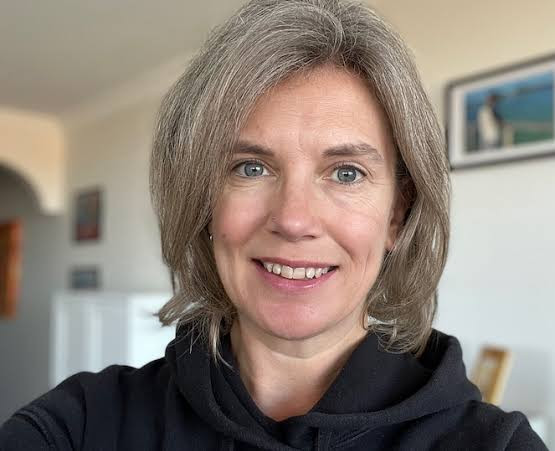
Laura is Professor of International Relations in the School of Social and Political Sciences at the University of Sydney, and served as President of the International Studies Association from 2023-2024. She is a former Australian Research Council Future Fellow (2018-2022), and has been a Visiting Senior Fellow at the LSE Centre for Women, Peace and Security in London, UK, since 2016. She is a member of The Disorder of Things authorial collective.

Paul is Reader in International Politics and a Fellow of the Institute for the Humanities and Social Sciences at Queen Mary University of London. He was until this year a Co-Director of the GCRF Gender, Justice and Security Hub, a multinational, interdisciplinary research consortium investigating the politics of gender justice and inclusive peace. A founding editor of this blog, he is our own Pablo K.
Following this opening post, we will share contributions from an august roster of colleagues over the coming days, followed by a response from the authors.

In late April 2019, Nadia Murad addressed the United Nations Security Council during its annual open debate on sexual violence in conflict. Murad had gained an international profile as a courageous and articulate survivor of atrocities carried out by Da’esh – the so-called Islamic State – against the Yazidi ethno-religious community in northern Iraq. In her short speech, Murad urged the council to end its reliance on slogans and finally prosecute sexual violence and other grave crimes. Accompanying Murad was her lawyer, Amal Clooney, who challenged the Council to rise to its “Nuremberg moment, its chance to stand on the right side of history” by triggering an International Criminal Court or hybrid court process. The meeting culminated in a new resolution, the ninth in the series of Women, Peace, and Security (WPS) resolutions, consolidating the status of ‘the agenda’ as the most extensive of all the Security Council’s thematic commitments.
Murad’s six-minute speech was but one instance in a still-unfolding mosaic of events and relations, institutions and movements, talk and text, united by reference to conflict-related sexual violence. Similar constellations of actors may be found throughout the WPS agenda, working across boundaries of domestic and international, formal and informal, state and society, military and civil, lay and expert, public and private. Sexual violence is but one – and the most controversial – in a docket of gender issues, encompassing equal rights, the benefits of women’s substantive participation in promoting peace, the contribution of a ‘gender perspective’ to military planning, the urgent need for global disarmament, recognition of gender diversity, changes to humanitarian practice, inclusivity in refugee, disaster and climate change management, and more besides. As well as the national governments that are invariably the target of appeals for resources and action, the WPS circuit runs on an expansive cast of women’s groups, humanitarian agencies, freelance consultants, celebrity activists, academics, private philanthropic foundations, lawyers, investigative journalists, religious authorities, intergovernmental agencies, international courts, treaty bodies, think tanks, and military alliances.
Governing the Feminist Peace is our attempt to come to terms with this dizzying array of issues and agents. WPS is (still) celebrated as a success for feminists in that a coalition of civil society actors managed to get the Security Council to not just acknowledge the gendered quality of war and peace but to pledge – and on some accounts to legislate – for concerted global action towards feminist goals, from demilitarisation to indigenous peace-making. In formal policy terms it is embraced not only by the Security Council but by over a hundred countries, dozens of regional bodies, and, increasingly, a range of sub-national actors. An accompanying cottage industry has sprung up to track the pace of adoption. For all this energy, WPS is also frequently, almost reflexively, announced as partial, faltering, betrayed, coopted, and securitised. In our terms, a wellspring of vitality and a vortex of failure. These aspects of WPS are not mere opposites, with advocates celebrating vitality and cynics documenting failure. The relation is more intricate, with failure as often a spur to greater implementation efforts as a reason to abandon the agenda, and with vitality in the sense of official adoption to some extent dependent on the failure of the more radical versions of the agenda.
Continue reading

 The Disorder Of Things