Decolonising International Relations – some Pedagogical Reflections

This is a guest post by Maïa Pal and Doerthe Rosenow, Senior Lecturers in International Relations, Department of Social Sciences at Oxford Brookes University.  Maïa is working on a co-edited volume for Routledge on The Extraterritoriality of Law: History, Theory, Politics and on a monograph for Cambridge University Press on Jurisdictional Accumulation: An Early Modern History of Law, Empires, and Capital. She is also an editor for the journal Historical Materialism: Research in Critical Marxist Theory. Doerthe has recently published the book Un-making Environmental Activism: Beyond Modern/Colonial Binaries in the GMO Controversy and a series of articles about critique and its limits. 


On 22 February 2018, Dr Meera Sabaratnam, Lecturer in Politics and International Studies at SOAS appeared on the BBC Radio4 Today programme [2.53 onwards] to discuss ‘What is decolonisation?’ and what it means to ‘decolonise the curriculum’. She faced David Aaronovitch, columnist at the Times, who complained about the problem with the word ‘decolonise’, stating it was ‘not the job of university studies to decolonise or recolonise’. Instead, he suggested, universities should ‘think critically’ and not look ‘like a political project’ that imposes a particular view on students. In other words, Aaronovitch claims that a university education should – and can – consist in a neutral, open, apolitical transfer of knowledge from the teacher to the student, and definitely not the other way round. He is shocked at ‘this business of’ students participating in the elaboration of curricula – no pun apparently intended, but Aaronovitch is obviously a natural. His sentiment is amplified by the current 9K fee system because if students are paying so much, they should expect to get a service delivered exclusively by teachers.

The underlying scandal here is that Aaronovitch is actually complaining about teachers whom he thinks are asking students to do their jobs for them – in spite of Sabaratnam reminding him in her introduction that most of university teachers and other professional staff are currently on strike to defend their pensions from being made dependent on the fluctuations of the stock market, which could result in a 25% pay cut. So behind a poorly constructed and intentionally naïve critique of decolonial education as a political project (which surely Aaronovitch himself does not believe in, since he must be well versed in debates about the objectivity and/or neutrality of epistemology stretching back to ancient philosophies, Western and non-Western) is the old conservative refrain of counter-establishment or radical projects being the product of lazy lefties, in this case teachers skiving by getting students to write their syllabi. Continue reading
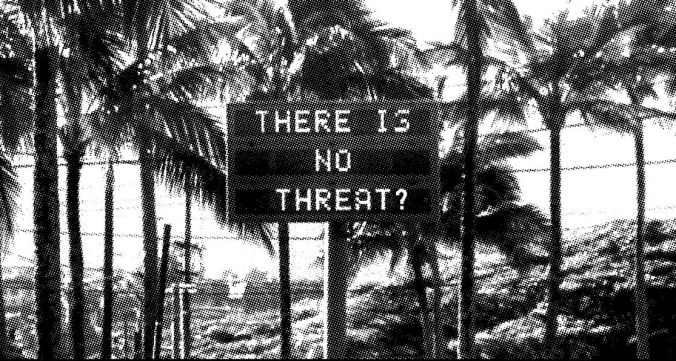
Living on the Wrong Side of the Redline

On Valentine’s day 2018, Admiral Harry Harris revealed that an evacuation plan for Non-essential personnel and military dependents was being developed for South Korea. A few weeks earlier the public was given a brief preview of this policy when almost-U.S. Ambassador to South Korea, Victor Cha, announced that he was dismissed by the Trump administration in part because of his resistance to undertaking an evacuation.  In his words, an evacuation would provoke North Korea and hasten the pace of invasion plans by the White House. Admiral Harris’ testimony before congress confirmed Cha’s incredulity regarding such a plan as he described the unrealistic logistics of moving thousands of American military dependents and potentially hundreds of thousands of U.S. citizens residing primarily in Seoul. Adm. Harris’ testimony is not encouraging, particularly in light of Trump’s ominous foreshadowing of a worldthreatening “phase II” if another round of sanctions do not produce complete nuclear disarmament on the part of North Korea.

unnamed

From the island of Oahu the response is: what about us? Seoul is 5 to 10 minutes from North Korean retaliation but Honolulu is only 15 minutes further away by ICBM. Where is our evacuation plan? The already unimpressive track record of U.S. nuclear interceptors has been joined by another very public failure of an interceptor test here in Hawai’i. Add to this the lingering collective dread after our mistaken missile alert on January 13th of this year, and we want to know where our militaryassisted evacuation plans are. Unlike South Korea which has thousands of bomb shelters, Honolulu has no approved public bomb shelters. This is a fact reinforced by recent statements by state civil defense authorities recommending that we all shelter in place despite the fact that most Honolulu homes are of wooden construction and do not have basements. We have nowhere to go, nowhere to hide, and we have received a taste of what it is like to wait for unstoppable death with those we love most.

What makes our collective vulnerability all the more terrifying is the palpable panic on the faces of our active duty service personnel in our communities, classrooms, and families. They are being told to prepare themselves to die for their country in Korea, are being issued a new generation of body armor, trained for tunnel warfare, and tasked to move the last of the necessary tactical equipment to South Korea. States move B-2 bombers to Guam to send a signal to North Korea. They move body armor to Seoul to prepare for invasion. Here in Hawai`i, we take the Trump administration at its word when they say there is no ‘bloody nose strike’ in the works. That is because we can see a full scale attack is being planned. If this seems unthinkable on the mainland, consider how often you have said Donald Trump’s behavior was unthinkable just before he proved you wrong.

Continue reading